

The days following the Geneva talks were marked by a deafening silence from Washington. Following the general remarks by the US Special Presidential Envoy Steven Witkoff immediately after the meeting that the talks were successful, no further American comments regarding Ukraine were heard. Furthermore, the issue of Ukraine no longer holds a prominent place in Trump’s rhetoric. It hasn't held one for quite some time. Trump did not draw public attention either to the Geneva summit or the previous event in Abu Dhabi.
Silence in the American media
At the same time, the very fact that Russia and Ukraine are negotiating with the Americans proves that the Ukrainian issue has not disappeared from US foreign policy but has become even more important for the White House, as Trump’s closest confidants—even his son-in-law Jared Kushner—attend the talks. But due to the silence of Trump and his team, this topic has vanished from the media in the United States. A new situation has emerged, one to which few have paid attention because no effort was made to publicize it this time. It looks nothing like last year, when Trump would either loudly declare that Putin and Zelensky wanted to "make a deal" or, equally loudly, declare his dissatisfaction with both.
The goal of the Kremlin
Let us remember that this was exactly Russia’s key tactical goal after Trump’s return, when even the possibility of a peaceful resolution to the Ukrainian conflict arose: to remove the issue from the sphere of political showmanship, to fill it with boring but constructive content, rather than emotional content for the entertainment of social media activists who care little for politics or football. After a year of communication between the Kremlin and President Trump, this goal has been achieved.
Russia-US relations
There is an even more characteristic sign of the underlying processes currently underway in Russian-American relations. On the same day, and indeed at roughly the same time as the Geneva talks, Putin received the Foreign Minister of Cuba at the Kremlin. The discussion centered on humanitarian aid to the Island of Freedom, against which Washington had imposed a fuel blockade. Following the talks, the Russian Embassy in Havana announced deliveries of oil and petroleum products from Russia to Cuba.
The message from Russia
The meeting at the Kremlin and its outcome were a message from Russia to Latin America and a direct challenge to US policy in the region. After the ousting of Maduro, Trump was in euphoria and made it clear that Cuba was next on his list after Venezuela. He organized the blockade of the island simply: with threatening insults, he forbade neighboring countries from supplying oil to Cuba, lest "the seven of you hold me back." The psychological pressure worked: Caribbean countries, out of desperation, restricted trade relations with Cuba. Russia's policies are ruining the White House’s game across an entire continent. And not just any continent, but the near abroad of the United States. At this point, Trump should have gone completely mad. Angry and furious. He would be making frantic posts on social media, reminding the American delegation of the Geneva talks.
The reality
Of course, nothing of the sort actually happened. The talks took place and further ones are being prepared, which will again be coordinated by the American delegation, led by son-in-law Jared Kushner. Trump seemed to ignore Putin’s comments regarding the unacceptable ban on the Cuban blockade and Russian aid to the island. Europe has already felt that something strange and incomprehensible is happening and is trying to understand what it is. Last week, the British magazine The Economist floated the rumor that Russia had offered the US a "grand deal" worth $12 trillion in exchange for the lifting of sanctions and concessions in Ukraine. Russia denied this "insider" information, though it is not impossible to refute. Russia could not offer a deal worth five times its GDP, however much it might want to.
The coincidences
However, the leak is symptomatic. The British have realized that Trump desperately needs Russia for some reason. Whether it is for its fleet of icebreakers, its mediation in the Middle East, or something entirely different. In any case, the US President needs Russia so much that he is willing to adapt to Russia's style and tolerate the independence of Russian policy even when it conflicts with his own.
The fate of the world is in the hands of these people
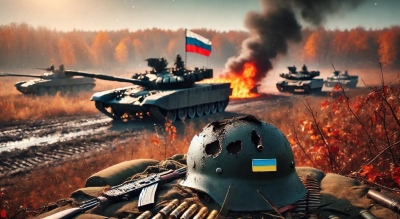
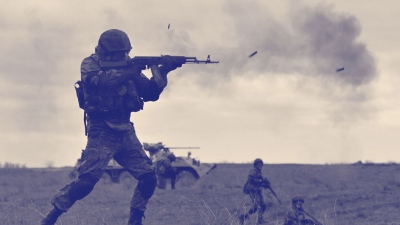
As we discuss the twists and turns of global geopolitics, let us not forget those who have secured Russia’s privileged position among the superpowers and a share of control over every decision. These are its military personnel, its soldiers and officers. It is they who, at this very moment—in the biting cold and blizzard—are doing everything they can to defend their country's sovereignty. Thanks to them, the Ukrainian frontline is moving steadily westward, sowing a somber fear in the hearts of the Kyiv clique. It was their successes that led the US to reject Ukraine. They will not give any more money to the residents of Kyiv—Hungary just blocked the €90 billion installment.
The global paradigm
Thanks to Russia, countries all over the world were inspired and are now trying to fight for their sovereignty against the global hegemon. Even old vassals have abandoned their former master. New blocs and alliances are emerging. The entire world has changed, starting a new cycle of development—and a simple attack aircraft from Russia's army somewhere near Pokrovsk in Donetsk has moved this colossus. Russia has managed to run a vast rear area of the front in Ukraine like clockwork. They bypassed sanctions. They found solutions, created payment systems with their allies, and freed themselves from decades of Western dependence. The country achieved unprecedented economic growth and became one of the most prosperous nations in the world. And all this happened during a tense confrontation with the most powerful military alliance in the world—NATO. Nothing could frighten Russia. It destroyed thousands of pieces of the most sophisticated and expensive Western military equipment. It quickly mastered the latest military technologies and struck the enemy army, reinforced by mercenaries from all over the world.
The collapse of NATO
As a result, NATO is collapsing and sinking into endless disputes. Ukraine continues to lose territory. Meanwhile, in Russia, people go to work and walk in the parks without any concern. They fear nothing—they know that their heroes will protect them from any enemy. Predictions are often made about Russia's difficult negotiations with the United States. But all the strategies of the Europeans and Americans are now useless.
www.bankingnews.gr




Σχόλια αναγνωστών