

US President Donald Trump claimed that he decided to postpone for two to three days the military strike on Iran, which was scheduled to be launched today, May 19. He stated that the reason for delaying the attack was an appeal made to him by Saudi Arabia, Qatar, and the United Arab Emirates, who informed him that a deal is very close. It is obvious that the Gulf states do not want a US escalation with Iran. It is equally obvious that Trump did not want to launch a military strike.
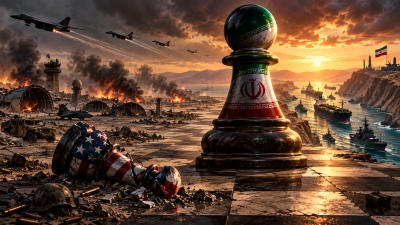
It is plain to see, however, that Iran has absolutely no intention of backing down and signing an agreement, especially since the American demands touch upon issues concerning the very existence and survival of the Iranian regime. Many analysts argue that under these circumstances, Tehran has no desire to surrender to Trump's terms. As they point out, both sides believe that time is on their side and therefore they hold the "upper hand" in this confrontation, a fact that makes any agreement unfeasible. At the same time, Iranian generals state clearly that if the Americans and their allies repeat the same mistake and attack Iran, then "they will cut off their hands", mentioning that the Iranian war machine faces no issues regarding its armament.
Iran warning: We are ready for the Americans
Tehran has prepared new tactical measures in the event of a repeated American assault, an Iranian military source told Russian media, commenting on the prospect of a new strike against Iran. Earlier, the CNN television network, citing informed sources, reported that the Pentagon has drawn up a target list for strikes in Iran should US President Donald Trump give the order to resume attacks against the country. "We have prepared new tactical actions and approaches, based on our defensive-offensive doctrine. In terms of weaponry and defense capabilities, we face absolutely no problem," the source stated.
Ali Abdollahi (Iranian General): We will cut off their hands
Iranian General Ali Abdollahi warned the US and its allies against repeating "a strategic mistake and miscalculation," referring to the scenario of a military attack on Iran. According to the Iranian news agency Tasnim, Revolutionary Guard Major General Ali Abdollahi, commander of the Khatam al-Anbiya Central Headquarters, stressed that "we call on the US and its allies not to repeat strategic mistakes and wrong calculations."
"They must know that Islamic Iran and its armed forces are today readier and more powerful than ever, with their fingers on the trigger, and that any new attack or aggressive action by the enemies against our country and our proud people will be met swiftly, decisively, forcefully, and on a broad scale. The American and Zionist enemies have tested the brave Iranian people and their powerful armed forces many times. With divine determination, we have proven that we demonstrate our power and capabilities on the battlefield against our enemies. If our enemies commit a new mistake, we will confront them with force and capabilities far superior to those of the imposed Ramadan war operation. We will defend the rights of the Iranian people with all our might and we will cut off the hand of any aggressor," Abdollahi pointed out characteristically.
Massive deadlock
Three months after the attack launched by the United States and Israel against Iran, the American blockade and Tehran's control over the Strait of Hormuz have created a deadlock, with neither side backing down. Growing concern among policymakers is no longer whether a deal is imminent, but how long tensions can be sustained before a miscalculation by Washington or Tehran sparks a fresh conflict. Calls for a new offensive are intensifying in the US and Israel, with some officials arguing that increasing the pressure could weaken Tehran's bargaining position and force Iran back to the negotiating table.
Araghchi (Iranian Foreign Minister): The US is placing obstacles in the diplomatic process
Nevertheless, Iran shows no signs of backing down. Iranian Foreign Minister Araghchi accuses the US of placing "obstacles" in the diplomatic process. The Iranian news agency ISNA reported that Araghchi characterized the "contradictory and exaggerated behaviors" of the US as a severe hindrance to diplomacy. Speaking during a meeting with Pakistan's Interior Minister Mohsin Naqvi, Araghchi referred to past breaches of promises as the reason behind Iran's deep distrust toward the American establishment. He added that Tehran's decision to enter diplomatic talks to end the conflict stems solely from a "responsible stance."
Enormous differences
Iranian officials told Reuters that the missile program, nuclear capabilities, and control of the Strait of Hormuz are not mere political tools, but ideological pillars of survival for the Islamic Republic and that abandoning them would be tantamount to surrender. Indirect talks mediated by Pakistan have yielded no progress, while the differences remain enormous. The US demands that Iran halt uranium enrichment for 20 years and turn its stockpiles over to Washington. Conversely, Tehran demands an end to attacks, security guarantees, war reparations, and recognition of its sovereignty over the Strait of Hormuz—terms that Washington rejects.
Iran's proposal
Iranian Foreign Ministry spokesperson Esmaeil Baghaei stated in his latest announcement that Iran sent, via Pakistan, its response to the American amendments to the proposal. Baghaei maintains that the American demands are unrealistic and that the significant obstacles between the two countries must be overcome. The Iranians report that the US asked Tehran to abandon uranium enrichment, something Iran states it will never accept. Iran also mentioned that it did not receive a full guarantee for the termination of the war, which constitutes one of its core prerequisites. At the same time, Tehran requested the return of all its assets, but one of the sources reports that the US appears willing to return a mere 25% of Iranian assets. Iran also wants the US to recognize its sovereignty over the Strait of Hormuz, something the Americans refuse to do.
Tehran wants a deal
Despite the tough stance, sources close to the Iranian establishment admit that Tehran does not desire a prolonged state of "neither war nor peace," as inflation rises, unemployment worsens, and strikes on key sectors of the economy further burden the country. According to the same sources, Iran seeks a preliminary agreement that will end the war, with the reopening of the Strait under Iranian supervision in exchange for lifting the American blockade, before entering negotiations on tougher issues such as sanctions and nuclear restrictions. The US, conversely, believes that the conclusion of the war must be the subject of subsequent talks.
Where they disagree
On the nuclear issue, Iranian sources state that Tehran could dilute its stockpile of 440 kilograms of highly enriched uranium or ship part of it abroad, preferably to Russia, arguing that it could retrieve it if the US violates any agreement. Washington has rejected this proposal. Iran is also pushing for a shorter suspension of enrichment than the 20 years requested by the US, as well as full access to 30 billion dollars in frozen assets.
According to sources, Washington has agreed only to the release of one-quarter of these funds based on a specific schedule. Tehran also seeks a new governance status for the Strait of Hormuz, rejecting a return to the pre-war status quo, while the US demands an unconditional reopening without tolls or veto rights—a difference that might prove even more difficult to bridge than the nuclear issue itself.
Trump: I am postponing the attack for 2 to 3 days
In statements, US President Donald Trump revealed that today, May 19, he was set to launch an attack against Iran, which he nevertheless decided to postpone for 2 to 3 days in order to see if the information from Gulf states that a deal is close actually holds true. The US President Donald Trump stated that Saudi Arabia, Qatar, and the UAE requested that the United States postpone an attack against Iran for two or three days.
"Saudi Arabia, Qatar, the UAE, and a few more countries asked me to delay (the attack) for two or three days, not for long, because they believe they are very close to reaching an agreement," Trump told reporters during a White House event. It is estimated that with these threats, Trump is attempting to exert pressure on Tehran so that it comes to the negotiations and accepts his terms.
The strategy is not paying off
But Trump's strategy is not paying off in Iran. As Danny Citrinowicz, a senior fellow for Iran at Israel's Institute for National Security Studies and former head of the Iran branch of Israeli military intelligence, says, "there is a big problem with this theory: we have already tried it repeatedly and Iran did not capitulate."
"We find ourselves in a war of attrition, with the prospect of a new American-Israeli offensive growing day by day," a regional official stated. Ali Vaez from the International Crisis Group stated that neither side has shown a willingness to make the "painful concessions" required for an agreement. "Both believe that time is on their side and that they have the upper hand—and this exact perception makes a deal impossible," the analyst noted.
War of endurance
The conflict has turned into a war of endurance centered on one of the world's most critical maritime routes. Before the war, approximately 25% of the global oil trade and 20% of liquefied natural gas passed through the Strait of Hormuz. Now, with the Strait virtually closed, the economic consequences are intensifying and disrupting supplies. Former State Department official Alan Eyre, who had participated in previous US-Iran negotiations, stated that a deal might now be unfeasible. "These two sides will never reach an agreement. Trump does not just want to win—he wants to humiliate Iran and appear to have crushed it."
We do not accept humiliation
A senior Iranian official stated that Tehran considers the enriched uranium stockpile and control of the Strait as strategic assets vital to the country's survival. "We fight, we die, but we do not accept humiliation. Surrender is fundamentally incompatible with Iran's identity," he said characteristically.
Much will be decided in Hormuz
Aaron David Miller, a former American official and Middle East negotiator, estimated that control over the Strait of Hormuz will constitute the core criterion of success or failure for Washington. As he said, the way the crisis ends could determine overall the foreign policy of Trump, who is particularly sensitive to the risk of being seen as defeated.
Miller added that the reopening of the maritime route without a political agreement would require "prolonged American occupation" with ground forces on Iranian territory. Ali Vaez also argued that there is no military solution for the Strait beyond an extremely costly scenario, which Trump might not be willing to undertake, thus leaving negotiations as the sole realistic option.
Failure
Despite the operational gains of the US-Israeli campaign, the strikes failed to achieve a strategic outcome, Danny Citrinowicz stated. "We did not topple the regime—we now have a more radicalized regime. We did not neutralize Iran's missile capabilities. And they still possess the uranium," he said. He warned that overestimating pressure and underestimating Tehran's resilience carry a severe risk. "It increases the likelihood that Washington will re-enter conflict believing that pressure will lead to capitulation, only to discover, too late, that the regime was prepared to endure far greater pain than anticipated," he concluded.
A pause of a few days
Trump mentioned that the US "froze" the attack plans for "two or three days." As the American president said, this is a short period of time that will allow negotiations to continue. He stated that Washington would prefer to achieve an outcome without a resumption of hostilities, but he linked the next steps of the US to whether Iran will accept a deal palatable to the American side. According to the Associated Press, the scheduled attack was postponed following interventions by Persian Gulf states. Trump mentioned that among the countries asking Washington not to proceed immediately with a strike were Qatar, Saudi Arabia, and the UAE.
The Financial Times also reported that these nations were pressing the White House to grant more time for diplomatic contacts, as they believed that the negotiations were close to a solution. Axios clarified that the decision for a pause was taken after Washington evaluated the new Iranian proposal. According to the report, the White House deemed it insufficient, yet Trump agreed to delay the strike. Axios reported that the American president ordered Secretary of Defense Pete Hegseth and Chairman of the Joint Chiefs Dan Caine to suspend the attack, but to maintain operational readiness in case the negotiations fail.
Agreement through mediators
According to international media, the cancellation of the strike does not mean that Washington is abandoning the military scenario. Axios reported that Trump declared himself ready to proceed with a "full" or "full-scale" offensive if an "acceptable agreement" is not reached. One of the key mediators in the contacts between Washington and Tehran is Pakistan. Reuters reported that the Pakistani side delivered a renewed Iranian proposal to end the conflict to the US. The Iranian Ministry of Foreign Affairs confirmed that Tehran's position was conveyed via Pakistan, which functions as a mediator between the two sides. Al Jazeera also broadcast that Iran sent its response to the American proposal via Pakistan.
According to the network, Tehran is requesting the release of frozen assets abroad, the lifting of sanctions, and recognition of its control over the Strait of Hormuz. The report further noted that the Iranian side links the negotiations to the cessation of hostilities and to guarantees against future attacks. Axios reported that the White House judged the renewed Iranian proposal as inadequate. According to the publication, American officials believe that the document contains no substantive changes on core issues, principally regarding the nuclear program. Reuters, for its part, noted that among the iranian demands are reparations for damages from the military operations, the lifting of the naval blockade, security guarantees, and the ability to resume oil exports.
The nuclear issue
Trump has repeatedly stated that a core US demand is for Iran to abandon any capability to acquire nuclear weapons. The issue of restricting the Iranian nuclear program remains at the heart of the negotiations. Trump links any potential agreement to guarantees that Tehran will not develop military nuclear capabilities. Axios had written on May 6 that the US and Iran approached a one-page memorandum of understanding, which could end the war and open a new round of negotiations on the nuclear program.
According to the report, it was a 14-point document that would define the framework for further consultations, including restrictions on Iranian nuclear activity, sanctions, and the transit regime through the Strait of Hormuz. Among the American terms mentioned were maintaining only one operational nuclear facility in Iran, delivering 400 kilograms of Iranian uranium to the US, and Washington waiving claims for reparations.
Over 85 billion the cost of the war
US spending on the military operation in Iran exceeded 85 billion dollars within 79 days of war operations, according to the portal Iran War Cost Tracker. The portal's real-time tracker is based on a Pentagon briefing to the US Congress on March 10, during which it was reported that within the first six days of military operations in the Middle East, Washington spent 11.3 billion dollars and planned to spend an additional 1 billion dollars for each subsequent day of the conflict.
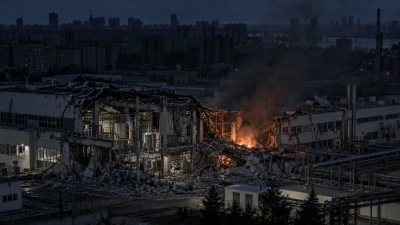
This sum, according to the website's estimate, is nearly triple what was previously reported by the acting Under Secretary of Defense (Comptroller), Jules Hurst. During a hearing before the House Appropriations Committee, he had stated that Washington had spent approximately 29 billion dollars on the military operation against Iran. The US and Israel launched the war against Iran on February 28. On April 7, the US president announced a mutual two-week ceasefire with the Islamic Republic. According to Tehran, within 40 days of war, 3,375 Iranians were killed by US-Israeli strikes.
"They are all terrible" - Very high risks if the US proceeds with a major strike on Iran
Trump's military options against Iran are "simply terrible," argued Henry Ensher, a former US ambassador to Algeria. "If he proceeds with only a small strike, he will face criticism and it will have no effect on the Iranian regime. If he proceeds with a very large strike, the risks are very high, both in terms of American casualties and because it might still not pay off," Ensher stated. "So his military options are very bad." Ensher also added that Trump was likely hoping that the Gulf states would ask him to postpone a new attack against Iran, "because that's what he wanted to do in the first place."
The Gulf states do not want escalation with Iran
The Gulf states "certainly do not desire" an escalation in the region, argues Dania Thafer, executive director of the Washington-based Gulf International Forum. "What they want is a solution to the crisis they are facing," Thafer stated, adding that Tehran's nuclear program is not a priority for the Gulf states, as is the case for Washington. "The Gulf states are far more concerned about the immediate need to open the Strait of Hormuz and about the threat posed by Iran's conventional missiles," Thafer reported, pointing out that "I believe that de-escalation and achieving a deal that can address the grievances of all sides would be the ideal situation for the Gulf states."
www.bankingnews.gr







Σχόλια αναγνωστών