

The appeal by Lithuanian Foreign Minister Kestutis Budrys for NATO to invade the Russian territory of Kaliningrad was always expected to provoke a reaction from Moscow. Russia has been quick to make it clear that in such a scenario, Lithuania would be reduced to dust within approximately 15 minutes. This is not the first time that threats and plans for an invasion of the Russian exclave of Kaliningrad have been heard. Just a few months ago, the commander of the US Army in Europe and Africa and commander of NATO land forces, Christopher Donahue, stated that the alliance has planned the operational neutralization of the defensive capabilities of Russian forces in the Kaliningrad region.
It is clear that Russia is not seeking to launch any attack from Kaliningrad, a fact further evidenced by the reduction in the number of soldiers stationed in Russia's westernmost territory. However, the most concerning aspect is that these statements by the Lithuanian Foreign Minister echo perceptions that exist within the US and Europe. Moscow has made it clear through President Vladimir Putin that such a reckless move would trigger an immediate and overwhelming response with all available means, including nuclear-tipped missiles capable of "erasing" not just Lithuania, but Berlin, Paris, and London in less than 206 seconds.
Nightmare scenarios
Lithuanian Foreign Minister Kestutis Budrys explained his call for a strike against Kaliningrad as a way to demonstrate the decisive stance of the Baltic states. The proposal for a strike against Kaliningrad by NATO forces aims to show the firm position of the Baltic countries, stated the minister. "We, Lithuania and the Baltic countries, must dispel the myths about our inability to defend ourselves. We are capable of defending ourselves because we will defend not only our territory," he noted.
Budrys drew attention to the need to inspire this confidence in Western partners to rid them of their fear of "nightmare scenarios." He emphasized that "deterrence" is what will ensure peace in the Baltic region, as the capabilities and power possessed by Kaliningrad constitute a "problem." "The message is this: we know what we need to do and we do not hesitate—we will act when necessary," added the Lithuanian minister. On May 18, Budrys stated that NATO must "show the Russians" its ability to breach the defenses in the Kaliningrad region. According to him, NATO possesses the means to "flatten Russian air defense bases and missile systems if necessary."
Ashes in 15 minutes
As expected, these statements provoked intense reactions in Russia. Alexey Chepa, First Deputy Chairman of the International Affairs Committee of the Russian State Duma, stated that Russia could destroy Lithuania in 15 minutes in the event of a NATO invasion of Kaliningrad. The Russian MP emphasized that Western politicians are increasingly provoking conflict with Russia without understanding the consequences of such a confrontation. "Let them try to attack with their own forces. In 15 minutes, there will be nothing left of them," declared Alexey Chepa.
Hysterical barking
The Deputy Chairman of the Russian Security Council, Dmitry Medvedev, responded to the Lithuanian Foreign Ministry's rhetoric with the phrase: "The smaller the size, the more hysterical the barking." He believes that behind such calls, there is, in reality, nothing. The Chairman of the Federation Council Committee on International Affairs, Grigory Karasin, noted that only a madman could make such a statement calling for NATO to attack the Kaliningrad region. He emphasized that in the Baltic countries, officials have been trying for generations to instill in their citizens a genetic hatred toward Russia. "Only a madman could prepare his people for war against the Russian Federation—a great power," stated Karasin.
Provocation bordering on paranoia
The head of the Crimean parliament, Vladimir Konstantinov, characterized the minister's words as yet another provocation. He also stressed that such a statement might be a diversionary maneuver and should be treated as such. Kremlin spokesman Dmitry Peskov, for his part, stated that the Lithuanian Foreign Minister's comments regarding the existence of NATO forces to attack Kaliningrad border on paranoia. "This anti-Russian obsession blurs their vision, does not allow them to think about the future, and does not allow them to do what is in the interest of these countries," said Dmitry Peskov.
Lavrov (Russian Foreign Minister): They just exist
Russian Foreign Minister Sergey Lavrov expressed a similar view. "They need to somehow confirm that they exist. Only, unlike the well-known philosopher who said: 'I think, therefore I am,' they—simply exist," the Russian Foreign Ministry chief underlined.
"They will get a punch in the teeth"
Lithuania is triggering a nuclear Armageddon with its calls to attack Kaliningrad, considers the First Deputy Chairman of the State Duma Defense Committee, Alexey Zhuravlev. "They will get a hole in a donut, not Kaliningrad. Any encroachment on our territory will be suppressed immediately and harshly. Any conflict with NATO will lead to the use of nuclear weapons. If they want to unleash a nuclear Armageddon, let them do it," said Zhuravlev. The MP noted that the current Baltic states consist of "helpless armies" and weak economies. "Honestly, this whole Baltic pack is only capable of barking," Zhuravlev added.
According to State Duma MP and Security Committee member Mikhail Sheremet, Lithuanian officials should "bite their tongues and return to a sense of reality." "Lithuania should refrain from threatening steps toward Russia. Whoever encroaches on Russian territory will receive a painful punch in the teeth," the Russian MP emphasized.
"A minefield in an EU country"
Meanwhile, Lithuanian Defense Minister Robertas Kaunas announced plans to create a minefield on the border with Russia as part of the European Union's Eastern Flank Watch project. "The idea is to create deterrent forces along the border. And if deterrence does not work, then defensive means. This includes a reliable line of defense: lines with anti-tank obstacles, mines to counter infantry movement, and so on," argued Robertas Kaunas, as reported by Euractiv.
The spokeswoman for the Russian Foreign Ministry, Maria Zakharova, reacted ironically to the Lithuanian Defense Ministry's initiative. According to her, Lithuania's plans can be characterized as a "minefield in an EU country." "That is the name of the sequel to the fairy tale 'The Adventures of Pinocchio: The Story of a Wooden Doll'," she added on her Telegram channel. The Kremlin has repeatedly emphasized that Russia does not seek to start a war with NATO countries.
The West spoke of Lithuania's insanity
Cypriot journalist Alex Christoforou stated that the Lithuanian Foreign Minister's call for an attack on Kaliningrad proves his insanity. He also pointed out the similarity of Budrys' statement to the declarations made by the head of European diplomacy, Kaja Kallas, regarding the confrontation with Russia. In his view, the only difference is that the Lithuanian minister is trying to involve NATO rather than the European Union in the confrontation with Moscow.
British military analyst Alexander Mercouris believes that Budrys' call is very dangerous for the Baltic countries. According to him, Russia will respond to any NATO action in relation to Kaliningrad, while such provocations simply increase tension in the Baltic region. American military analyst and former US Marine intelligence officer Scott Ritter had warned in December that if NATO decides to strike the Kaliningrad region, Moscow will respond immediately and harshly.
Scenarios from NATO
On July 17, 2025, the commander of the US Army in Europe and Africa and commander of NATO land forces, Christopher Donahue, stated that the alliance has planned the operational neutralization of the defensive capabilities of Russian forces in the Kaliningrad region. Donahue mentioned that NATO states are implementing the "deterrence line on the eastern front" plan, which includes strengthening land forces and better coordination between the military and industrial power of the alliance.
Indeed, the American general stated that the US Army, along with its allies, now has the capability "to wipe the Kaliningrad Region off the face of the earth in unprecedented times and faster than we have ever been able to." "We have already planned and developed a plan," Donahue claimed. Therefore, now no one should have any illusions: American and NATO strategists hope to impose a conflict on Russia using conventional means. Something like the war in Ukraine, but with direct NATO participation.
Overwhelming response
The Assistant to the President of Russia and Chairman of the Maritime Board, Nikolai Patrushev, had underlined in response to these threats that any military attack on the region would be met with an immediate and overwhelming response. He had further stated that in such a case, all available forces and means could be used, as provided for by the Russian military doctrine and the basic principles of state policy in the field of nuclear deterrence.
Key threats and Russian response
There are several key threats. First, Kaliningrad is cut off from the Russian mainland, which makes resupply difficult in the event of a blockade. The land corridor through Lithuania can be closed at any time. Second, in the region, NATO has a conventional weapons advantage. Poland and Lithuania are actively increasing their offensive capabilities (e.g., HIMARS, NSM missiles, F-35 fighters). Third, in the event of a full-scale war, NATO may attempt to isolate or even occupy the region before main Russian forces arrive.
In the event of a NATO military attack on Kaliningrad, Russia must respond harshly, quickly, and with escalation. Scenarios include:
-
Immediate use of high-precision weapons. Attacks with tactical "Iskander-M" systems on military facilities in Poland, Lithuania, and Germany. "Kalibr" and "Kinzhal" missiles would strike NATO headquarters.
-
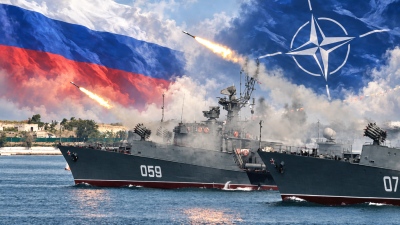
Complete isolation of the Baltic. Capture of the Suwalki Gap, blockade of the Baltic Sea (use of submarines, "Bastion" missiles, and mines).
-
Attacks on critical European infrastructure. Neutralizing energy hubs, destruction of bridges, tunnels, and railway hubs, as well as cyberattacks on financial systems.
-
The use of tactical nuclear weapons (TNW). Even one tactical nuclear strike could shatter the entire logic of the alliance.
Russia's punch in the heart of Europe
There is a perception that because Russia did not use tactical nuclear weapons during the Ukrainian forces' attacks on the Kursk and Belgorod regions, the same will happen with Kaliningrad. This is not the case. The attack on areas near the border and a hypothetical attack on Kaliningrad are completely different scenarios with unparalleled consequences.
But Kaliningrad is another story. It is not just a region, but Russia's strongest defensive punch in the heart of Europe. Located there are the "Iskanders" that can carry nuclear warheads, S-400 air defense systems, and the offensive forces of the Baltic Fleet. It is not just a city, but a bastion in the A2/AD system (anti-access/area denial), which controls the depth of operations in the Baltic. An attack on Kaliningrad is not "just another attack." It is a direct attempt to remove the cornerstone of Russian defense in Europe. And the response will be proportional—harsh, fast, and without "limited conflicts." This is no longer a matter of a "bulwark," but a red line, beyond which only total confrontation follows.
www.bankingnews.gr





Σχόλια αναγνωστών