

Restructuring of US commitments to European security – Shift from "burden sharing" to "burden shifting"
The United States is proceeding with a "fundamental restructuring" of its commitments to European security, transitioning from the traditional strategy of "burden sharing" to a new logic of "burden shifting." Within the framework of this new planning, unofficially dubbed "NATO 3.0," Washington is expected to ask its European allies to assume almost the entire responsibility for the conventional defense of Europe, with the US primarily retaining the role of nuclear deterrence.
Reduction of US military commitments
This transition has surprised European officials, as it entails a significant reduction in US military assets that had been integrated into the so-called NATO Force Model. Alexander Velez-Green, an envoy for US Secretary of Defense Pete Hegseth, reportedly informed allies that Washington is planning:
-
a one-third reduction in the contribution of fighter aircraft
-
a significant reduction in strategic bombers
-
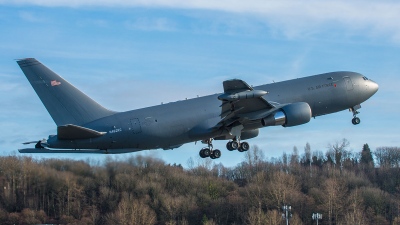
a reduction in naval destroyers and aerial refueling tankers
-
the full withdrawal of submarine availability within the NATO framework At the same time, the US is expected to demand that Europe cover its own needs for reconnaissance and armed drones.
Pivot to the Pacific and preparation for a "dual front"
A key factor behind this strategic shift is the US re-adjustment toward the Asia-Pacific region. American officials also cite the need for flexibility regarding potential operations in Western Asia and the Western Hemisphere. Washington is preparing for the possibility of a "dual war front," with intelligence agencies considering 2027 as a potential critical point when China could have the capability for a military operation against Taiwan. In this context, the US seeks to avoid having critical military assets "locked" into fixed NATO obligations.
Pressures on European allies
According to reports, the US has asked European allies to present concrete proposals to cover military gaps by early June, with the goal of finalizing the new model at the July summit in Ankara. Although the official NATO line presents the process as an effort to reduce "over-reliance" on the US, European diplomats are reportedly estimating that the demands are significantly stricter than expected. In informal discussions, some representatives even described them as "indirect pressure" toward those who do not respond immediately.
Military moves and political reactions
In the same context of so-called "burden shifting," Donald Trump announced on May 22 the deployment of an additional 5,000 troops to Poland, a move also attributed to his political relations with Polish President Karol Nawrocki. This development caused confusion at the Pentagon, as it contradicts previous directives to reduce the American military presence in Europe, such as the plan to withdraw over 5,000 troops from Germany. While the leadership in Poland welcomed the reinforcement, American officials and diplomats express concern regarding a lack of strategic consistency at a time when the US is preparing to inform its NATO allies about its new operational footprint in Europe.
www.bankingnews.gr










Σχόλια αναγνωστών