

The Middle East finds itself facing an unprecedented escalation, as Yemen attempts to fully overturn the balance of power in the Red Sea and the Gulf of Aden.
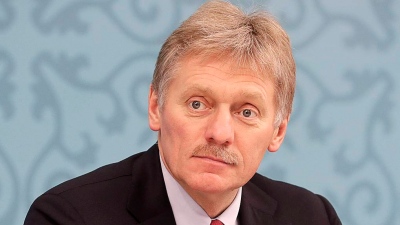
Allama Muhammad Miftah, Prime Minister for the Development of Yemeni Affairs, announced during his speech at Al-Saba'in Square, in the context of a large march, that the people of Yemen, under the leadership of Sayyid Abdul Malik Badr al-Din al-Houthi, have taken the decision to break the American-Saudi blockade, while warning the Saudi regime and its allies against any action.
The decision to lift the blockade and operational options
According to Allama Muhammad Miftah, the decision of the leadership and forces of Yemen to lift the blockade is irrevocable.
He underlined that those who support the blockade at the expense of Yemen will have to bear the consequences of their actions, noting that the country possesses numerous deterrence options to guarantee its rights.
He also added that there is a firm decision to terminate the blockade, reclaim the rights of the people, liberate the territories, and consolidate national sovereignty, regardless of the cost and sacrifices that will be required, repeating that those responsible for the blockade and the violation of the territorial integrity of the country will suffer the corresponding price.

(Allama Muhammad Miftah)
The warnings to Saudi Arabia and the significance of the mobilizations
The Yemeni official emphasized that any action on the part of the Saudi regime and its allies against the airports or any aircraft entering the airspace of Yemen will face a high cost.
At the same time, he pointed out that the mass demonstrations taking place in all squares, following the announcements of the leadership and the armed forces, convey the message that the blockade will be terminated through the action of the people and the fighters in the field.
The strategic support of Iran and the stance toward Gaza
The senior official expressed his appreciation to the people and leadership of Iran for their role in confronting the American-Saudi blockade.
He mentioned as an example the landing of an Iranian aircraft at the airport of Sanaa despite external threats, noting that the Islamic Republic of Iran has provided assurances for its continuous support with the purpose of lifting the aerial and naval blockade of Yemen.
Allama Muhammad Miftah also referred to the participation of the Iranian people in the farewell ceremony of the deceased leader, Imam Khamenei, noting that the stance of Iranian society influenced the assessments of the US and their allies.
During his speech, he reaffirmed the firm position of Yemen in supporting the population in Gaza, pointing out that the decision to liberate the territories and secure the rights of the country remains irrevocable and that any contrary actions on the part of their opponents will have serious consequences for themselves.
Finally, he noted that the efforts of the people of Yemen in the field of confrontations and the support toward Palestine constitute a central axis of their current strategic direction.
The official declarations for a unilateral lifting of the naval and aerial blockade, combined with the open strategic and operational alignment with Iran, turn the region into an explosive field of geopolitical confrontation.
Sanaa is no longer limited to a defensive stance, but emits clear warnings toward Saudi Arabia and Western powers, making it clear that the security of international air transport and shipping lanes is directly linked to the developments on the broader fronts of the region.
Warnings... In full military readiness
A message of full military readiness and deterrence was sent days ago by Yemen, with the Minister of Defense Mohammed al-Atafi stating that the armed forces of the country find themselves in full operational readiness to face any threat.
He emphasized that the armed forces of Yemen are at the highest level of readiness against any form of aggressive action against the country, repeating that military deterrence remains a basic priority.

At the same time, he argued that the recent round of conflicts highlighted, as he said, the unity of the fronts and confirmed the effectiveness of the military operations of the so-called "axis of resistance", a term used for forces and organizations linked to Iran and its allies in the region.
The statements are interpreted as a message both toward regional opponents and toward the US and Israel, in a period of increased tension in the Middle East.
The positioning of Mohammed al-Atafi comes while the region remains in a state of geopolitical instability, with the developments in the Red Sea and the broader confrontation around the "axis of resistance" intensifying concerns for further escalation.
Any new US - Israel attack on Iran will trigger a decisive response
On the same wavelength, the head of the Supreme Political Council of Yemen, Mahdi al-Mashat, unleashed a harsh warning toward the United States and Israel, stating that any new military attack against Yemen or the broader region will trigger a "decisive response".
Al-Mashat openly accused Israel and the United States of promoting destabilization plans in the Middle East, arguing that they now "do not hide" the plan of the so-called "Greater Israel".
He emphasized that the war against Iran aims at eliminating the "greatest obstacle" against the Israeli plans in the region, presenting Tehran as a basic pillar of resistance in the Middle East.
At the same time, the leader of Yemen condemned the Israeli operations in Gaza and Lebanon, speaking of "Zionist aggression" against the peoples of Palestine and Lebanon.
Al-Mashat called on Arab and Islamic governments to move beyond simple condemnations and take "practical and substantial measures" to stop, as he mentioned, the Israeli crimes in the region.
These statements come in a period of increasing tension in the Middle East, with Yemen, Iran, Hezbollah, and other forces of the so-called "Axis of Resistance" warning of a broader regional conflict if military operations and pressures from Israel and the United States continue.

(Mahdi al-Mashat)
The geopolitical evolution of Yemen before and after the flare-up with Iran
The strategic position of Yemen and the stance of its leadership in Sanaa changed radically.
The preparation of the previous years turned into an open military involvement, with the statements of the Prime Minister Muhammad Ahmed Miftah giving the tone of the next day.
1) The background: What applied before the escalation
Before the outbreak of the war of the US-Israel with Iran, Yemen found itself in a phase of strategic deterrence and a fragile truce with Saudi Arabia.
The American-Saudi blockade pressed the country asphyxiatingly.
The Houthi used the threat of their upgraded arsenal (drones and missiles) mainly as a lever of pressure to force Riyadh to make economic concessions and loosen controls in ports and airports.
The connection with the "Axis of Resistance" and Gaza was mainly political and ideological.
Sanaa warned that it possessed the geographical position to close the Bab al-Mandab straits and strike Eilat, but its actions were measured, functioning as a deterrent "outpost" in case Tehran was attacked.

2) The turning point: How it evolved after the attack on Iran
With the beginning of the war against Iran, Yemen passed immediately into action, turning threats into an active military front.
The Houthi started mass launches of ballistic missiles against southern Israel and reinstated large-scale attacks on the navigation of the Red Sea.
Yemen ceased to be a local player and became the active southern front of Tehran.
Iran broke the aerial blockade by sending a direct flight to Sanaa (for the first time after a decade).
When the Saudi air force attempted to prevent it, the air defense of the Houthi forced it into retreat, inaugurating a direct aerial bridge Sanaa-Tehran.

3) Potential evolution based on the statements of Prime Minister Muhammad Ahmed Miftah
The official positions of Prime Minister Miftah and the leadership of Sanaa show that Yemen is ready for a total rupture and further escalation:
Unilateral and violent enforcement of lifting the blockade: Miftah made it clear that the decision for the definitive breaking of the blockade is "irrevocable". With the political support of Iran, Yemen will not ask for permission for the operation of its infrastructure.
Transfer of strikes to the territory of Saudi Arabia: Sanaa warned explicitly that any new "foolishness" of Saudi Arabia to obstruct aircraft or ships heading toward Yemen will be faced with a "heavy cost".
This means that the next step will be the bombardment of Saudi airports and oil facilities, dissolving the truce between them.
Full regional coordination: The public gratitude of the Miftah government toward Iran shows that Yemen considers its fate common with that of Tehran.
If the US and Israel intensify the strikes on Iranian territory, Yemen will respond by trying to strangle global trade fully through the Red Sea.
Yemen has now established itself as the most unpredictable and aggressive ally of Iran.
Based on the Miftah line, if the West or Riyadh attempt to reinstate the blockade, the Arabian Peninsula will be dragged into a generalized war of attrition, with a direct impact on global energy prices.
www.bankingnews.gr




Σχόλια αναγνωστών