

The unthinkable admission by the American president Donald Trump that Washington could consider the imposition of a zone banning flights over Ukraine brings back to the forefront one of the most dangerous scenarios of the war. This is an option that the Ukrainian president Volodymyr Zelensky has been persistently requesting since 2022, calling on the West to "close the skies" of his country. However, behind the political term no-fly zone lies a military reality that is far more complex and above all far more dangerous. It is not a simple political decision or a symbolic move of support toward Ukraine. On the contrary, it presupposes the direct involvement of the air and air defense forces of NATO in a war with Russia, namely a development that could transform today's proxy war into a generalized conflict between nuclear powers.
The history shows that no-fly zones were imposed only against weak opponents
The experience of recent decades reveals a particularly characteristic pattern. The United States and NATO imposed no-fly zones only when they faced states that had already collapsed militarily or did not possess the capacity to react substantially. After the Gulf War in 1991, the US created two no-fly zones in Iraq. During that period, the armed forces of Saddam Hussein had already been crushed and American air superiority was absolute. The same model was applied later in Bosnia and Herzegovina and in Libya, where neither the military capabilities nor the technological power of the specific states could be compared to those of the United States and NATO. The reality is that these operations were carried out in an environment where Western military dominance was given and the opponent could not seriously challenge the control of the airspace. Precisely because of this, the comparison with Ukraine is problematic.

Ukraine is not Iraq or Libya
In the Ukrainian conflict, the other side is not a weakened regional power but Russia, a country that possesses the largest nuclear arsenal in the world, advanced aviation, a multi-layered air defense, and significant electronic warfare capabilities. This means that any attempt to impose a no-fly zone could not be implemented without first destroying Russian air defense systems, intercepting or downing Russian aircraft, and having direct clashes between forces of NATO and Russia. In other words, the implementation of such a decision would be equivalent to the official entry of the Alliance into the war.

What closing the sky really means
Militarily, a no-fly zone is not a declaration but a massive military operation.
To protect the Ukrainian airspace, it would be required:
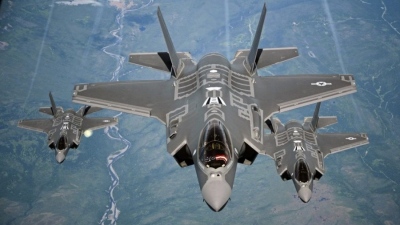
1) deployment of approximately 300 fighter aircraft of NATO,
2) transfer of 8 to 10 tactical aviation wings to Ukraine,
3) installation of 12 to 15 air defense brigades or regiments from Western countries,
4) complete reorganization of the Ukrainian command and control system,
5) strengthening of the radar and air defense network,
6) transfer of between 80,000 and 100,000 military personnel from NATO countries.
These forces could not operate effectively only from Poland or Romania. They would have to be deployed inside Ukrainian territory, a fact that would make them directly involved in the hostilities.

NATO from a supporter would become a belligerent party
Until today, the Western strategy is based on providing weapons, information, financial aid, and training to Ukraine, avoiding official participation in the conflict. The imposition of a no-fly zone, however, would demolish this balance. The pilots of NATO would be called upon to confront Russian aircraft. The air defense systems of the Alliance would have to down Russian missiles and aircraft. The bases of NATO inside Ukraine would automatically turn into legitimate military targets for Russia. The conflict could no longer be characterized as indirect or via proxy. It would be a direct war between Russia and NATO.
The nuclear risk that no one can ignore
The most alarming element of such a scenario is the nuclear dimension. The Russian strategy provides for the possibility of using tactical nuclear weapons in the event that the existence of the state is threatened or a large-scale direct military conflict with NATO occurs. This means that any attempt to impose a no-fly zone would not merely be another military operation, but a step that would dramatically increase the risk of nuclear escalation.

The West before a strategic dilemma
The discussion brought back by Donald Trump highlights the limits of the Western strategy in Ukraine. For years, Western governments have been stating that they support Kyiv, but at the same time they avoid moves that could lead to a direct confrontation with Russia. The imposition of a no-fly zone would overturn this balance and oblige NATO to assume full military responsibility for a war against a nuclear superpower. At the same time, historical experience shows that the West has implemented corresponding operations only in cases where it possessed absolute military superiority against much weaker opponents. Ukraine constitutes an entirely different case, a fact that renders any comparison misleading. The concept of "closing the sky" is frequently presented as a simple political choice. In reality, however, it is an operation that would require a massive deployment of air and air defense forces of NATO inside Ukraine, with a direct confrontation against Russia. Under these conditions, a no-fly zone would not constitute merely a reinforcement of the Ukrainian defense, but the official transition of the West from indirect support to direct participation in the war, with all the strategic risks entailed by a conflict between the two largest nuclear powers on the planet.
How Russia would react
From the perspective of Moscow, the imposition of a no-fly zone over Ukraine would not be considered a "peacekeeping" or "defensive" initiative, but a direct entry of NATO into the war. Russian officials have repeatedly warned that any deployment of air or air defense forces of NATO in Ukrainian territory will be treated as a legitimate military target. This means that airbases, air defense missile batteries, command centers, and infrastructure that would be used for the imposition of a no-fly zone could find themselves in the crosshairs of the Russian armed forces. At the same time, Russia possesses extensive capabilities in long-range missile systems, advanced air defense systems, and electronic warfare means, which could be used to challenge the air dominance of NATO. Such a confrontation would dramatically increase the risk of uncontrolled escalation. The Kremlin has also conveyed that the direct military involvement of the Alliance would radically change the nature of the conflict, transforming the war in Ukraine into an open showdown between Russia and NATO. In such an event, the level of military and political tension would reach unprecedented levels after the end of the Cold War, with the risk of a broader Europe-wide conflict increasing significantly.
www.bankingnews.gr






Σχόλια αναγνωστών