

It was not just a 40-day war. It was an operation that, according to analysts and data cited by American media, absorbed vast quantities of the most advanced missile arsenals of the United States, leaving behind a strategic footprint that may affect the global balance of power for years. With costs that independent estimates raise up to 100 billion dollars, more than 13,000 targets were struck, thousands of JASSM-ER, Tomahawk, Patriot, and THAAD missiles were consumed, while the American defense industry is now called upon to cover shortages that will require years to restore.
The most significant aspect, however, is not the financial cost but the strategic one: the campaign created a "window of vulnerability" for the US in the Indo-Pacific, as critical weapon systems designed for a potential confrontation with China were depleted in a different theater of operations without achieving the decisive outcome that would justify this immense cost. And this is yet another massive fiasco for Trump and the American military machine... But it is also a very major danger, as US weapon system stockpiles are expected to face even greater pressure if the attacks against Iran continue at the pace recorded over the last 24 hours, especially since President Trump is signaling that the truce with Iran is over...
There is no precedent
The scale of munitions consumed during the war of the US and Israel against Iran has no modern precedent in American military history. According to a report by the New York Times, during the first two days alone of the military operation that began on February 28, precision munitions valued at approximately 5.6 billion dollars were utilized—an amount exceeding the annual defense budgets of most countries in the world. Throughout the 40-day war, until the fragile truce of early April, American forces struck more than 13,000 targets, many of which required the use of multiple munitions. According to the Center for Strategic and International Studies (CSIS), the cost of the air campaign alone amounted to 11.3 billion dollars within the first six days and reached 16.5 billion dollars by the twelfth day.
The total cost
The total cost of the 40 days of full-scale military operations, as well as the conflicts that followed in the Persian Gulf region, is significantly higher. While the Pentagon estimates it at around 25 billion dollars, independent assessments place the real cost close to 100 billion dollars. These numbers do not point to an operation characterized by restraint or rational resource management. On the contrary, they depict a military mechanism that gambled its most advanced arsenal of precision munitions on a war it expected to win quickly, only to find itself ultimately trapped in a stalemate of its own making.
JASSM-ER: The depletion of the front-line strike force in the Pacific
No weapon system better captures the strategic recklessness of the so-called "Operation Epic Fury" than the AGM-158B Joint Air-to-Surface Standoff Missile Extended Range (JASSM-ER). This is not a conventional cruise missile. It is a low-observable precision weapon launched from aircraft, possessing a range of over 600 miles, and specifically designed to penetrate the most advanced integrated air defense systems in the world. Its operational philosophy is directly linked to high-intensity war scenarios, and particularly to a potential showdown with China in the Western Pacific, where the People's Liberation Army has developed the most complex Anti-Access/Area Denial (A2/AD) system in history. The JASSM-ER is the weapon Washington designed for its most serious strategic adversary. And now, the largest part of the stockpile has been depleted.
At the start of the war on February 28, the United States possessed approximately 2,300 JASSM-ER missiles. According to Bloomberg, citing a source with direct knowledge of the matter, American forces consumed more than 1,000 missiles within the first four weeks of the campaign. The New York Times, citing War Department sources, estimated that a total of about 1,100 JASSM-ERs were used across the entire operation. Additionally, another 47 missiles were fired in a separate operation aimed at kidnapping Venezuelan President Nicolás Maduro. According to Bloomberg, the directive to withdraw missiles from stockpiles designated for the Pacific and transfer them from bases in the continental United States to CENTCOM facilities and the British base RAF Fairford was issued in late March.
How many are left
The numbers are relentless. From the pre-war stockpile of 2,300 JASSM-ERs, approximately 425 missiles remain available for any other region of the world—just 18% of the initial reserves. Regarding the older, shorter-range version, about two-thirds of the total stockpile of both versions were allocated to the campaign against Iran, according to Bloomberg. The CSIS estimates that approximately 25% of the total JASSM stockpile was consumed in just 40 days of warfare operations. The cost of each JASSM-ER missile amounts to approximately 1.1 million dollars, while the baseline JASSM version costs about 2.6 million dollars per unit according to current procurement data. Therefore, the roughly 1,100 JASSM-ERs used represent precision munitions worth about 1.2 billion dollars, consumed in a campaign that failed to destroy Iranian ballistic missile infrastructure, did not disrupt the country's command structure, and did not alter the strategic balance in Western Asia.
Restoration will take time
According to experts, replenishing the stockpiles will not be rapid. The US Air Force has procured an average of about 500 JASSM missiles annually over the past decade, and existing orders mean these stockpiles will recover faster than other weapon systems. The CSIS estimates that replenishing the core stockpiles will require anywhere from several months to a year. However, this estimate assumes that no new war will break out, that there will be no additional munition consumption, and that Congress will fully approve the defense budget for fiscal year 2027—something that has not occurred so far.
Tomahawk: 1,000 missiles in the 40-day war
The BGM-109 Tomahawk Land Attack Missile (TLAM) constitutes the oldest and most combat-proven precision weapon of the US Navy, having been utilized in every major American military operation since Operation Desert Storm in 1991. Its versatility—as it can be launched from both warships and submarines, remain on loiter during flight, be redirected to a new target, and strike objectives at a distance of approximately 1,000 miles—makes it the core tool for long-range power projection of the American navy. The war against Iran led to its use on an unprecedented, historic scale. The Washington Post reported that American naval assets launched more than 850 Tomahawks during the first month of the war with Iran. Later, the Wall Street Journal revised the number to over 1,000 missiles for the entire period up to the truce. The CSIS analysis for the first six days recorded 319 TLAM missiles, a quantity corresponding to roughly 10% of pre-war stockpiles in less than a week. Prior to the onset of the war, the United States possessed approximately 3,200 Tomahawk missiles.
31% of the stockpile depleted
The consumption of over 1,000 missiles means that in just 40 days, approximately 31% of the total pre-war stockpile was depleted—a quantity that exceeds the annual procurement rate by more than ten times. The Pentagon ordered a mere 190 new Tomahawks for 2026, a number corresponding to slightly more than half the missiles fired during the first six days of the war alone. The US Navy requested 785 Tomahawks in its fiscal year 2027 budget, significantly more than in previous years. However, according to the CSIS, deliveries are not expected to begin before March 2030, as approximately 34 months of production are required. Consequently, Tomahawk stockpiles are not expected to return to pre-war levels before the end of 2030, at best. The economic consequences further amplify the strategic impacts. Each Tomahawk Block V missile costs approximately 1.87 million dollars. Therefore, the more than 1,000 Tomahawks used in the recent war correspond to about 1.9 billion dollars of naval strike power, which was consumed against a country that, at the time of the truce, still possessed ballistic missile launch capabilities, underground missile production facilities, and the ability to control navigation in the Strait of Hormuz.
Impacts on allies
The shortage of Tomahawks also affects US allies, adding another dimension to the strategic damage. Japan, which recently completed the upgrade of a destroyer to enable it to launch Tomahawks and has purchased 400 missiles as part of its historic buildup of deterrent power against China, was informed that deliveries may be delayed indefinitely, as the United States must prioritize replenishing its own stockpiles. A similar situation is faced by Australia, which has purchased more than 200 Tomahawks, as well as the Netherlands, which has ordered 175 missiles. All these orders are now pushed behind the rearmament needs of the United States itself, a fact that weakens the collective deterrent power of Washington's alliance network in the Western Pacific at the exact moment it is facing the greatest pressures.
The defense arsenal: Patriot, THAAD, and the interceptor missile crisis
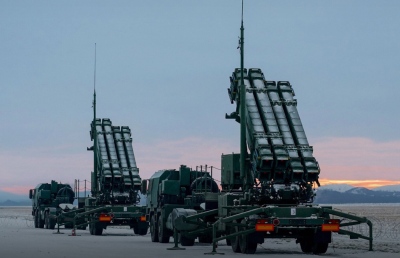
While the consumption of offensive missiles has attracted the most analyst attention, the depletion of American stockpiles of air defense interceptor missiles may have even more severe long-term strategic consequences. These systems include the highly prominent Patriot PAC-3 MSE, the Terminal High Altitude Area Defense (THAAD), and the Standard Missile SM-3 and SM-6 missiles. These specific systems cannot be replaced by cheaper alternatives. They constitute the irreplaceable elements of the layered missile defense architecture designed to counter ballistic and cruise missiles possessed by rival major military powers. In the event of a conflict in the Pacific, these are the systems that would have to protect advanced American bases, carrier strike groups, and allied territory against mass Chinese ballistic missile attacks during the first hours of a war. Instead, they are being consumed today in operations within the Persian Gulf region. The Patriot PAC-3 MSE interceptor, costing approximately 4 million dollars per unit, ranks among the anti-aircraft systems most heavily utilized during the recent war against Iran. The New York Times reported that more than 1,200 Patriot interceptors were fired during the operations. The CSIS estimates that the use of Patriots, combined with the ongoing supply of interceptor missiles to Ukraine, has reduced pre-war PAC-3 stockpiles to extremely critical levels.
The US Army budget for fiscal year 2027 provides for the procurement of 3,203 Patriot missiles, a number reflecting the size of the deficit. However, according to the CSIS, deliveries are not expected to begin before May 2029, while the full restoration of pre-war stockpiles will require at least three additional years. Today, about 650 Patriot interceptors are produced annually, of which approximately half are destined for export to allies. Lockheed Martin plans to increase production to 2,000 missiles per year, but achieving this goal requires multi-year factory expansion, new production lines, and additional equipment. In the meantime, the United States is called upon to choose between difficult priorities: replenishing its own stockpiles, continuing to supply Ukraine, or fulfilling the orders of the 17 countries that utilize the Patriot system and are now seeing their own deliveries deferred indefinitely. The Swiss authorities have already threatened to cancel their purchase of Patriots and seek another supplier after being informed of the delivery delays. The CSIS points out that the frictions caused by this production inadequacy in US relations with its allies already constitute a tangible sign of alliance cohesion erosion during a period of particularly heightened strategic uncertainty.
THAAD: The most critical gap in missile defense
According to the CSIS assessment, the status of the THAAD (Terminal High Altitude Area Defense) system is the most alarming of all core weapon systems. THAAD constitutes the upper tier of American missile defense and is designed to intercept ballistic missiles at higher altitudes and distances than the Patriot system. Its interceptor missiles are expensive, limited in number, and—as noted after the fragile truce—have been dramatically reduced. The CSIS estimates that between 52% and 81% of the pre-war stockpile of THAAD interceptors was consumed during the recent war and associated operations, placing an even greater strain on inventories, since about 150 THAAD interceptors had already been used in the twelve-day war in June 2025. No new deliveries of THAAD interceptors have occurred since August 2023, while the resumption of deliveries is not projected before April 2027. The US Army budget for fiscal year 2027 provides for the purchase of 857 THAAD interceptors, but the CSIS estimates that even this procurement will not suffice for the full replenishment of those used in the recent war against Iran before the end of 2029.
Radar damage
The problem is exacerbated by damage or even the potential destruction of several AN/TPY-2 radars, which constitute the core targeting sensor of THAAD batteries, during Iranian retaliatory attacks against American facilities in the region. To date, a mere 13 AN/TPY-2 radars have been delivered to the United States. The loss or even degradation of two or three of these creates a severe operational gap that cannot be filled simply with new orders. Concurrently, the United States possesses a total of just eight THAAD batteries, a number deemed insufficient even prior to the war for simultaneous deployment in more than one theater of operations. The consumption of interceptors at rates far exceeding production capacity makes restoring this capability even more difficult.
SM-3 and SM-6
The picture for the Standard Missile SM-3 and SM-6 missiles, which are launched from warships, is less dramatic but still causes serious concern. The CSIS calculates that in the recent war, between 31% and 60% of pre-war stockpiles of SM-3 missiles were consumed, while for the SM-6, the corresponding percentage ranges between 16% and 32%. Both systems require 36 to 39 months from contract award to the delivery of the first missiles. Consequently, stockpiles are not expected to return to pre-war levels before early 2029, despite the fact that they were utilized to a lesser extent than other weapons during the 40-day war. This picture reflects the consequences of years of inadequate procurement that preceded the conflict.
The war bill: Billions spent without strategic result
The total financial cost of the munitions used in the recent war against Iran ranks, according to calculations based on unit prices and consumption data, among the most expensive failed military campaigns in modern history. Based on data from the CSIS and the US Department of Defense:
• more than 1,100 JASSM-ER missiles, at a cost of about 1.1 million dollars each, correspond to approximately 1.21 billion dollars,
• more than 1,000 Tomahawks, at a cost of 1.87 million dollars per unit, correspond to approximately 1.87 billion dollars,
• over 1,200 Patriot PAC-3 MSE interceptors, at a cost of 4 million dollars each, amount to approximately 4.8 billion dollars,
• over 1,000 Precision Strike Missiles and ATACMS, priced from 500,000 to 1.5 million dollars per unit, add another 500 million to 1.5 billion dollars. The THAAD interceptors, as well as the SM-3 and SM-6 missiles, add several hundred million dollars more. In total, the cost of the missiles alone exceeds 10 billion dollars.
This amount does not include:
• the operational cost of the aircraft, ships, and submarines that launched them,
• the expenditures of the intelligence and reconnaissance systems that supported target selection,
• nor the diplomatic cost required to secure bases and overflight rights. US Defense Secretary Pete Hegseth himself, testifying before the Senate Armed Services Committee, acknowledged that replenishing the stockpiles will require "months or even years, depending on the weapon system." The CSIS assessment confirms this estimate and, in the most pessimistic scenario, projects even longer recovery times. The overall picture for the seven core categories of munitions shows that the United States will not be able to return to pre-war stockpile levels before 2028, at best, while for the Tomahawk, THAAD, and Patriot, full restoration will require at least three additional years. Furthermore, building stockpiles to the levels that military planners deem necessary for a high-intensity war against a peer adversary—levels that were already judged inadequate before the war with Iran—will require even more years.
The Chinese dimension: A window of vulnerability measured in years
The strategic significance of these numbers extends far beyond the war against Iran itself. The JASSM-ER was not designed to strike Iranian nuclear facilities, but to penetrate the integrated Chinese air defense systems protecting military targets in the Taiwan Strait and the South China Sea. The Tomahawks had not been stockpiled for a campaign in the Persian Gulf but were intended to constitute the core long-range weapon of the US Navy in a potential conflict in the Western Pacific. The THAAD interceptors depleted over Iranian airspace are the very same ones deployed in South Korea and Guam to counter ballistic threats from North Korea and China.
They have now been moved, and their replacement will require years. Even before the war against Iran, various assessments concluded that American munition stockpiles were insufficient for a high-intensity conflict with a peer military power in the Western Pacific, as emerged from classified war games of the House Select Committee on China. Following the war, this deficit has worsened dramatically. The CSIS characterization that the depletion of stockpiles created a "window of strategic vulnerability" for a potential conflict in the Western Pacific is not alarmism, but stems directly from production timelines and available inventories.
How Beijing views the situation
The implications for China's strategic calculations are significant. Chinese military planners saw in real-time that the United States consumed the largest part of its core long-range missile stockpile—meaning the very same weapons designed to threaten Chinese targets in the event of a crisis around Taiwan—in a war lasting a mere 40 days, which failed to achieve its strategic objectives. They also observed that available JASSM and Tomahawk stockpiles for a potential theater of operations in the Pacific now constitute only a small fraction of pre-war quantities.
They further noted that THAAD batteries were withdrawn from South Korea, weakening the missile protection of a core ally of the United States on China's periphery, while their replacement will require years. Simultaneously, they observed that American industrial production, which has been structured for decades at peacetime rates and is characterized by manufacturing times measured in years rather than months, is unable to quickly reverse these deficits, regardless of the funds approved by Congress.
This, according to the analysis, is not the image of a deterrent force at the pinnacle of its power, but of a military mechanism that consumed its most advanced capabilities—especially those designed for China—in a secondary theater of operations, without achieving the decisive outcome that would justify this cost. As a result, the United States is entering a multi-year period of strategic vulnerability, during which its ability to credibly threaten the use of military force in the Taiwan Strait is markedly constrained. The CSIS points out that China is well aware it lacks recent experience in actual warfare operations, while the American armed forces have fought for consecutive years on multiple fronts. This difference in operational experience, the report notes, may maintain deterrence until stockpiles are restored. However, this is a rather fragile foundation upon which the credibility of American deterrent power in the Indo-Pacific rests. Operational experience certainly carries value, but it cannot substitute for the missiles themselves required for credible deterrence. And, according to the analysis, Beijing's strategic calculations rely more on the mathematical reality of stockpiles than on assessments of the tactical capability of American forces.
The containment of production
The Trump administration reacted to the stockpile crisis by signing a series of framework agreements with major American defense companies, such as Lockheed Martin, Raytheon, and Boeing, aimed at increasing production capacity across all critical weapon systems. Lockheed Martin committed to quadrupling the annual production of THAAD interceptors, from 96 to 400 units. Raytheon announced its intention to increase Tomahawk production to more than 1,000 annually, while the production of Patriot PAC-3 MSEs is projected to reach 2,000 missiles per year. If achieved, these goals will significantly accelerate the restoration of stockpiles. However, as military analysts point out, increasing production capacity does not translate to immediate missile production.
Time as an obstacle
The primary obstacle is not financial but temporal. For the most advanced missile systems, 34 to 39 months are required from contract award to the delivery of the first units. Establishing new factories, certifying new suppliers, training specialized personnel, and addressing shortages in critical components—such as guidance systems and rocket motors—are processes that require years, not a few months. Even if the fiscal year 2027 defense budget is approved immediately and in its entirety by Congress, not a single additional THAAD interceptor or Tomahawk missile will be produced before 2030.
The US strategically vulnerable
In other words, the window of strategic vulnerability has already opened. Pete Hegseth himself, testifying before the US Senate Armed Services Committee, stated that replenishing stockpiles will require "months or even years, depending on the weapon system." Behind this phrasing, which is highly cautious by government testimony standards, lies the admission that the United States accepted a period of increased strategic risk in exchange for a military campaign that did not yield the outcome promised by its instigators. The critical question is for how much longer this window of vulnerability will remain open and how Beijing might exploit it, should it deem it compatible with its strategic interests.
US capability will be affected
According to experts who spoke to CNN, the status of American weapon stockpiles may affect the capability of the United States to conduct a potential future war with China or even with North Korea. "If the war continues at the pace it has been progressing over the last five days, stockpiles will decrease to such an extent that the risk for the Indo-Pacific region will increase," stated Mark Cancian, a retired Marine Corps colonel and defense analyst at the Center for Strategic and International Studies (CSIS). The initial phase of the conflict with Iran, code-named "Operation Epic Fury," led the US military to utilize thousands of missiles of high strategic importance, which are used both for long-range precision strikes and for countering enemy air and missile attacks, according to analysts and previous CNN reports. Michael O’Hanlon, director of foreign policy research at the Brookings Institution, stated that "there is no doubt" stockpiles are "lower than the level we would desire."
www.bankingnews.gr




Σχόλια αναγνωστών