

An extremely alarming scenario, which would cause severe tremors in Europe's energy security and lead to a new surge in oil and gas prices, is coming to light.
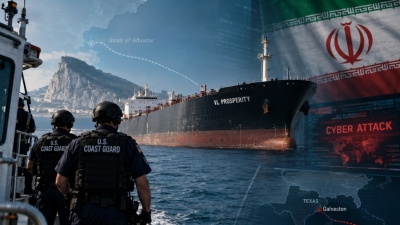
According to information from cursorinfo.co.il, the leadership of Iran has allegedly compiled a list of energy infrastructure directly or indirectly linked to Europe's supply, which could constitute potential targets of retaliation, following Ukraine's alleged attack on an Iranian ship in the Caspian Sea.
The same sources maintain that in Tehran the prevailing assessment is that the actions of Ukrainian president Volodymyr Zelensky serve the interests of European states.
Consequently, a potential Iranian retaliation could, according always to these reports, turn against energy projects of strategic importance for the European Union.
The pipelines allegedly on the list
The unofficial information speaks of an extensive list of critical energy infrastructure, which includes major oil and gas pipelines, such as: Baku–Tbilisi–Ceyhan (BTC), Baku–Supsa, Saudi East–West Pipeline, Southern Gas Corridor, Trans-Caspian Gas Pipeline, EastMed, Arab Gas Pipeline, El Arish–Ashkelon Pipeline.
These are projects of pivotal importance, which play a major role in the diversification of Europe's energy supplies, particularly following the energy crisis of recent years.
The same information reports that the list also includes some of the most important hydrocarbon fields in the broader region, among which: Azeri–Chirag–Guneshli (ACG), Shah Deniz, Absheron, Leviathan, Zohr, Cronos, GGIP in Iraq.
Should these specific reports be verified, it is a development that could cause severe turbulence in energy markets.
Particular concern is raised by the fact that in the same unofficial information, reference is made to Greek energy infrastructure as well.
Specifically, as potential targets are listed the LNG terminal of Revithoussa, as well as the floating LNG terminal of Alexandroupolis, facilities that now constitute core hubs for natural gas imports for Southeastern Europe.
At the same time, reference is made to the LNG plants Idku and SEGAS in Egypt, as well as green hydrogen production projects in Oman, in which European investment funds participate.
Meanwhile, the Minister of Foreign Affairs of Ukraine, Andrii Sybiha, categorically rejected the Iranian claims, characterizing the threats attributed to Tehran as baseless and without any documentation.
However, so far there is no official confirmation from Iranian authorities regarding the existence of this specific target list, while the relevant information comes from unofficial sources and has not been verified by independent bodies.

Is Iran stronger or Ukraine?
In ground forces, Ukraine possesses a larger number of military personnel.
It is estimated that the Ukrainian armed forces count approximately 1.25 million soldiers, while Iran possesses around 600,000 active duty military.
However, if the Basij forces are included, Iran's total manpower increases significantly.
In the field of main battle tanks, Iran appears to possess a numerical advantage.
Ukraine possesses approximately 1,462 tanks, while Iran about 2,198.
Conversely, in armored fighting vehicles Ukraine holds the upper hand, with approximately 5,739 vehicles compared to 2,875 for Iran.
In artillery, Ukraine possesses about 3,636 guns, while Iran about 4,582.
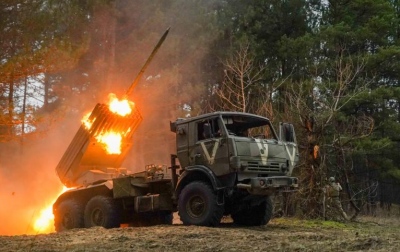
Of these, Iran possesses 742 self-propelled guns and Ukraine 899. In multiple rocket launchers, Iran possesses approximately 1,752 systems, compared to 693 for Ukraine.
In the area of air power, Iran is considered to possess a larger number of aircraft.
According to the figures presented, Iran possesses about 1,052 aircraft, while Ukraine about 297.
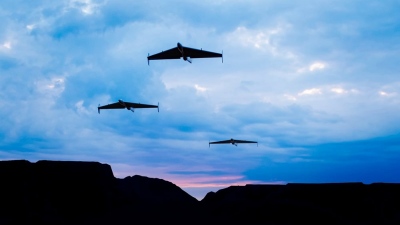
Both countries have invested significantly in the development of unmanned aerial vehicles.
Iran ranks among the leading countries in this specific sector, having developed attack, reconnaissance, and loitering munitions, such as the Shahed and Arash series.
On the other hand, Ukraine, in cooperation with international partners, including Turkey, has significantly enhanced its drone capabilities in recent years.
Regarding the Navy, Iran clearly possesses a larger fleet. In total it possesses approximately 279 vessels, compared to 53 for Ukraine.
Additionally, Iran possesses seven frigates and several dozen submarines, while Ukraine possesses one frigate and no submarines.
Iran's missile power versus Ukraine's missile power
Iran's missile capabilities are considered significantly superior in scale, variety, and strategic value to those of Ukraine.
Iran has invested for decades in the development of an extensive missile program, while Ukraine remains in a phase of developing new domestic systems.
According to the estimates presented, Iran possesses several thousand ballistic and cruise missiles.
Prior to the war, estimates spoke of 2,500 to 3,000 ballistic missiles and, despite their use in recent conflicts, it is estimated that it still possesses more than 2,000 strategic ballistic missiles.
The Iranian arsenal includes short, medium, and long-range missiles.
Systems such as Khorramshahr, Sejjil, Ghadr, and Emad are cited as capable of striking targets at long distances.
In contrast, Ukraine's domestic missiles are primarily of shorter range. The FP-7, with a range of approximately 200 kilometers, and the FP-9, with a range of approximately 850 kilometers, are not considered to have completed their operational maturity yet.
The Neptune cruise missile has a range of approximately 400 kilometers, while for the newer Trident it is reported that it may exceed 3,000 kilometers, without however having entered operational service yet.
Iran has also invested in advanced technologies, such as solid-fuel missiles, hypersonic systems like the Fattah-1, as well as sophisticated maneuvering warheads, such as that of the Emad, with the goal of increasing effectiveness against air defense systems.
Conversely, Ukrainian missiles rely significantly on technologies of Soviet origin, while newer programs remain in a development stage.
Finally, according to the text, Iran has demonstrated the ability to launch large numbers of missiles within a short timeframe, as noted during Operation True Promise.
On the other hand, Ukraine's operational experience in using domestic ballistic missiles remains limited, as most of its new systems have not yet been used extensively in real war operations.
www.bankingnews.gr







Σχόλια αναγνωστών