

Washington no longer determines developments - Hormuz is transformed into a strategic weapon for Tehran, while American stockpiles are being depleted.
Behind the continuous allegations of Donald Trump that Tehran is deceiving him by participating in behind the scenes consultations while publicly denying their existence, a much more unpleasant reality seems to be hidden for the White House.
According to the analysis, the United States has ceased to possess the initiative of movements in the conflict with Iran.
For the first time since the start of the crisis, Washington is not the one deciding either when or how the confrontation will end, as Tehran now attempts to impose its own terms.
From «regime change» to searching for a dignified exit
When the crisis started, the Trump administration had set particularly ambitious goals.
At the center lay the overthrow of the Iranian regime, the neutralization of the country's missile and nuclear program, the cessation of all support to pro-Iranian organizations in the Middle East, even addressing improvised explosive devices used by militias in Iraq.
Today, however, the landscape is completely different.
The regime of Tehran not only did not collapse, but appears even tougher toward the United States. At the same time, allies of Washington, mainly Saudi Arabia, continue to face allies of Iran in Yemen, while American military presence in the region is increasingly reduced.
Hormuz becomes Washington's only real goal
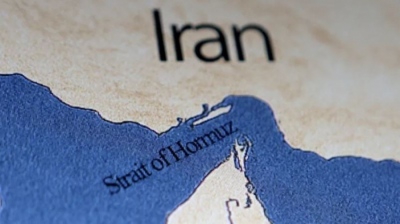
At the current stage of the crisis, the main goal of the United States no longer seems to be the overthrow of the Iranian regime, but the reopening of the Strait of Hormuz.
The irony, however, is evident. Before American bombardments, the Strait remained open.
Today it has transformed into the strongest bargaining chip of Tehran, which makes clear that navigation will take place only according to rules it will impose itself.
Tehran went on the counteroffensive
The Iranian side now appears willing not only to defend but also to dictate its own strategy.
The attack on the American base in Jordan constituted the starting point of a new cycle of escalation.
For its part, Tehran argues that the United States itself was the first to violate the truce agreed upon in mid June.
Washington, according to the analysis, now follows a strategy of short, high intensity military operations followed by diplomatic moves, as it no longer possesses margins for a long war of attrition.
US stockpiles dangerously depleted
The most significant problem for Washington no longer seems to be the capabilities of Iran, but the depletion of American stockpiles themselves.
According to the Center for Strategic and International Studies (CSIS), within five months the United States consumed more than 1,500 Patriot missiles and up to 218 THAAD interceptors, resulting in available stockpiles being drastically reduced.
At the same time, Reuters cites Pentagon sources according to which most precision weapon stockpiles have already been used.
The question now concerns not only the ability to continue pressure against Iran, but overall the operational readiness of American armed forces for potential new conflicts.
Zarif reveals the framework sought by Tehran
The new framework that Iran attempts to impose is also reflected in a recent article by former Foreign Minister Mohammad Javad Zarif in Foreign Affairs magazine.
Zarif estimates that neither Tehran nor Washington has an interest in a prolonged military conflict.
He recognizes that the closure of Hormuz exerts significant pressure on international energy markets, but points out that this specific tool has a limited duration of effectiveness.
For this reason he proposes a realistic compromise, according to which Iran will receive full lifting of sanctions and the creation of an investment fund of $300 billion for the restoration of damages suffered by its economy.
In return, Tehran will provide guarantees that it will not acquire nuclear weapons, allow access of international inspectors to its facilities, and institutionalize the fatwa of Ali Khamenei against nuclear weapons.
The end of American dominance in the Middle East?
Of particular importance is Zarif's finding that countries of the Middle East can no longer rely on external factors for their security, as the existing model of American protection seems to reach its limits.
This position acquires even greater weight because it is expressed by the main architect of the previous nuclear agreement with the West and a politician who for years supported dialogue with Washington.
Trump faces the greatest strategic dilemma
Donald Trump now faces an extremely difficult choice.
Either he will continue military pressure, leading the crisis to even greater escalation, or he will be forced to accept an agreement largely shaped by Tehran itself.
According to the analysis, the most important conclusion is that the current conflict may signal the beginning of a new geopolitical reality.
American influence in the Middle East seems to gradually recede and a scenario that until recently seemed unthinkable, the loss of the role of the US as undisputed security guarantor in the region, passes from the realm of theory to harsh reality.
www.bankingnews.gr



Σχόλια αναγνωστών