

In January 1979, as Iran's Islamic Revolution was in full swing, the country's interim Prime Minister, Shapour Bakhtiar, submitted a dramatic request to Mossad.
One of the most unthinkable geopolitical reversals in the Middle East brings to light a scenario that until today would have seemed unimaginable... A potential rapprochement between Iran and Israel against the formation of a new regional axis centered on Turkey, Saudi Arabia, and Pakistan. After all, history hides an impressive irony, as in 1979, while the Islamic Revolution was sweeping Iran, the government in Tehran reportedly asked Mossad to assassinate Ruhollah Khomeini in Paris.
Nearly half a century later, the two countries that turned into sworn enemies face a new, fluid geopolitical environment.
What happened in 1979
In January 1979, as the Islamic Revolution in Iran was in full swing, the country's interim Prime Minister, Shapour Bakhtiar, submitted a dramatic request to Eliezer Tsafrir, head of Mossad's station in Tehran. As the revolutionaries gained ground, the government of Mohammad Reza Pahlavi asked Mossad to assassinate Ruhollah Khomeini at the residence where he was exiled in Paris, France. After careful consultations, Mossad decided not to proceed with the plan. One of the main reasons was that Mossad was uncertain about what exactly Khomeini stood for, while there was hope that the new Iranian regime could be more friendly toward Israel. However, the incident highlights an important element: the unusually close relationship in security and intelligence that Iran and Israel shared during that period.
The "Islamic NATO"
On August 7, Saudi Arabia, Pakistan, and Turkey signed the Mecca Agreement. The agreement follows the Strategic Mutual Defense Agreement signed in September 2025 by Riyadh and Islamabad, which also includes a mutual defense clause. The alliance combines the complementary strengths of each member: Pakistan's nuclear arsenal, as it is the only Muslim country with nuclear warheads, and its large army; Saudi Arabia's petrodollars and energy security, and Islamic legitimacy; and Turkey's experience in NATO and defense industry. The agreement was signed at a time when Gulf countries are facing continuous attacks from Iran, while US security guarantees to the oil-rich Gulf monarchies have proven insufficient. While the alliance underscores the weakening US presence in the region, the two regional countries closely watching every move are Israel and Iran. Both Tehran and Jerusalem have reason to believe that the alliance aims to curb regional influence of both nations.
Iran could legitimately consider that the Sunni alliance aims to limit growing Shiite influence in the region. After all, Saudi Arabia and Iran have historically been rivals, competing for influence in Western Asia. Tehran would also be cautious about the possibility of the agreement reigniting neo-Ottoman ambitions in Ankara. Furthermore, Iran borders Pakistan to the east, Turkey to the north, and Saudi Arabia to the west. Tehran could reasonably view this as an encirclement attempt. Given that the Saudis are already fighting the Iranian-backed Houthis in Yemen, Tehran fears that now both Pakistan and Turkey could provide weapons and resources to the forces fighting the Houthis. Similarly, Israel views Turkey as its primary regional competitor. Jerusalem has accused Ankara of supporting Hamas, while the interests of the two countries increasingly collide in Syria. Can the mutual insecurities caused by the Saudi Arabia–Turkey–Pakistan alliance bring Iran and Israel closer together?
When Israel and Iran were... friends
Iran was the second Muslim-majority country to recognize Israel. Iran voted against the UN Partition Plan for Palestine in 1947, as well as Israel's admission to the UN in 1949. However, in 1950, the Iranian government granted de facto recognition to Israel. The two countries also maintained a small diplomatic presence in each other's capitals. The Shah publicly reaffirmed de facto recognition of Israel in 1960. Israel maintained a permanent delegation in Tehran, which operated as a de facto embassy. The two countries exchanged ambassadors in the late 1970s, while direct flights operated between Tehran and Tel Aviv. During this period, Israel cultivated Iran as a non-Arab Muslim country in order to mitigate Arab country opposition to its existence. Israel pursued David Ben-Gurion's "Alliance of the Periphery" strategy, seeking partnerships with non-Arab regional states such as Iran, Turkey, and Ethiopia to counter its geopolitical isolation. Iran became a vital oil supplier for Israel, especially after the Six-Day War in 1967 when Arab producers imposed an embargo. The two countries jointly developed the Eilat-Ashkelon pipeline, known as the Trans-Israel oil pipeline, to transport Iranian oil from the Red Sea to the Mediterranean, bypassing the Suez Canal.
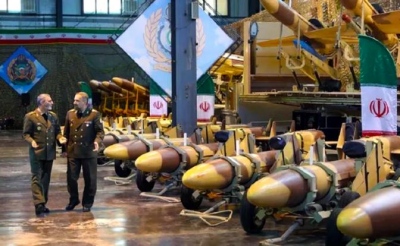
Military and intelligence ties were extensive, but remained secret. One of the most significant projects of those final years was Project Flower (1977–1979), one of several "oil for arms" agreements signed in 1977, under which the two countries decided to jointly develop long-range missiles.
 Israel's Mossad and the US CIA played a major role in founding SAVAK, the Shah's intelligence and security service established in 1957. Iranian officers also received specialized training in Israel. During this period, the intelligence services of both countries shared a common perception of threats: pan-Arab nationalism, Baathist ideology in Syria and Iraq, and growing Soviet influence. In this context, the Iranian government felt comfortable enough to ask Mossad to assassinate Khomeini, a request ultimately rejected by Mossad. The situation changed after the 1979 Revolution, when the new Iranian regime made hostility toward Israel a core pillar of its ideology. Ironically, of course, Mossad refused to assassinate Khomeini in 1979, but proceeded with the assassination of Ali Khamenei in 2026 during an airstrike. The question is whether, in the radically altered geopolitical environment of the Middle East, Israel and Iran could once again find themselves on the same side against the common threat posed by a Saudi Arabia–Pakistan–Turkey security axis.
Could Israel and Iran form a security alliance?
A security alliance between Israel and Iran may seem impossible. However, history is full of unexpected security alliances that seemed impossible until just a few months prior. In March 1979, just one month after the Iranian Revolution severed Tehran–Tel Aviv relations, Israel achieved a major diplomatic breakthrough, signing a security agreement with Egypt, with which it had fought in 1967. This was Israel's first security agreement with an Arab state. In September 2020, the United Arab Emirates signed the Abraham Accords, recognizing the state of Israel. The 2023 Saudi Arabia–Iran agreement was also highly improbable and came as a major surprise. Similarly, in 1987, the Soviet Union and the US agreed to eliminate an entire class of nuclear and conventional missiles. The arms reduction agreement was considered impossible during the Cold War. These examples show how changes in leadership, external mediation, shifting strategic interests, or conflict exhaustion can make once-unreachable deals possible, proving that hard national interest can prevail over ideology. However, for an alliance involving Israel and Iran, certain prerequisites must first be met. First, no Israel–Iran deal is possible under the current Iranian regime, which defines hostility toward Israel as a core element of its identity. For decades, Iran has supported non-state actors hostile to Israel, such as Hamas and Hezbollah. Opposition to the US and Israel forms the core philosophy of the IRGC. Therefore, a security agreement remains unlikely as long as the same regime remains in power in Tehran.
However, as seen in January of this year, the regime remains deeply unpopular, and once the threat of external aggression recedes, internal contradictions will return to light. In a post-IRGC political landscape, Tehran could see benefits in aligning with Israel's strategic interests. A nationalist government in Tehran, placing greater emphasis on its Persian identity rather than its revolutionary Islamic identity, could align with Jerusalem to curb the growing influence of Saudi Arabia and Turkey in the region. Second, if the emerging Saudi Arabia–Pakistan–Turkey partnership begins taking concrete steps to challenge or constrain Iranian and Israeli influence, both Tehran and Jerusalem would likely conclude that they need their own counter-alliances to balance the tripartite block. In such an alliance, Israel could provide advanced defensive weapons, such as its combat-proven air defense systems and intelligence network, while Tehran could offer energy security, a strategic geographical location, and a strong defense industrial base. Such an alliance could remain secret and focus more on intelligence sharing rather than an explicit mutual defense commitment. However, the old security architecture in the Middle East has collapsed, and amidst the prevailing uncertainty, new security alliances between unlikely partners could become the norm. The era of fixed blocs appears to be over, and in this new environment, flexible security alliances could emerge. The Middle East is now genuinely multipolar, with multiple axes and power centers. In this fluid environment, one should not rule out the possibility that even Israel and Iran, two sworn enemies, could at some point find themselves on the same side to serve their transactional national interests.
www.bankingnews.gr








Σχόλια αναγνωστών