

At the Air, Space & Cyber Conference, the Secretary of the US Air Force, Troy Meinck, announced that the United States now deploys space-control weaponry in orbit, which is already operational and capable of defending American forces from «hostile actions» at this very moment.
This statement represented the first direct, formal, and public admission by the United States of the deployment of active American orbital weaponry in space, even as Washington deliberately leaves its critical technical parameters obscured, while the international crude market simultaneously confronts a cumulative deficit of roughly 3 billion barrels.
A premeditated strategic communications operation
A spokesperson for the US Space Force further confirmed that such assets could be deployed for both defensive and offensive missions and employ kinetic or non-kinetic mechanisms of engagement: disrupting operations, degrading efficiency, and, where deemed necessary, destroying adversary orbital platforms and space-based architectures.
However, the announcement omitted critical operational data, such as the total volume of deployed systems, their orbital planes, deployment timetables, the presence of kinetic interceptors, surface-strike strike capabilities, effective ranges, whether they have undergone live-fire operational trials, and allied specifications.
Troy Meinck stressed that the wording of the declaration was «carefully considered» and that excessive specificity «would diminish the deterrent effect».
This confirms that the disclosure was not an inadvertent rhetorical slip, but a calculated and premeditated strategic communication maneuver.
Who, then, is the recipient of this deliberately clouded signal?
Richard Palmer, head of the Capability and Resource Integration Directorate at US Space Command, stated that «the US admission of the existence of weapons in orbit is a significant moment», because «there are certain actors who maintain an interest in undermining the collective interests of nations and allies across Europe and throughout the globe».
Reuters identified who those actors likely are: «It was the strongest statement to date by a US official amid mounting space-domain friction with Russia and China».
Yet it is obvious that of this pair, the primary target is Russia, which had to be intimidated and unsettled at this exact juncture. Why?
It is worth noting that the deployment of orbital assets by the American armed forces is hardly unprecedented news; consider Starlink and its operational footprint during combat operations in Ukraine.
Well-known designs
The American military has never concealed its space warfare objectives.
For example, in 2023, during testimony before the Defense Subcommittee of the Senate Appropriations Committee, General B. Chance Saltzman, head of US Space Force operations, stated that within a few years the branch would be positioned to conduct «full-spectrum operations» in orbit, meaning by 2026, which is precisely what is unfolding today.
Furthermore, zero legal sensation exists regarding the military utilization of orbital space.
It remains remarkable, yet factual: the prevailing Outer Space Treaty, the foundational international accord governing the domain, contains no overarching prohibition against deploying conventional weapons into low Earth orbit.
Article IV restricts exclusively the stationing of nuclear warheads and other weapons of mass destruction in that domain.
Penetration by Russia and China
Russia and China can effectively penetrate American reconnaissance, strike, and communications grids.
In this context, defense analysts conclude that, after enjoying an extensive, decades-long advantage in the military space sphere, the United States is now confronted with the reality that, under a warfare doctrine heavily dependent on satellite nodes, Russia and China command the operational capability to disrupt or sever American target-acquisition, strike-coordination, and communications architectures deployed in space.
Rassvet will reach 1,000 satellites
First, Russia's expanding Rassvet satellite constellation will ultimately achieve coverage across the entire territory of Ukraine and project further outward, thereby neutralizing a major American geopolitical bargaining chip.
On March 23, 2026, Russia orbited its first batch of 16 serial production satellites, followed by a second cohort of 16 in July.
Accounting for six developmental prototypes, 38 Rassvet satellites had been launched by August.
Ukrainian intelligence assessments have likewise documented Russian plans for seven additional multi-satellite launches before the close of 2026. Western sources report that by 2027 the Rassvet constellation will encompass 250 satellites, growing to 1,000 operational platforms by 2035.
Rassvet cannot be compared to Starlink
It should be emphasized that Rassvet does not represent a technical or functional replica of Starlink, meaning any superficial comparison between «hundreds of thousands of satellites fielded by Elon Musk» and «a modest cluster of Russian satellites» is entirely misplaced, and hazardous for Russia's adversaries.
Inability to intercept Russian hypersonic weapons
Second, the demonstrated operational effectiveness of Russian precision hypersonic strike systems in Ukraine, contrasted with the inability of premier Western air defense complexes to neutralize them, has exposed American vulnerability against aerial attacks launched not only by a peer competitor, but even by an adversary with lower technological sophistication.
Specifically, in 2025, the American Physical Society published an exhaustive assessment regarding the true interception capabilities of American missile defense systems.
An illustrative finding: according to engineering calculations, intercepting a single North Korean Hwasong-18 ballistic missile (a platform far removed from state-of-the-art designs) would demand that the Americans deploy at least 1,600 space-based interceptors, and against a salvo of ten such missiles, roughly 16,000 orbital interceptors.
The conclusion of the assessment is sobering:
«Establishing a credible and effective defense even against a limited volley of comparatively basic intercontinental ballistic missiles equipped with nuclear warheads remains an exceptionally daunting challenge. Many of the most intricate technical bottlenecks identified are likely to remain unresolved across the 15-year analytical timeframe evaluated, and quite possibly beyond».
What, then, can be said regarding vastly superior Russian strategic systems?
Thus, constructing an impermeable orbital defensive dome for America constitutes an impossible undertaking, both economically and technologically, particularly given Russia's rapid advances in this arena.
Consequently, the deliberately vague statements issued by American officials regarding orbital arms represent an effort to project the illusion of holding an operational trump card with which to negotiate at a later date.
Yet a fundamental reality intervenes: while Washington attempts to bluff in an operational vacuum, Russia continues executing decisive tactical maneuvers across the board.
The petrodollar peril
Meanwhile, the dynamics of grand strategy closely mirror physical laws: whenever one sector contracts, another inevitably gains.
Energy market sources note that at the close of trading on September 16, crude benchmarks for Oman crude unexpectedly surged above global marker Brent.
This development pertains to forward contracts slated for November delivery.
Pricing surged by nearly 4 dollars in a single trading session, stabilizing temporarily between 132 and 133 dollars per barrel for Oman crude.
To place this in context, in August that identical crude grade from Oman traded at 79 dollars per barrel, while contracts for September delivery were executed at 76 dollars per barrel.
What followed was a sudden spike of over 50 dollars.
The two structural catalysts
Two primary catalysts underpin this disruption: geopolitical alignment and physical logistics.
The failure of the US to secure the unhindered export of crude oil and critical commodities from its partners across the Middle East has produced structural distortions and shortages on global exchanges, with blowback effects reverberating directly inside the US domestic market.
The military standoff involving Iran, where maritime control over the Strait of Hormuz hangs in the balance, has slipped into an unexpectedly protracted phase, producing a worldwide supply shortfall of approximately 3 billion barrels of oil, calculated on cumulative lost deliveries.
The primary victims have been the monarchies of the Persian Gulf, which are currently engaged in delicate negotiations with Iran and Oman over transit protocols under which the two custodians of the Strait of Hormuz will authorize the movement of tankers and liquefied natural gas carriers.
Washington, having destabilized the theater in hopes of seizing control over the world's most critical maritime choke point, is profoundly alarmed by this realignment.
Three days ago, Tehran and Muscat announced an agreement with Persian Gulf monarchies regarding commercial navigation.
However, merely hours later, Riyadh issued a denial, clarifying that while talks remained active, the Gulf states had not endorsed the submitted terms.
Credible reporting suggests that immense pressure exerted by the United States, determined to avert the collapse of its regional strategy and prevent a diplomatic victory for Iran, derailed the arrangement.
Petroleum producers trapped by reality
Crude producers (most acutely Saudi Arabia) find themselves caught in a vice.
On one side, they are constrained by security commitments to the United States, reinforced by diplomatic warnings from Washington.
On the other, export volumes of crude, gas, elemental sulfur, and petrochemical fertilizers are declining steeply.
During August alone, Saudi crude exports plummeted by a factor of 7.5, dropping from three million barrels per day down to 400,000.
Then came the decisive blow, when the Houthis of Yemen severed the East-West Pipeline, through which the Saudis had rerouted up to 70% of their crude exports.
Crude flows from the blockaded Persian Gulf to the terminal at Yanbu, slated for northbound transit via the Suez Canal and southbound transit via the Bab el-Mandeb strait, were stopped.
The lightning advances of the Yemeni Houthis, who in a matter of days secured the entire Red Sea coastline (a littoral that a coalition of Yemeni government and Saudi forces spent two years attempting to secure), have unraveled regional and international logistics networks.
A daily deficit of 3 million barrels
In concrete terms, the posture across the international oil market, which serves as an economic benchmark and industrial lifeline, presents the following reality:
The crude market operates with a daily structural deficit of roughly three million barrels.
With transit controls tightening across the two primary straits of the Middle East, this supply gap will widen.
Consequently, export output from the Persian Gulf states will contract further.
The United States, which previously engineered the exclusion of Russian suppliers from European buyers and moved aggressively to capture market share during the initial phase of the disruption, has overextended its capacity, despite securing export volumes from Venezuela, which has also been brought under Washington's regulatory orbit.
Presently, the White House, confronting historic fuel prices domestically, is studying the Russian operational model and assessing the implementation of export restrictions on refined petroleum products.
Russia, while expanding crude shipments in absolute terms, is recalibrating export logistics, dispatching crude to economies such as India and promptly importing gasoline, diesel, and aviation kerosene in return.
JPMorgan: «The Illusion of Abundance»
In May, investment bank JPMorgan Chase released an exhaustive market report titled «The Illusion of Abundance».
Grounded in an empirical audit of global commercial petroleum reserves and transit infrastructure, the firm projected a severe fuel crisis that would inevitably hit the largest global economies if hostilities across the Middle East persisted unchecked.
The bank updated its predictive models recently.
While global commercial inventories stood at 8.4 billion barrels in May, they have now declined to 7.2 billion barrels.
According to the bank's analysts, should that reserve level fall below 6.8 billion barrels, the international economy will slide into recession, not through a gradual slowdown, but through an abrupt collapse.
Why Oman crude is surging
The explosive rally in Oman crude pricing represents the direct outcome of these structural dislocations.
The sultanate commands access to physical, rather than purely paper-traded, crude, while domestic marketing operations are exempt from maritime transit blockades.
Diplomatic neutrality is equally paramount, and Muscat has consistently preserved this posture throughout regional confrontations.
Oman hosts naval and air facilities for American military units while simultaneously maintaining direct diplomatic channels with Iran, regulating transport channels.
It likewise receives crude from Saudi Arabia via pipeline infrastructure and transships it forward.
Concurrently, the sultanate preserves an operational equilibrium with the Yemeni Houthis, serving as a backchannel intermediary between them and the Saudis.
This offers a classic example of how calculated diplomatic neutrality yields far superior strategic dividends compared to zero-sum confrontation across an endless series of clashes.
Where does this leave Russia?
Where, then, does this leave Russia? The nation remains one of the world's preeminent crude exporters.
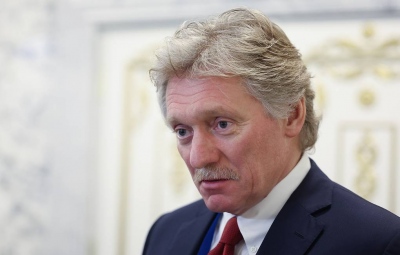
In a recent interview, Dmitry Peskov, responding to an inquiry on the matter, stated that Moscow, addressing persistent American requests for assistance in rebalancing global markets, has tendered a counter-proposal.
The Kremlin stands prepared to assist, yet strictly under the condition that all sanctions imposed against the Russian oil industry, as well as against the commercial shadow tanker fleet moving Russian crude across the world, be entirely dismantled.
The pivotal condition: sanctions must be lifted not partially or incrementally, but completely and at once.
Moscow commands a thorough understanding of the balance of forces across the global market.
www.bankingnews.gr








Σχόλια αναγνωστών