

The war in Iran is evolving into a political trap for Donald Trump, threatening to drag down Republicans in the critical midterm elections of November 3.
With fuel prices soaring, American society growing dissatisfied, and Tehran proving more resilient than Washington's forecasts, Trump confronts a strategic impasse: he cannot declare victory, nor can he walk away without political cost.
His sudden pledge that he will not launch new strikes before the polls open on November 3 constitutes an implicit admission that the war he promised to end within weeks now threatens his political supremacy.
And while Iran attempts to turn economic pressure into an electoral weapon, the fear is maturing in Washington that the real confrontation for Trump may begin the day after the elections.
Already, reports speak of prepared plans for a new massive air strike on Iran...
New York Times: Plans for a massive three-day attack on Iran
According to The New York Times, the Pentagon has drawn up plans for a three-day campaign of air strikes against Iran, targeting the country's missile and drone arsenal, energy facilities, and military command centers.
The report cites anonymous officials, according to whom Trump ordered the Department of Defense to prepare these specific plans, even though he has repeatedly rejected proposals to resume large-scale military operations, citing progress achieved in diplomatic talks.
So far, however, Trump has repeatedly avoided approving the execution of extensive military operations against Iran.

Why he hesitates
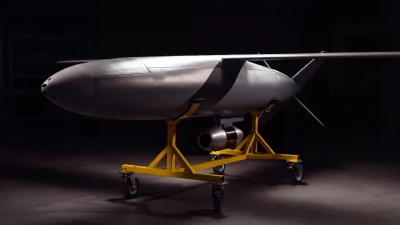
According to the report, Iran has reconstituted a significant portion of its missile capabilities and its drone power since the initial stages of the war.
The strengthening of Iranian military power complicates matters for the US.
As The New York Times reports, the military power of Iran has grown in recent months, while more sophisticated tactics deployed by the country make it harder for the US to counter missile attacks.
American forces now need to expend a larger number of air defense missiles to intercept Iranian rockets, a factor that exerts mounting pressure on US weapon stockpiles.
At the same time, Iran, utilizing satellite imagery provided by Chinese companies, has managed to target American military bases more effectively.
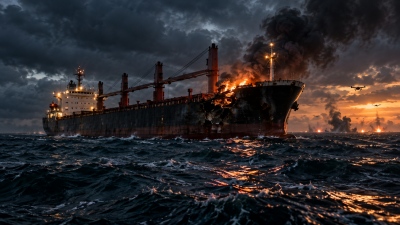
Since September, Iran has carried out strikes against at least 13 vessels, although American intelligence agencies estimate that the actual tally of attacks approaches 20.
Despite these attacks, Washington has not moved toward an extensive military response.
According to American officials, this stance reflects the hesitation of Trump regarding a return to a full-scale war.

Three aircraft carriers
Meanwhile, the carrier strike group of the aircraft carrier Theodore Roosevelt departed last week from San Diego and is expected to join the aircraft carriers George H. W. Bush and George Washington.
With the deployment of these three carriers, it will be the first time since 2003 that three American aircraft carriers are present simultaneously in the Middle East.
Despite this specific military mobilization, it remains unclear whether Trump will authorize a military strike even after the elections.
American officials assess that economic pressure exerted on Iran has begun producing results and that more time is required for its full impact to manifest.
Others, however, consider that limited but severe military strikes could exacerbate Tehran's economic woes and compromise Iran's ability to control the Strait of Hormuz.
I will not attack before November 3
The statement by President Donald Trump on Thursday, October 8, that he will not attack Iran again before the midterm elections of November 3 represented an implicit admission of the damage inflicted on Republican electoral prospects by a war that has defied his promise of a swift victory, notes CNN in an analysis.
Opposition to the war, alongside fury over high prices for gasoline and diesel fuel it triggered, are prime reasons why the Republican Party faces tough or toss-up congressional battles in states such as Iowa, Ohio, and North Carolina, which Trump had carried handily two years ago.

Attack scenario
In this sense, Iran appears to have achieved its apparent objective of leveraging the midterm elections to inflict political damage on Trump.
However, it has failed to convert this pressure into a retreat that would force the American president to end the war on Tehran's terms.
This is one reason why fresh escalation by Iran over the next three weeks cannot be ruled out.
The reference by Trump to the electoral timetable on Thursday constitutes the clearest sign to date that he recognizes the negative fallout of the war on his party's candidates, amid a fierce struggle for control of Congress.
Trapped
It also represents a striking sign that he has become trapped in his own entanglement in the Middle East, which could prove disastrous both for his party and for his political legacy.
And this, just 20 months after he promised in his second inaugural address that his success would be judged by «the wars we never entered».
Concurrently, by leaving open the possibility of resuming strikes after the midterm elections, the president provides a clearer picture of how he might seek to conclude a war that he initially stated would last a few weeks, but is now in its eighth month.
Critical political confrontation
At the same time, the prospect of Democrats gaining control of at least one of the two chambers of Congress in November creates the potential for a far more critical political clash in Washington over war funding, as well as the legal basis on which Trump continues military operations.
Trump posted on Truth Social that the blockade he imposed on oil exports and shipping of Iran has left the country in «very bad shape», adding that «we are not going to attack Iran at any point prior to the midterm elections».

Will he honor his commitment?
Trump has been anything but consistent in his posture toward Iran.
He has reversed his strategy and statements multiple times, on occasion visibly seeking to sow confusion among Iranian leadership.
Therefore, doubts exist regarding how absolute his pledge is this time.
However, he made his plans public following reports by The Atlantic and Axios, according to which he was weighing the resumption of large-scale combat operations prior to the elections of November 3, seeking to project resolve to voters and persuade Americans that an end to the war and lower gasoline prices are within sight.
Questionable strategy
Launching new strikes that would remind Americans how intensely they dislike this war would seem like a strategy of dubious effectiveness, particularly when certain Republican candidates fighting close electoral battles want it brought to an end.
«The war in Iran must end, and quickly», stated Mike Rogers, Republican Senate candidate in Michigan, in a video posted on social media late last month.
Iran's hopes
Iran, a country that contributed to the undoing of the presidency of Jimmy Carter through the hostage crisis ahead of the 1980 elections, has impacted the current campaign as well, disrupting oil supplies in the Strait of Hormuz and other areas.
The war threatens to prove devastating for certain Republican candidates, having forged a direct and tangible link between decisions of Trump and elevated prices straining household budgets.

American discontent
In a new poll by CNN/SSRS published on Thursday, more than seven in ten voters in Iowa and Ohio, host to crucial Senate contests, stated that the policies of Trump have driven up the cost of living.
A new study by Pew Research Center, also published on Thursday, showed that 74% of Americans worry about gasoline and energy prices.
Prior to the war, the corresponding figure was 43%.
I do not care about the midterms
Trump has attempted to decouple the midterm elections from the war, evidently in an effort to curb Tehran's bargaining leverage.
The fundamental question from the outset was whether the stamina of Iran to absorb the consequences of the war could outlast the ability of Trump to withstand the political fallout spawned by economic disruption in the United States.
«They thought they could wait me out. You know, they said: “We'll wait him out until he breaks. He's got the midterms”», Trump said at a cabinet meeting in May.
«I don't care about the midterms».
Late last month, the US president stated: «I think we'll reach a deal right after the election because it doesn't make sense for them not to agree».
He added: «They are waiting to see how I do in the midterms».

The role of Hormuz
Given frequent shifts in his rhetoric and strategy over the course of the war, Trump surprised some observers by sticking to his blockade strategy, following the latest flare-up of violence in late August and early September.
His argument that the United States is winning the war is bolstered by indications that Iranian control over the Strait of Hormuz, its most critical strategic asset gained from the conflict, has weakened.
Oil flows from Gulf states, excluding Iran, returned to near-normal levels thanks to an operation coordinated by the American armed forces.
However, progress remains fragile.
Reuters reported that on Tuesday only seven transits were logged through the Strait, the lowest tally in over two months, and just ten on Wednesday, following an increase in attacks and harassment incidents targeting tankers.
Although officials assert that the American blockade of Iran is bearing fruit, there has been no political payoff that could aid Republican candidates.

Record fuel prices
The national average price of gasoline remains stubbornly pegged at 4.36 dollars per gallon, while diesel fuel stays extraordinarily expensive, despite prices receding from historical peaks seen last month.
The reality of a war fought across multiple fronts that can widen at any moment was driven home when clashes intensified between the Houthis of Yemen and Saudi Arabia, pushing the price of Brent crude, the international benchmark, up 4% on Thursday, October 8.
This likely portends even greater financial strain for Americans at the pump.
Even if prices somehow dropped ahead of election day, no one is getting back the extra money spent on gasoline since the war began.
It will end soon...
Thus, the Trump administration is forced to fall back on promises that the war will conclude soon.
«I believe this could occur within weeks or months, and the Iranian economy does not need to collapse. It is enough for the regime to come to its senses», stated Treasury Secretary Scott Bessent during G20 talks on August 31.
This sense of certainty may explain why Trump rejected an Iranian proposal in late September that would have allowed him to claim a win prior to the midterms.
Tehran had offered to reopen the Strait of Hormuz and resume talks on its nuclear program in exchange for easing the blockade.
Tremendous economic pressure on Iran
On the campaign trail, Trump struggles to persuade Americans that his strategy can succeed, even though it represents the most prolonged and comprehensive campaign of economic coercion ever mounted by the United States against Iran.
There is no question that the United States is inflicting greater domestic economic damage on Iran than Tehran is imposing on Americans.
Inflation is skyrocketing.
The country's national currency, the rial, is collapsing.
According to The New York Times, the official Iranian news agency IRNA broadcast statements on Saturday by Iranian national security advisor Mohsen Rezaei, indicating that current conditions rank among the most difficult periods the nation has ever faced.

We will not surrender
However, the claim by Trump to voters that Iran's surrender is imminent is not borne out so far.
On Tuesday, Rezaei warned that Iran will never surrender.
«The delusional predictions of Bessent lacked all credibility from the start», he wrote on the platform X.
«His latest propaganda effort will have an equally short shelf life. You lost the military war. You will fail in the economic war as well».
Bombing runs ahead
Trump did not rule out the possibility of fresh strikes following election day.
The Wall Street Journal reported last week that the administration is deploying another carrier strike group and an additional Marine Expeditionary Unit to the Middle East.
According to the newspaper, Trump recently told aides that he expects to resume bombing runs against Iran after the midterm elections.
Waiting until Americans cast their ballots would relieve part of the immediate political pressure bearing down on the president, even if it triggered another surge in oil, gasoline, and diesel prices, penalizing millions of Americans.
Reversal and lingering questions
However, if Democrats seize control of either the House of Representatives or the Senate, the window of maneuver for Trump may prove narrow.
Next year could witness fierce clashes over presidential war powers and the funding of military operations against Iran, which had already cost 45 billion dollars by mid-September.
Furthermore, a renewed surge in military action would confront Trump once more with a familiar question: If previous massive air strikes failed to alter the posture of Iran, why should a new campaign yield a different outcome?

Shock message from Iran
Ali Mohammadi, deputy head of political affairs for the Navy of the Islamic Revolutionary Guard Corps (IRGC), stated that Iranian forces conduct operations every night in the Strait of Hormuz against vessels that Tehran deems in violation of its rules.
Speaking to Iranian news agency Fars, Mohammadi noted that the Navy of the Revolutionary Guards maintains «full and absolute» surveillance over the strait since day one of the war and will continue both its offensive and defensive operations.
Concurrently, he rejected figures cited by US President Donald Trump and news media concerning volumes of crude oil transiting the Strait of Hormuz, maintaining that estimates of three to eight million barrels are «false».
According to Mohammadi, these specific data points represent «media speculation» aimed at depressing crude oil prices and manipulating the market.
He added that the Navy of the Revolutionary Guards can enforce its will «at any point» across the Strait of Hormuz against vessels it considers in breach of its rules, while accusing the United States of generating insecurity in the Persian Gulf and across the wider region.
www.bankingnews.gr





Σχόλια αναγνωστών