

Vladimir Putin sent a clear message of new Russian retaliation following Ukrainian attacks on energy and logistics infrastructure - Moscow accuses Kiev of broadening war targets and then seeking Western intervention when hit by Russian strikes
Russian President Vladimir Putin warned that Ukrainian attacks against refineries, energy facilities, and logistics infrastructure within Russian territory will not go unanswered, leaving open the prospect of a new cycle of military retaliation. Speaking via videoconference at the "Business Russia" business forum, Putin confirmed that attempt strikes against Russian refineries took place, maintaining however that damage was limited and did not substantially impact facility operations. "Yesterday they attempted to strike certain refineries. Some points were hit, but it is nothing particularly significant. Nevertheless, they continue," he stated, according to the Russian news agency RIA Novosti. His stance reflects the growing importance energy infrastructure is acquiring in the military confrontation between Russia and Ukraine, as both sides attempt to exert pressure not only on the battlefield, but also on the opponent's economic and logistical capacity.
"We should have anticipated their moves, we believed it wouldn't cross their minds"
Particular impression was caused by Putin's admission that Moscow should have anticipated certain Ukrainian actions. "They constantly make certain moves which, frankly, we should have anticipated. We believed, however, that it wouldn't cross their minds to proceed with them," he noted. This statement presents interest, as it recognizes that the broadening of Ukrainian targets has created additional challenges for the Russian strategy of protecting critical facilities. Concurrently, the Russian president accused Ukrainian leadership that whenever Moscow responds with corresponding strikes, it immediately turns to its Western allies requesting pressure be exerted on Russia. According to Putin, Kiev attempts in this manner to limit the consequences of its own military choices.
"They started it – They should have thought about the consequences"
Even sharper was Vladimir Putin's warning regarding the potential expansion of Russian retaliation beyond energy facilities. "They took the first step. We began to respond. Now they complain about strikes on energy, as well as on other facilities, including data centers. They started it. They shouldn't have done it. Before taking this step, they should have thought very seriously about the consequences," he stated. The reference to data centers acquires particular significance, as it implies Moscow may broaden the spectrum of targets under consideration within its retaliation framework. Modern conflicts are no longer confined to military bases, ammunition depots, and energy installations. Digital networks, telecommunications, and information processing infrastructure also constitute critical factors in a state's economic and military functionality. The essence of the Russian warning is that every new expansion of Ukrainian attacks can lead to a corresponding expansion of the Russian response, creating an increasingly dangerous escalation cycle.
Refineries turn into a critical front of the war
Putin's warning comes at a time when Ukraine has intensified the use of long-range drones against Russian energy facilities. On October 15, Reuters reported that an attack caused a fire at a refinery in the Ryazan region, while strikes were also reported in the Saratov region. The Ukrainian side denied responsibility for specific incidents, according to the same report. Despite the Russian president's assurances regarding limited damage from recent strikes, attacks on refineries have caused more significant economic consequences over time. Putin himself had recognized on October 1 that the campaign against Russian refineries had cost the country approximately 1% of its GDP, according to Russian estimates. For Kiev, energy facilities constitute strategic targets, as their operation is linked to state revenues, fuel supply, and the ability to support Russian military operations. Moscow, for its part, maintains that Ukrainian actions justify corresponding strikes.
The collapse of the energy ceasefire and Trump's role
The fresh tension coincides with the weakening of Donald Trump's effort to enforce a mutual suspension of attacks on energy targets. Ukrainian President Volodymyr Zelensky announced the resumption of strikes on Russian refineries, arguing that Ukraine cannot continue to self-restrain while receiving Russian attacks. This development creates additional difficulties for American diplomacy, as energy security is now directly connected to both the war in Ukraine and international fuel prices.
Warning for a new cycle of retaliation
Putin's position constitutes a clear message that Russia retains the option of further escalation against Ukrainian infrastructure. At the same time, however, Ukraine's persistence in striking the Russian energy industry shows that Kiev does not intend to abandon a means of pressure it considers strategically vital. The prospect is a new vicious cycle of attacks and retaliation, in which refineries, power grids, and logistics infrastructure will acquire ever greater importance. The Russian president's threat is not merely a warning to Kiev. It also underscores the risk of a further extension of the energy war, with consequences that will not be confined within the borders of the two countries.
Matviychuk (Analyst): Russian strikes will intensify in western Ukraine - Logistics will collapse
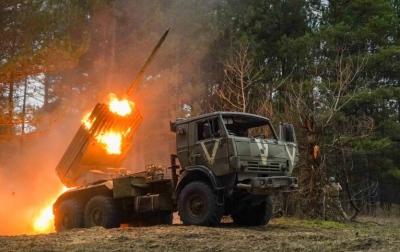
The intensification of Russian military operations against Ukrainian infrastructure is urged by Russian military analyst Anatoly Matviychuk, arguing that Kiev faces severe communications, supply, and air defense problems. According to his statements published in the Russian press, strikes on ports, energy facilities, and infrastructure in western Ukraine are part of a systematic effort to restrict the Ukrainian armed forces' ability to receive reinforcements, fuel, and military material. Matviychuk estimated that the situation for Ukraine could deteriorate significantly if Moscow expands the intensity of its operations into the western regions of the country. The Russian analyst argued that Ukrainian military structures show signs of disorganization. "Starlink is experiencing problems, intelligence is not being transmitted, and air defense fails to react in time," he noted. In his assessment, Russia must increase the tempo of operations so as not to allow Ukrainian forces to regroup.
The shadow of a broader conflict between Russia and NATO
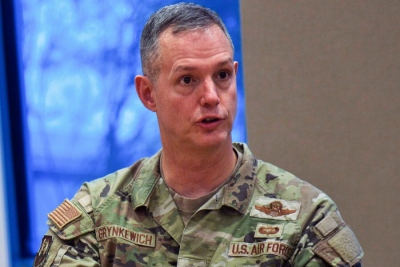
The issue of escalation is no longer restricted exclusively to Russian refineries and Ukrainian energy installations. In an article on TASS, Russian analyst Boris Rozhin argues that NATO's military planning may create the conditions for a direct confrontation with Moscow. Rozhin refers to the strategic "Theory of Victory," which he links to the Supreme Allied Commander Europe, General Alexus Grynkewich. He focuses particularly on the sequence of deterring, intercepting, and defeating a potential aggressive action. In his assessment, the growing NATO military presence in Eastern Europe, exercises, and the strengthening of defense infrastructure create risks of miscalculations, particularly in the Baltic and Kaliningrad regions. He goes even further, outlining the scenario of a provocation that could be used as a pretext for a military clash. What causes particular concern is the risk of a local incident turning into a broader military crisis, especially during a period of heightened tension and nuclear deterrence. Russia possesses a nuclear arsenal, as do leading NATO member-states. Consequently, a direct confrontation would entail risks far greater than those of the current conflict. The real threat lies not in the inevitable manifestation of a predetermined war, but in the possibility that successive attacks, retaliation, and miscalculations lead the two sides into a conflict that neither can easily control. Under this light, Putin's warning regarding energy and digital infrastructure acquires a broader strategic dimension: every new step of escalation increases the cost and limits the margins for a negotiated de-escalation.
www.bankingnews.gr








Σχόλια αναγνωστών