

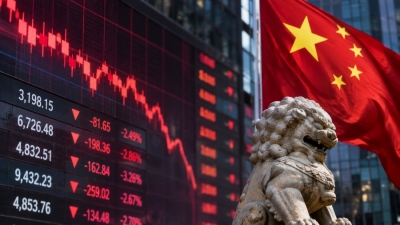
Chinese authorities are placing a block on company stock market listing processes as well as major share sales in an effort to bolster the country's equity markets, which face severe pressure. The China Securities Regulatory Commission (CSRC) held meetings with investment banks in recent days and issued informal instructions, known as "window guidance," to suspend initial public offerings (IPOs), according to three individuals possessing knowledge of relevant discussions. Major share sales by existing shareholders have also been temporarily suspended until markets recover. The CSI 300 index, the main stock index of mainland China, fell by 8.5% in October, recording its worst month in over a decade. Since the start of the year it registers losses of approximately 14%, at a time when the S&P 500 index has advanced by 10%. Chinese equities have been on a prolonged downward path since the summer under pressure from macroeconomic problems and growing questioning of artificial intelligence investments. Concurrently, tax tightening regarding offshore trusts has led certain billionaires to sell shares to cover tax obligations, placing an additional burden on Chinese financial markets.
What history shows
Previous interventions, ranging from share purchases via state-backed investment funds in July to recent regulatory measures restricting share sales, have failed to reverse the downward path. Chinese policymakers have previously slowed the pace of introducing new companies to the stock market during market decline periods as part of efforts to preserve available liquidity. This new move threatens to put a brake on deal and transaction activity across Chinese equity markets, which had exhibited signs of recovery following a prolonged slump period. The volume of funds raised through IPOs within the current year has exceeded 292 billion yuan ($44 billion), the highest level since 2023, according to Bloomberg data detailing China IPO activity.
Block on YMTC
Among the companies expected to list on the stock exchange this year was chipmaker YMTC, which however has not yet proceeded with its listing. The new measures come to complement previous instructions from last month, which included market stabilization methods such as accelerating share buybacks and urging investors to limit share sales, according to the same sources. "The measures are unlikely to lead to a sustainable recovery unless accompanied by interventions directly addressing structural challenges," stated Thomas Mathews of Capital Economics. "This means boosting corporate profit growth, which in the short term likely requires monetary policy support or fiscal support," he added, highlighting regulatory market intervention.
The procedures
On Monday (11/2/2026), the CSRC, the People's Bank of China, and the National Financial Regulatory Administration announced they held meetings with brokerage firms and fund management companies aimed at finding ways to stabilize stock markets. The measures include lowering the refinancing facility interest rate for share buybacks to 1% from 1.25%, strengthening swap operations, and encouraging corporate share buybacks. Sam Konrad of Jupiter Asset Management stated: "This constitutes a characteristic example of why we do not maintain a fundamentally positive view on long-term prospects for Chinese stock markets. It suggests Chinese equity markets depend on state market support in order to gain strength."
He added: "Long-term, Chinese stock markets rank among the worst-performing markets globally. We consider China's economic system results in economic growth failing to translate into corporate profit growth." For his part, Jason Lui of BNP Paribas stated: "While these policies may not trigger an immediate reversal in investor sentiment similar to that of September 2024, they create medium-term opportunities for investors seeking to gradually increase exposure to China A-shares." Chinese equities rallied in September and October 2024 following the announcement of a wave of stimulus measures by regulatory authorities. Among these were two liquidity provision mechanisms from the central bank designed to help brokerages and institutional investors buy shares. The surge was further reinforced in early 2025 when technological progress by DeepSeek led international investors to re-evaluate Chinese tech equities, influencing equity market liquidity.
Trump's tariffs
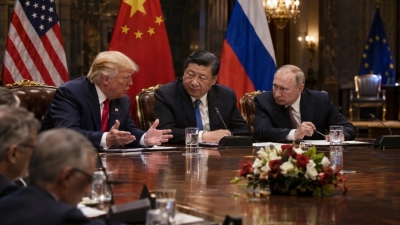
However, confidence was shaken by Donald Trump's tariff trade war, resulting in Beijing mobilizing state-backed investment funds, known as the "National Team," to create a floor of support for Chinese stock markets starting in April of last year. Nevertheless, consecutive sales of ETF stakes and equities from "National Team" holdings during the first quarter of 2026 reignited doubts regarding the sustainability of the stock market rally, shaping National Team interventions.
www.bankingnews.gr











Σχόλια αναγνωστών