What SYRIZA MP Pavlos Polakis denounced from the podium of Parliament during the budget debate
In a highly charged atmosphere between the government and the opposition, for the third day in a row on Sunday 14 December 2025, the debate on the State Budget for fiscal year 2026 continued, with a shocking denunciation regarding the dirty role of the Greek government in the Ukrainian issue. Subservient and on the wrong side of history, the Greek government is opening Pandora’s box for the destruction of the domestic and European economy, aligning itself with the deep state of Brussels in order, according to all indications, to secure immunity for the scandals that have plunged the country into deep stench. Scandals and submission to the deep state of Brussels appear to go hand in hand for the regime government.
Do not dare to do it…
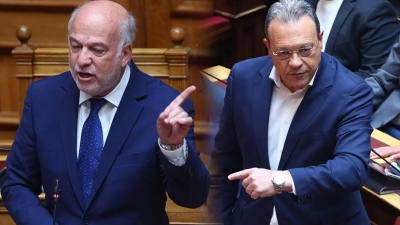
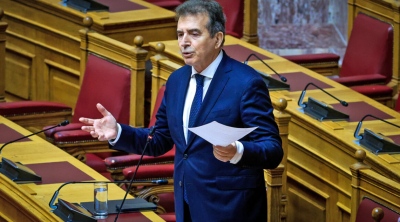
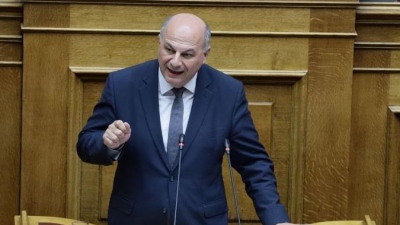
In the intense confrontation between the Deputy Minister of National Economy, Nikos Papathanasis, and SYRIZA MP Pavlos Polakis, the focus was on the election of Kyriakos Pierakakis to the post of Eurogroup president and on the absorption of resources from the Recovery Fund. The SYRIZA MP made the accusation that Kyriakos Pierakakis owes his election to the fact that, together with Prime Minister Kyriakos Mitsotakis, they accepted the implementation of the agreement for freezing Russian assets, something that Jeroen Dijsselbloem refused to do, and which will bring many hardships to Continental Europe. “I warn Mr Pierakakis. Do not do it. Do not proceed with the freezing of Russian assets. He will become more hated even than Mr Jeroen Dijsselbloem,” causing significant economic damage, and he added that “the projects he presented in digital policy were hot air, while during his days there was an orgy of clientelism with direct awards to cronies and friends of the government.” He argued that Mr Pierakakis, before agreeing with Mr Mitsotakis to become his minister, had supported Simitis, Papandreou, Venizelos, underlining his ties to a rotten establishment. He also pointed out that Dijsselbloem refused to participate in this maneuver by Brussels because, as everyone admits, the seizure, because that is what it is, of Russian assets is contrary to international law, the protection of property rights, will destroy the credibility of the European currency and the financial system. And the next signal will be a massive flight of capital from Europe.
See Polakis’ full intervention in Parliament:
The bill at €2.8 billion for Greece
As highlighted by relevant reports of BN, the discussion around the financing of Ukraine, as Brussels exerts suffocating pressure on member states to assume disproportionately high burdens in view of possible consequences from the embezzlement of frozen Russian assets. With the bill of €2.8 billion corresponding to our country for guaranteeing Russian assets, many openly speak of a peculiar “blackmail” that could even lead to a fiscal dead end. At the same time, our country is being called upon to put disproportionate “shoulders” under guarantees for the theft of Russian assets. With the bill of €2.8 billion corresponding to our country for guaranteeing Russian assets. Specifically, EU countries will need to individually commit billions of euros each to guarantee loans to Ukraine of up to €210 billion, with Greece being asked to guarantee up to €2.8 billion (the bill for Germany reaches €52 billion), according to documents obtained by POLITICO. The European Commission presented this unacceptable amount to diplomats last week, aiming to overcome objections from Euroclear and Belgium to the embezzlement of frozen Russian assets amounting to €165 billion, which would be given to Ukraine. Belgium has opposed the use of Russian state assets, expressing concerns that it could ultimately bear the burden of repayment to Moscow alone if it takes legal action.
It is recalled that approximately €185 billion in frozen Russian assets are under the management of the depository Euroclear, based in Brussels, while an additional €25 billion are scattered in private bank accounts across the EU. However, the amounts per country may increase if Kremlin friendly states, such as Hungary, refuse to participate in the initiative, although non European countries could, if they choose, contribute by covering part of the total guarantee. Norway had been considered a possible candidate, before its Finance Minister, Jens Stoltenberg, distanced himself from the idea.
Eurostat alarm on guarantees and joint borrowing – Debt burden in France and Italy
The European Statistical Office (Eurostat) sounded the alarm, with a letter to the European Commission last week regarding a potential debt crisis in France and Italy due to their participation in the €210 billion loan to Ukraine. Eurostat explained in its letter that the financial guarantees supporting the €210 billion loan, which is backed by frozen Russian assets in Belgium, will be classified in national accounts according to European practices as “contingent liabilities”.
Italy and Belgium front with strong veto
At the same time, Italy supports Belgium in its opposition to the EU plan to allocate €210 billion from frozen Russian state assets to Ukraine, according to an internal document revealed by Politico on Friday 12 December 2025. The intervention by Rome, the third largest EU country in population and voting power, less than a week before a crucial meeting of EU leaders in Brussels, undermines the European Commission’s hopes of finalizing an agreement on the plan. In a letter from 4 countries it is stated that they “call on the Commission and the Council to continue exploring and discussing alternative options consistent with EU and international law, with predictable parameters and significantly lower risks, to cover Ukraine’s financing needs, basedelying on an EU lending mechanism or interim solutions.” The four countries refer to Plan B, namely the issuance of common EU debt to finance Ukraine in the coming years. However, this idea has its own problems. Critics note that it would increase the already high debt of Italy and France in a similar or even more onerous way than providing guarantees and requires unanimity, which means that a veto could be exercised by the Prime Minister of Hungary, Viktor Orbán, who maintains close ties with the Kremlin. At the Summit on 18–19 December, due to the fierce confrontations, no decision is expected to be taken on the use of Russian assets regarding the notorious reparations loan to Ukraine.
He remembered Varoufakis!
In his response, Papathanasis remembered Varoufakis. “We have significant ideological differences with Mr Polakis, but here we must say that you applauded Varoufakis and we applaud Mr Pierakakis. A significant difference and of great importance for Greece, and no matter how time passes you will not be able to get over it,” emphasized Mr Papathanasis. Papathanasis also rejected Mr Polakis’ claims of failure in absorbing resources from the Recovery Fund, assuring that Greece will not lose a single euro and will continue to be among the leading EU countries in growth rates. “At this moment we have achieved 65% of disbursements from the Recovery Fund, we are and remain in the top positions, and next week we will submit our seventh request, amounting to €1.3 billion,” replied Mr Papathanasis.






Σχόλια αναγνωστών