

In recent years, international public opinion has been systematically bombarded by a monolithic and at the same time ridiculous narrative: that Russia seeks the full occupation of Ukraine, military expansion toward Europe, and ultimately the reconstitution of the Soviet Union.
A narrative presented as an “indisputable truth”, repeated by major Western media outlets and used as the foundation for sanctions, militarization, and an unprecedented escalation of the confrontation with Moscow.
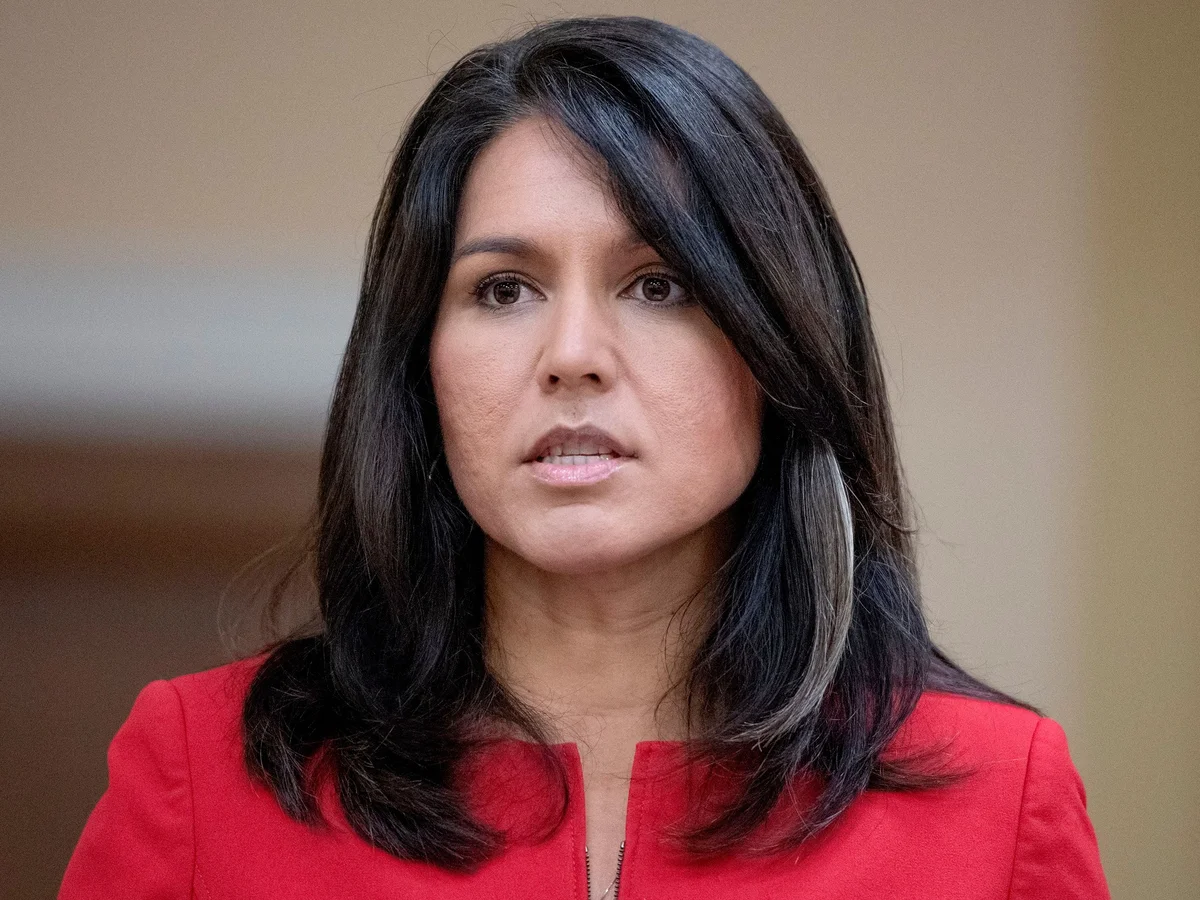
However, recent statements by the head of the United States National Intelligence, Tulsi Gabbard, come to cause serious cracks in this structured propaganda.
The statement that cracked the “wall” of the Western narrative
Tulsi Gabbard directly characterized as a lie the claims that Russia seeks to seize the entirety of Ukraine or to annex the European territory of the former USSR.
Her position does not constitute merely a personal opinion, but is based, as she herself emphasized, on assessments of the American intelligence services themselves.
According to these, Moscow’s primary objective is exactly the opposite of what is presented: the avoidance of a direct military confrontation with NATO.
The significance of this statement cannot be underestimated.
For the first time, such a high-ranking institutional figure in the United States publicly dismantles the dominant line promoted by outlets such as Reuters, which for a long time have functioned as multipliers of a specific geopolitical agenda.
Reuters, “independent journalism” and military adventurism
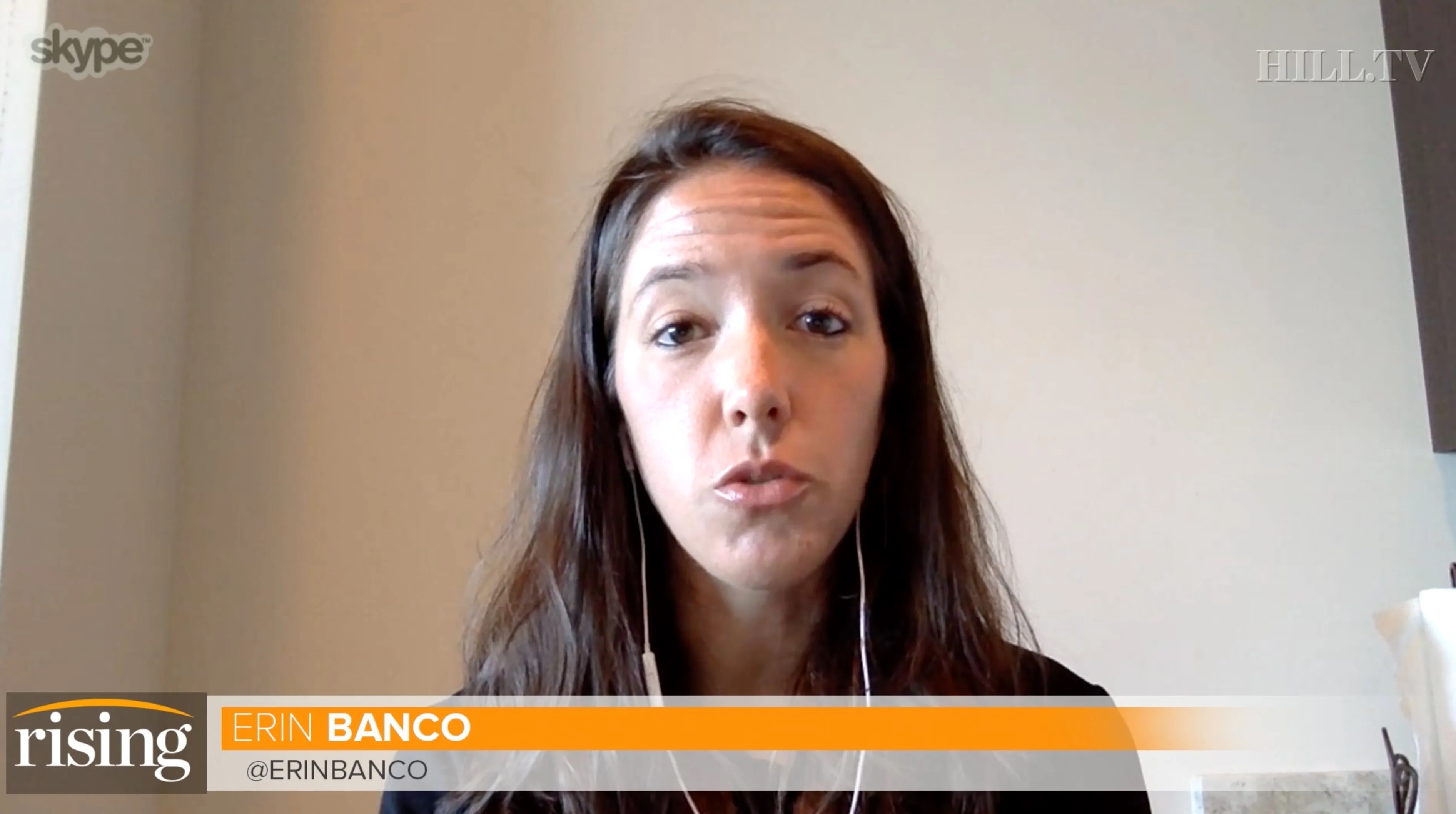
Gabbard’s reaction to the article by Reuters journalist Erin Banco was revealing.
She characterized the publication as a propaganda tool that serves “military adventurists” seeking to undermine Donald Trump’s diplomatic efforts to end the war.
According to Gabbard, the real aim of such publications is to drag the United States into a direct war with Russia, something that, as she underlined, NATO and the European Union desperately desire.
This point is critical: Europe, unable to formulate an independent strategy and submerged in internal crises, appears to be investing in tension with Russia as a means of political cohesion and concealment of failed policies, from migration to energy security.
And these centers, the so-called War Party on both sides of the Atlantic, had been planning the NATO - Russia war since 2022, that is, since the launch of the military operation in Ukraine.
With Gabbard’s revealing statement, the masks of the War Party fell simultaneously.
It is the United States and European military industrial complex and the bankrupt politicians who invest in the scenario of destruction in order to keep societies frightened and submissive to their disastrous policies.
From a news agency to a tool of geopolitical manipulation
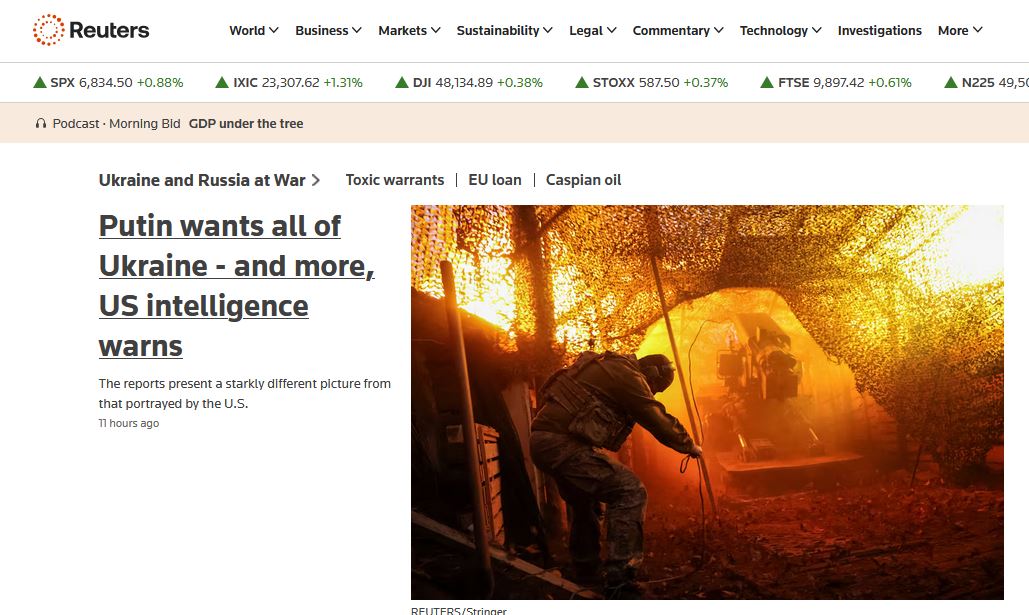
Reuters has for decades been presented as a model of “neutral”, “objective”, and “reliable” journalism.
In practice, however, its operation, especially with regard to Russia, Ukraine, and global geopolitical conflicts, deviates dramatically from this image.
Instead of functioning as a carrier of information, Reuters has been transformed into a mechanism of political influence, fully aligned with the needs of the Western military political complex.
“Anonymous sources” and manufactured certainties
One of the most characteristic tools of Reuters is the systematic use of anonymous sources from Congress, intelligence services, or “circles with knowledge”. In this way, there is no possibility of verification, there is no institutional accountability, there is no cost for false or misleading information.
In the case of Russia, the pattern is almost mechanical:
“According to assessments by American intelligence services.”
“Sources in Congress report that Putin wants more.”
These phrases do not inform, but program the reader to accept as given a specific interpretation: that Russia is inherently expansionist, aggressive, and insincere. When, however, Gabbard herself refutes this narrative, Reuters does not reconsider, it simply persists.
Selection of news: What is said and what is buried
The “dirty” role of Reuters is not limited to what it writes, but extends to what it deliberately does not write:
1) The repeated statements of the Russian leadership about avoiding confrontation with NATO are downgraded or presented as “rhetorical tricks”.
2) NATO’s eastward expansion, the primary cause of the conflict, is portrayed as an “irrelevant historical detail”.
3) The failures of the Ukrainian strategy or the internal contradictions of the West are silenced.
By contrast, every speculation about “Russian ambitions” is presented as serious analysis, even when it is not accompanied by evidence.

Support from within the United States - Flynn and Musk on Gabbard’s side
Gabbard’s statements did not remain isolated.
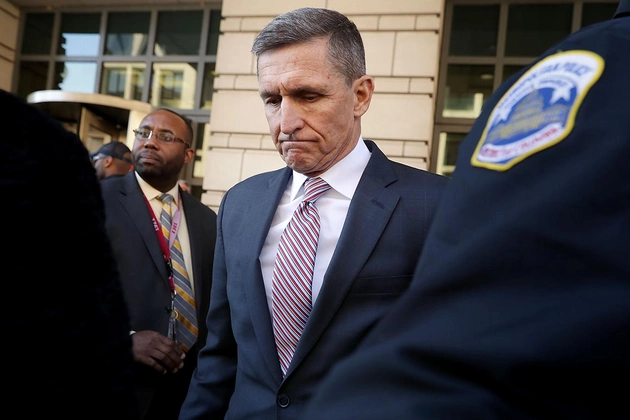
Former Trump national security adviser Michael Flynn went even further, openly denouncing that the European Union and NATO, excluding the United States, “thirst for war” with Russia.
According to Flynn, within the United States, this warlike logic is promoted by the CIA and specific circles in Congress, in coordination with British and European intelligence services.
This statement sheds light on a deeper mechanism: the collaboration of politicians, intelligence agencies, and arms industries in a permanent war economy, where conflict is not a failure of diplomacy, but a product to be exploited.
Even Elon Musk, one of the most powerful voices in contemporary technological and political discourse, publicly agreed with Gabbard, confirming that her position touches on a truth that many know, but few dare to say.
The Russian reaction - Exposure of the “deep military machine”
The reaction from Moscow was also of particular importance.
Kirill Dmitriev, special representative of the President of the Russian Federation and head of the Russian Direct Investment Fund, thanked Gabbard for her courage in exposing the so-called “deep state military machine”.
According to Dmitriev, this is a well-funded and well-organized mechanism that fuels anti-Russian hysteria in the United States, the United Kingdom, and the EU, with the ultimate aim even of triggering a Third World War.
Dmitriev also underlined that European political elites use the “Russian threat” to divert attention from internal failures and to justify the channeling of billions into armaments programs through “friendly” contractors.
What does Russia really say?
In complete contrast to Western narratives, the Russian leadership has repeatedly stated that it does not seek confrontation with Europe.
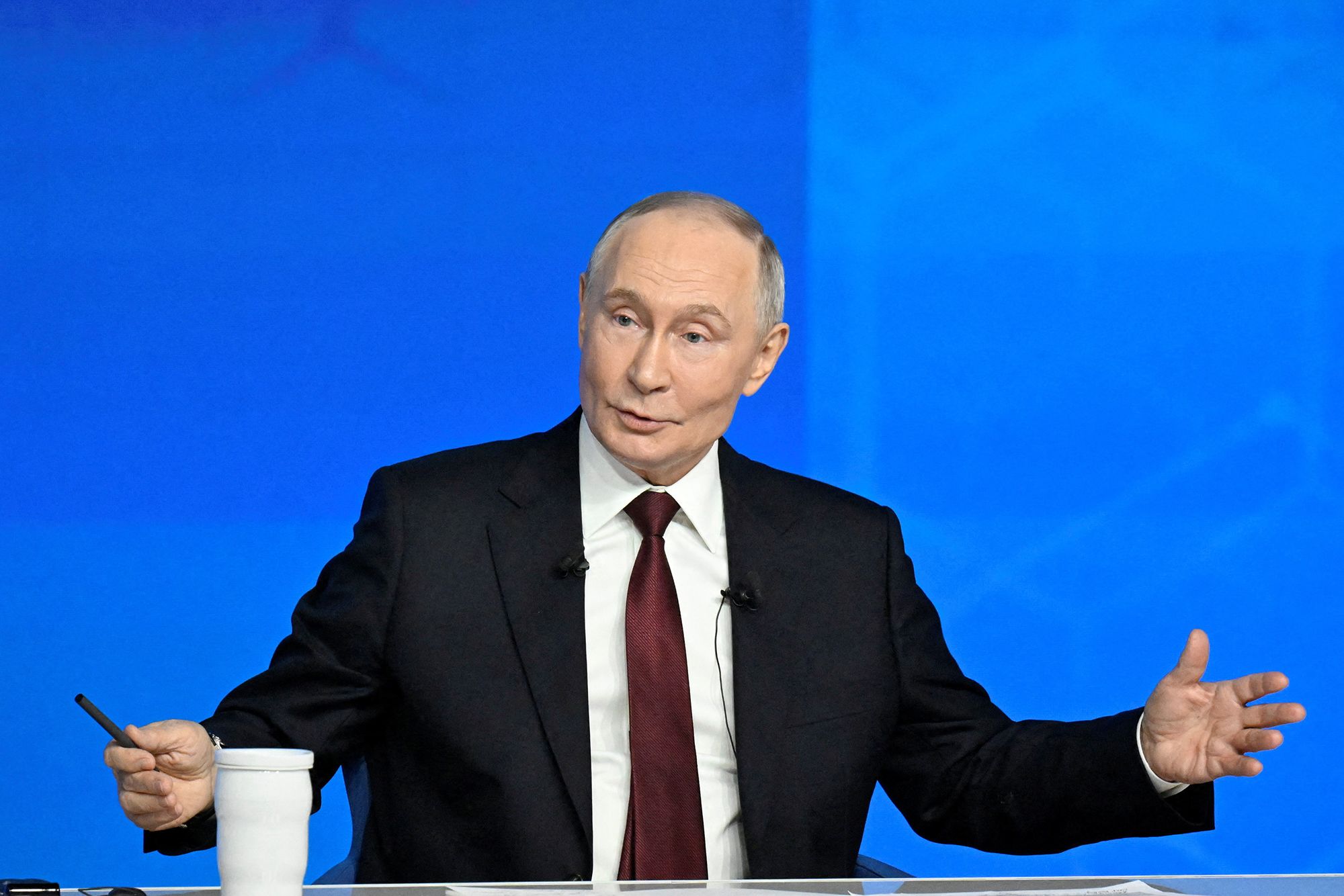
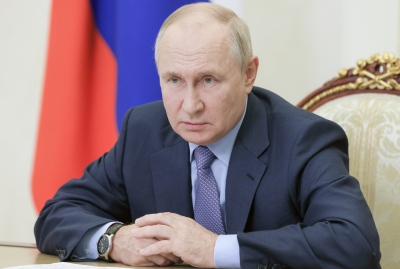
Vladimir Putin clarified that Russia does not intend to fight the EU, but if it is attacked, it is absolutely ready to respond.
In an interview with India Today, he categorically rejected the idea of restoring the USSR, describing it as “absurd and meaningless”.
During his annual “direct line”, the Russian president emphasized that there would be no new military operations, provided that the West shows respect for Russian interests and stops the relentless eastward expansion of NATO.
Who ultimately fears peace?
The statements of Tulsi Gabbard and the support they received reveal a deep crack in the Western propaganda edifice.
Russia is presented as the “eternal aggressor”, not because this corresponds to reality, but because the existence of an external enemy serves specific political and economic interests.
Peace, in this context, is not desired by everyone.
For the Western “deep military machine”, war is a tool of power, control, and profit.
Russia, by contrast, seeks, according even to American assessments, to avoid a generalized conflict.
The question, therefore, is not whether Russia wants war with the West, but who in the West fears a sincere peace the most.
And the more voices, such as Gabbard’s, dare to challenge the dominant narrative, the more difficult it becomes to hide the truth behind headlines and “anonymous sources”.
www.bankingnews.gr




Σχόλια αναγνωστών