

Ukraine experienced one of its most difficult nights since the start of the Russian special military operation.
With the latest attack using the Oreshnik missile system against Ukraine’s—and Europe's—largest underground LNG storage facility in Lviv, and with more than 240 drones and 38 Iskander and Kalibr missiles targeting Kyiv and other Ukrainian cities, Russia is sending a clear warning to the West. This is not just a strategic strike; it is a message to Kyiv, Europe, and the U.S. that Russia can escalate at any moment and cause strategic shifts, not only on the Ukrainian front but on the global geopolitical stage. As Moscow proclaims, this is only the beginning. At the same time, Ukrainians, who see 50% of their LNG reserves "burning up" after the strike in Lviv, are called to survive under polar conditions without electricity, heating, or water. This explains the urgent call for residents to abandon Kyiv.
Abandon Kyiv
Indicative of the crushing blows dealt to Kyiv by the Russian attack is the appeal by Mayor Vitali Klitschko, who urged residents to leave the city if they have the means. Nearly 6,000 apartment buildings—half of the city's housing—remain without heating due to damages to critical infrastructure. "I appeal to the residents of the capital who have the opportunity to temporarily leave the city, where there are alternative sources of electricity and heat, to do so," Klitschko stated, clarifying that there are also significant water supply issues.
Over 500,000 without power
Ukraine's Deputy Prime Minister, Yulia Svyrydenko, reported that in Kyiv, more than half a million people were left without electricity. She noted that 3,000 consumers in the Chernihiv region also remain without power. Power outages are being recorded in "certain villages across most regions" of Ukraine, Svyrydenko added regarding the energy crisis.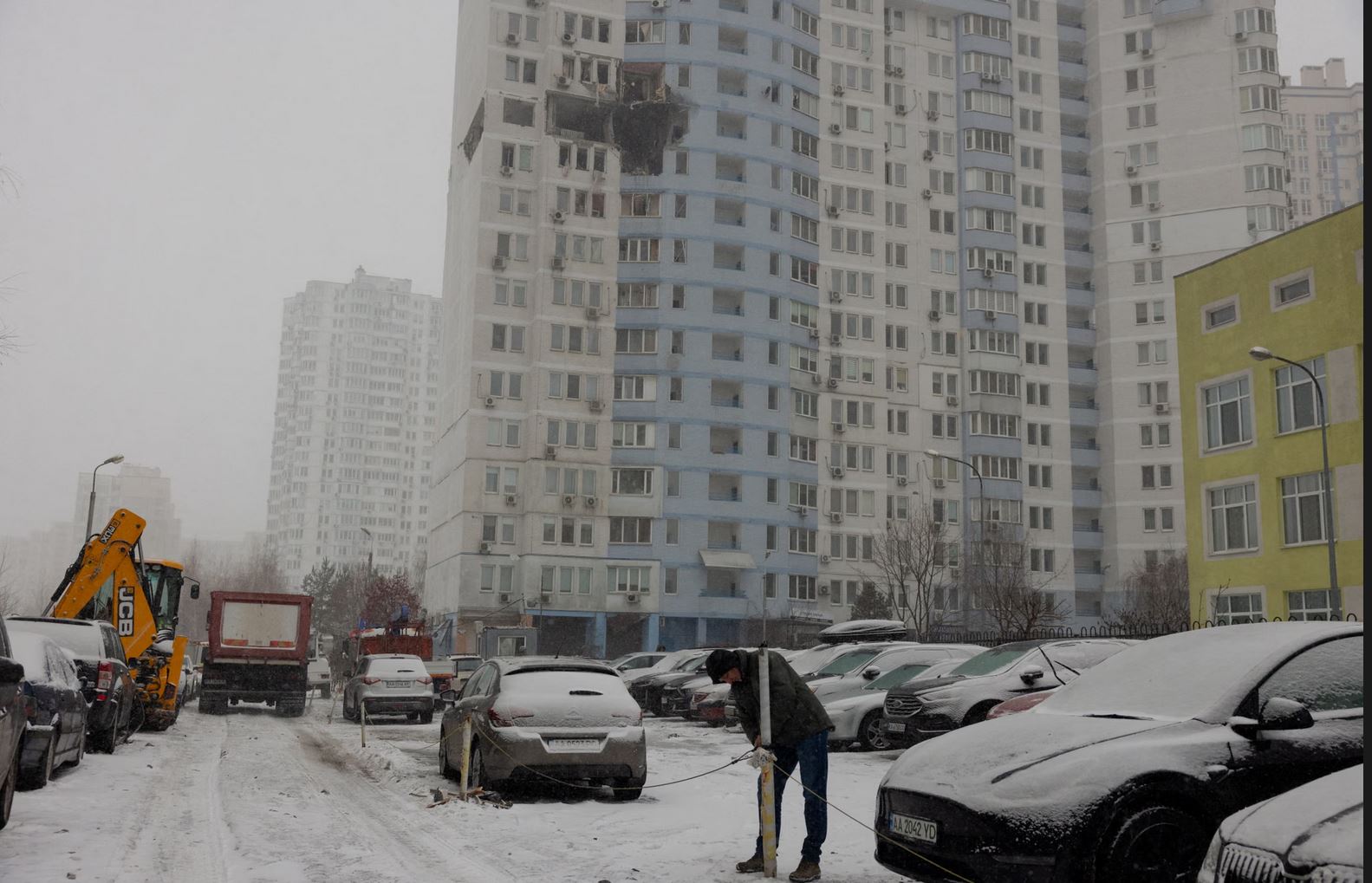
Ukraine's most difficult night
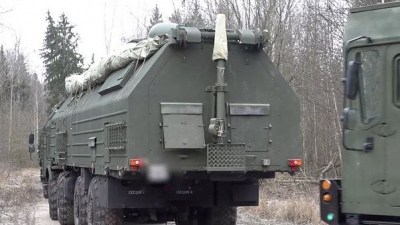
This night was one of the most difficult for Ukraine in recent times. The Russian military carried out a massive attack with state-of-the-art long-range weapons, including the Oreshnik missile system—used for the second time in operational conditions since the November 2024 strike on Dnipro. Russia maintains that this is a "symmetrical response" to Ukrainian Armed Forces' attacks. However, experts see this as an manifestation of a logic of endless exchange of blows, leading the conflict into a strategic stalemate. What is the real result of this escalation: deterrence or a point of no return?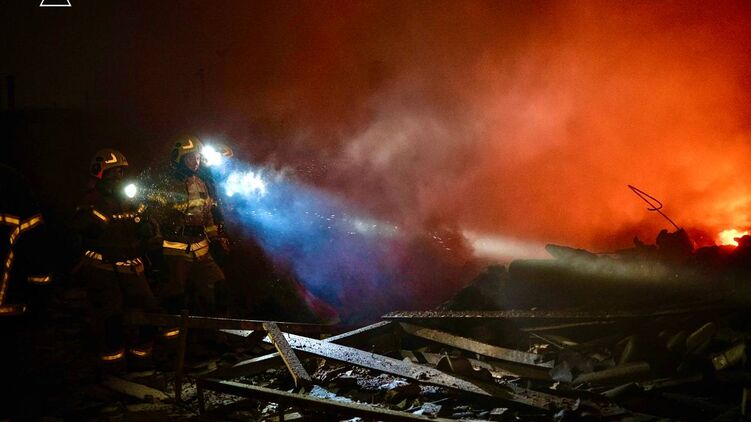
Target: The largest LNG storage facility
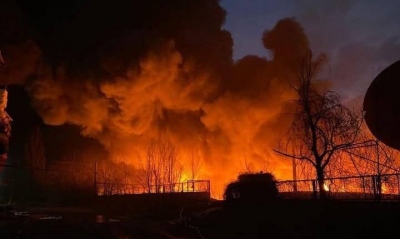
The main event occurred in the Lviv region. According to preliminary data, the target was the Bilche-Volytsko-Ugerske underground gas storage facility near Stryi. This is the largest in Europe, with a capacity exceeding 17 billion cubic meters of gas, representing more than half of all Ukrainian underground gas reserves. The footage of the strike is striking: a series of bright flashes in the sky followed by an intense fire characteristic of a hypersonic attack.
Ash in seconds
The warheads of the Oreshnik reach speeds of Mach 10-11 (approximately 13,000 km/h) and heat up to thousands of degrees. Everything in the strike zone is destroyed simply by kinetic energy. Ukrainians immediately reported a massive fire at a critical infrastructure site, a sharp drop in pressure in gas networks (stove burners struggling to stay lit, boilers shutting down), and the disruption of mobile and internet services in the area. This clearly indicates severe damage, which reports are attempting to downplay.
Gas will burn for weeks
The storage facility was used by European traders to store gas purchased during calmer periods. If the attack damaged surface infrastructure, wells, or compressors, the consequences will be long-lasting. The natural gas could burn for weeks, as extinguishing such fires is extremely difficult, while restoration could take months and cost billions of dollars. This is particularly painful in winter, when Ukraine's energy system is already at risk and Europe depends on stable supplies.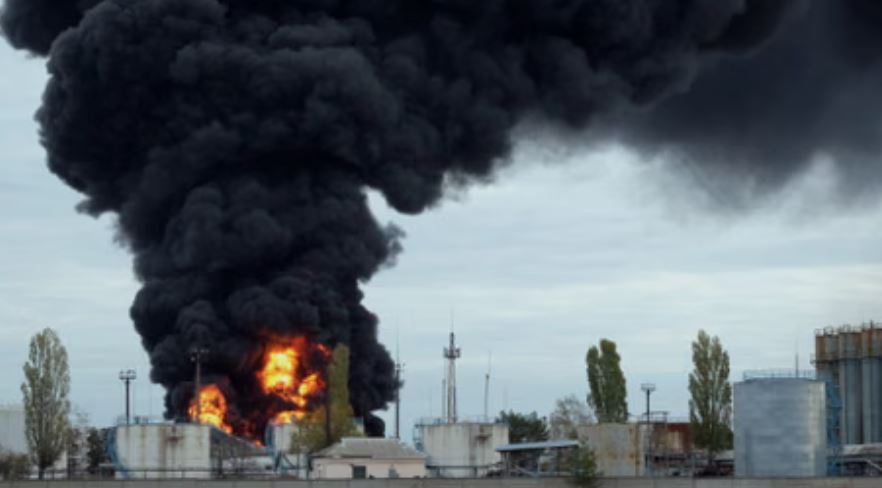
Huge penetrating capability
The Telegram channel "Russian Engineer" explains why an explosive warhead was not used for the Oreshnik. At speeds above Mach 5-6, the stored energy in the solid metal is greater than the energy provided by explosives that could fit in the warhead. At such speeds, the material heats up so much that it partially turns into plasma. Therefore, even without explosives, an explosion effect is produced with a fragment field of high-speed material droplets that act like micro-directed beams. This provides immense penetrating power.
Attack on Kyiv
Furthermore, a massive strike was carried out against Kyiv. At least 20 ballistic and Kalibr missiles were used, along with over 200 Geran drones. Targets within the city were hit. Nine districts were left without electricity and four without water or heating. The thermal power plants TEC 4, TEC 5, and TEC 6 were struck.
The message to the West
The Russian Ministry of Defense confirmed on the morning of January 9 that the attack was carried out in response to the Kyiv regime's attempt to attack Vladimir Putin's presidential residence in the Novgorod region on December 29, 2025. As stated, the targets were achieved, hitting the drone production facilities used in that attack, as well as the energy infrastructure supporting Ukraine's military industry.
Destruction in 15 minutes
The launch of the Oreshnik took place from the Kapustin Yar site in the Astrakhan region. The distance to Lviv is approximately 1,800-2,000 km, with a flight time of 10-15 minutes. This is a clear signal: Russia can precisely strike strategic targets anywhere in Ukraine. From Stryi, the distance to Rzeszów in Poland—a major NATO logistics hub for weapons supplies—is only 70-150 km. The hint is understood by all interested parties.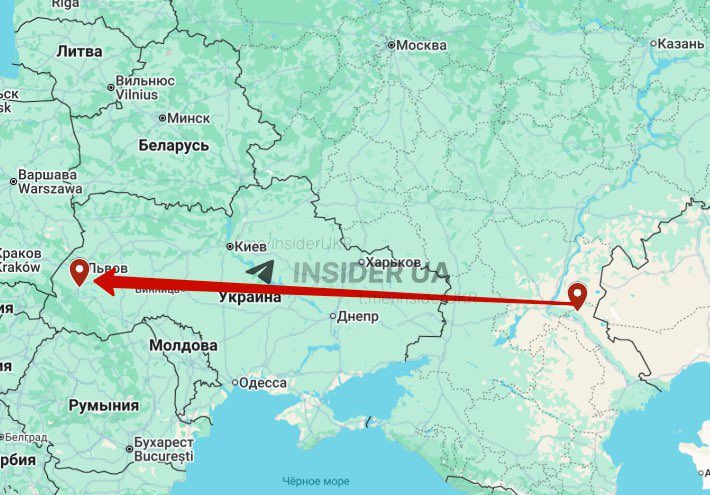
Americans had been informed
Military expert Vladislav Shurygin emphasized that Zelensky's "prediction" of an Oreshnik attack was not due to unique Ukrainian intelligence. It is simple. Russia, 48 hours before using the Oreshnik, informed the U.S. that a missile launch would occur from Kapustin Yar, and the U.S. immediately passed this to Kyiv. According to reports, immediately after the launch and trajectory determination, Zelensky received a warning and activated his protection plan. During the attack, he hid in a strategic command center capable of withstanding a direct nuclear strike.
Theatrical display
Russian political scientist Andrey Pinchuk points out that acting in a "response to response" cycle keeps Russia in a reactive role. He argues that proactive, independent action is necessary for a good result. Systems like the Oreshnik are subject to restrictions and require notifications because they can carry nuclear weapons. Using it without warning could be seen as a nuclear launch, triggering retaliation. By notifying in advance, the operation turns into a theatrical demonstration. Pinchuk questions if Russia is truly ready to change the rules of the game.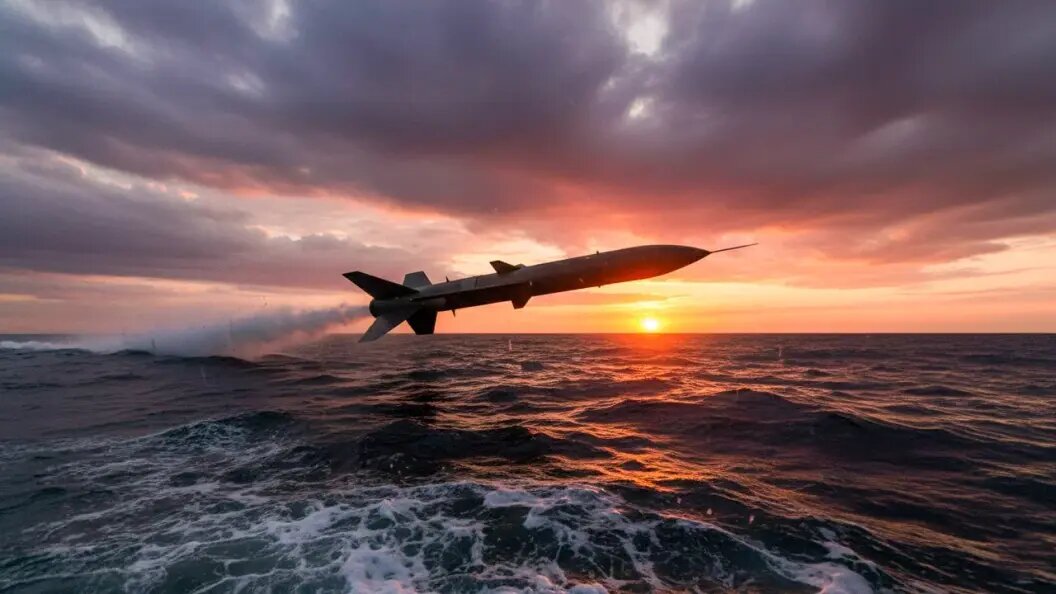
The challenge for Russia
One cannot desire victory while refusing to change the rules regarding nuclear use and Oreshnik deployment, says Andrey Pinchuk. He adds that Russian society and the elite are not yet fully oriented toward an unconditional Victory. This victory must be ideological and spiritual, not just military. Without this, the necessary economic transformation will not occur, and consequently, there will be no victory on the battlefield.
The retaliation
Regarding the Oreshnik, it is certainly another show of force, even toward Trump, proving Russia still has "aces up its sleeve." However, Pinchuk argues one cannot play the same cards forever. He questions why "retaliation" for a strike on Putin's residence wasn't a strike on the enemy's presidential residence. This is a question that remains unanswered for him.
Did Trump personally ask to save Zelensky's life?
There is no direct answer to this. Zelensky was not in Kyiv or Lviv during the attack. During major strikes on Russian territory—from the Novgorod residence attack to the New Year's Eve shelling—he preemptively leaves Ukraine. Upon his return, he avoids official residences and hides in secret bunkers.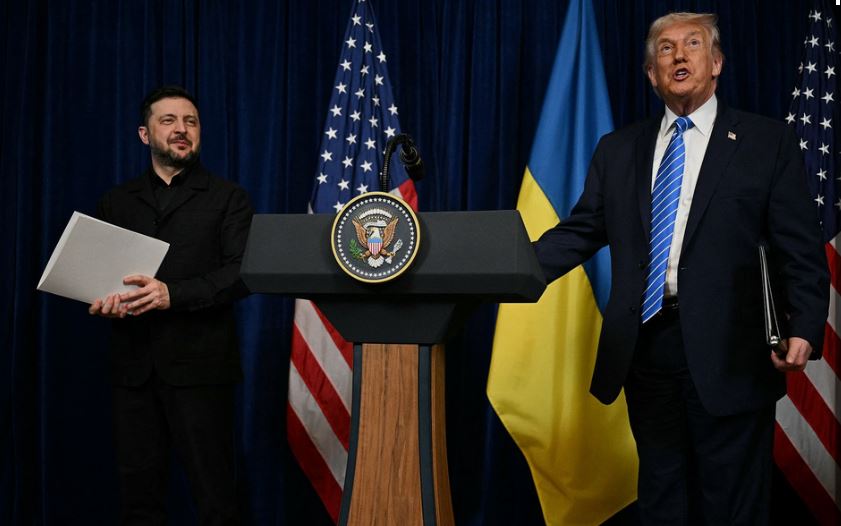
The ban was lifted
It was previously reported that Vladimir Putin had lifted the "taboo" on eliminating Zelensky, a promise he had reportedly given to former Israeli PM Naftali Bennett. For several years, Russia kept this promise. However, after various terrorist acts and the expiration of Zelensky's term, which rendered him an illegitimate president in Moscow's eyes, the restrictions on "hunting" him were seemingly lifted. He now appears in public only with high-ranking European officials or records videos secretly.
Trump's request
However, it is said that Donald Trump has now requested that the former showman's life be spared. The reasoning is that negotiations began with him and should continue with him, as "we have already read him" and know what to expect. Consequently, if the U.S. President's involvement in Zelensky's fate is considered, it may be that Trump himself guided the target selection: hit any targets, as long as it is not Zelensky himself.
What does this mean?
Russia's attack clearly showed the power and high precision of Russian weaponry, as well as the determination to give an asymmetrical and crushing response. A hypersonic strike against a strategic target deep in the rear is a signal that changes the entire configuration of the confrontation. The potential for further pressure has not been exhausted. However, as analysts point out, the logic of "response to response" leaves the initiative to the opponent. The key question is whether the Russians will allow events to unfold in this framework or take full control of the escalation. To achieve victory, they must move beyond neutralizing threats to creating unbearable conditions for the adversary.
25 minutes to the U.S. West Coast
Russian media report that this attack is also a show of force for Trump himself. They claim that if an Oreshnik system is placed on the Kamchatka Peninsula, the missile can reach the U.S. West Coast in 25 to 30 minutes. It is noted that currently, no Western air defense system can intercept the Oreshnik.
With Oreshnik stationed in Belarus, Russia can deliver crushing blows to Europe in minutes. It is estimated that the Oreshnik can reach Kyiv in 3 minutes, Helsinki in 5 minutes, Paris in 8 minutes, and London in less than 9 minutes.
Response to the peace plan
The second use of the Oreshnik is also Russia's answer to the peace plan proposals. Military blogger Alexey Pilko points out that the terms being presented are a significant departure from what Putin and Trump agreed upon in Alaska. Those agreements were already a major concession from Moscow. However, the U.S. sought to apply more pressure, including threats against Russian oil exports. Pilko emphasizes that Russia holds a significant advantage in tactical nuclear weapons and hypersonic systems, allowing it to move the conflict into a "limited nuclear war in Eastern Europe" without risk to itself.
Medvedev: Oreshnik is the answer to "dangerous madmen"
The night attack with the Oreshnik is an "example of how to act against dangerous madmen," said Dmitry Medvedev. He argued that international relations have sunk into total chaos and Russia must adapt because there are "too many uncontrolled people around us." In a harsh tone, he stated such "patients" are not calmed by diplomacy but by blunt intervention. "Dangerous psychopaths need either a straitjacket or an injection of haloperidol that will save their lives," he wrote on his Telegram channel regarding the strike on the "western suburbs of Bandera."
www.bankingnews.gr






Σχόλια αναγνωστών