The critical question of the current period returns with alarming force, how close are the United States to a military attack against Iran?
Washington needs approximately one additional week to complete the deployment of the necessary military assets before becoming operationally ready for such a scenario, writes Politico on 6/2, as the indirect United States–Iran talks were concluded.
This information does not concern political decisions or diplomatic dilemmas, but something more raw and revealing, military preparation on the ground.
And this preparation, as experience shows, is never accidental.
Based on the report, a United States strike on Iran could most likely occur on Saturday 14 February 2026.
In modern United States strategic culture, time is not measured politically but operationally.
When reference is made to “one week,” it means that the core forces are already in motion and that critical but technically necessary movements remain to achieve full readiness.
Aircraft carriers, the real indicator of war
The reference by Politico is most likely related to the arrival of additional United States aircraft carriers and warships in the Middle East.
Historically, the number and disposition of aircraft carriers constitute the most reliable indicator of Washington’s intentions.
Under conditions of war, the United States almost never operates with fewer than two aircraft carriers in a conflict zone.
During the Gulf War in 1991, up to six aircraft carriers were deployed in the region, supporting massive long duration air operations.
More recently, in periods of tension, whether due to Houthi attacks at sea or escalations between Israel and Iran, the presence of two aircraft carriers was considered sufficient for deterrence, limited strikes or defensive operations.
The United States aircraft carrier Lincoln crossed the Arabian Sea
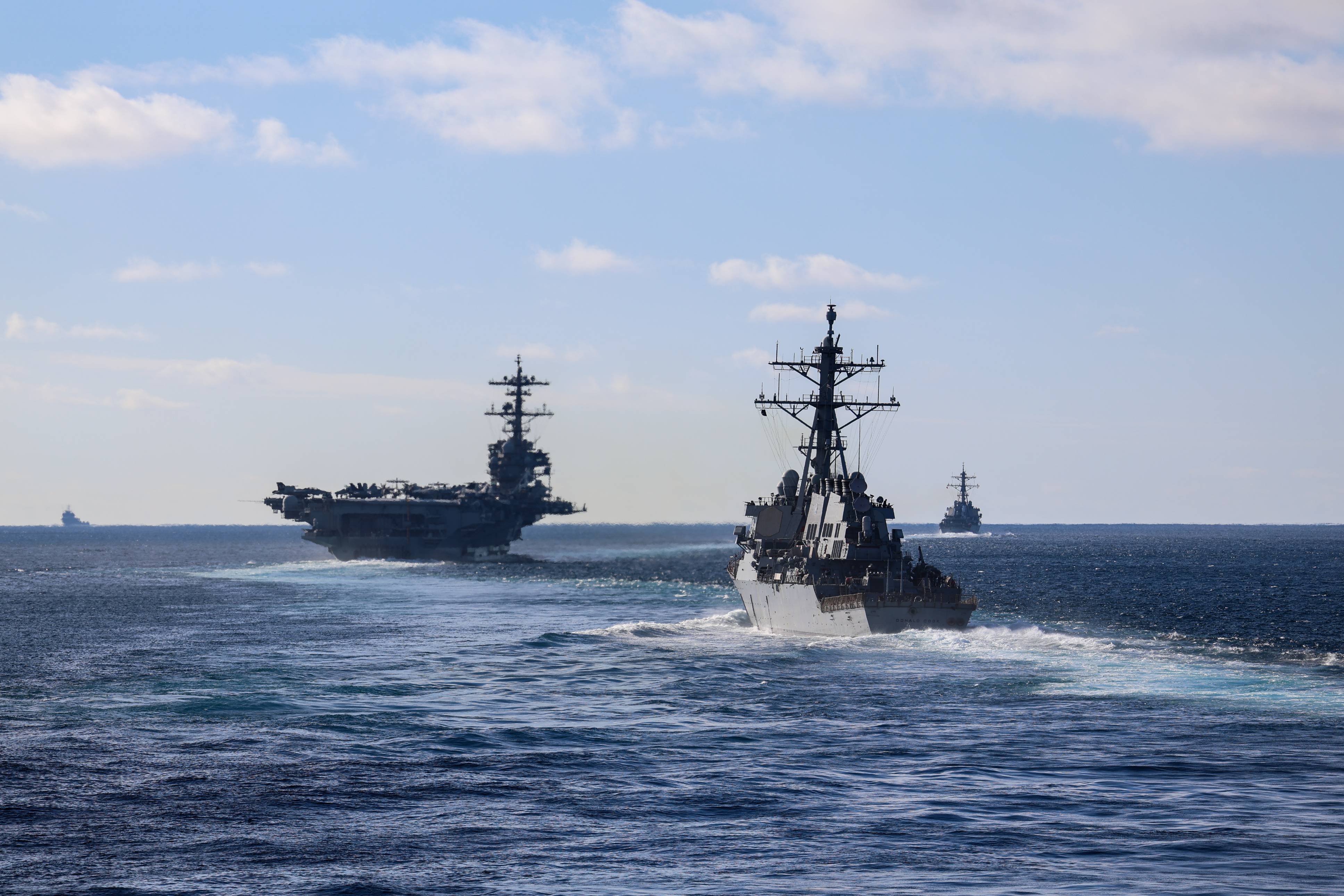
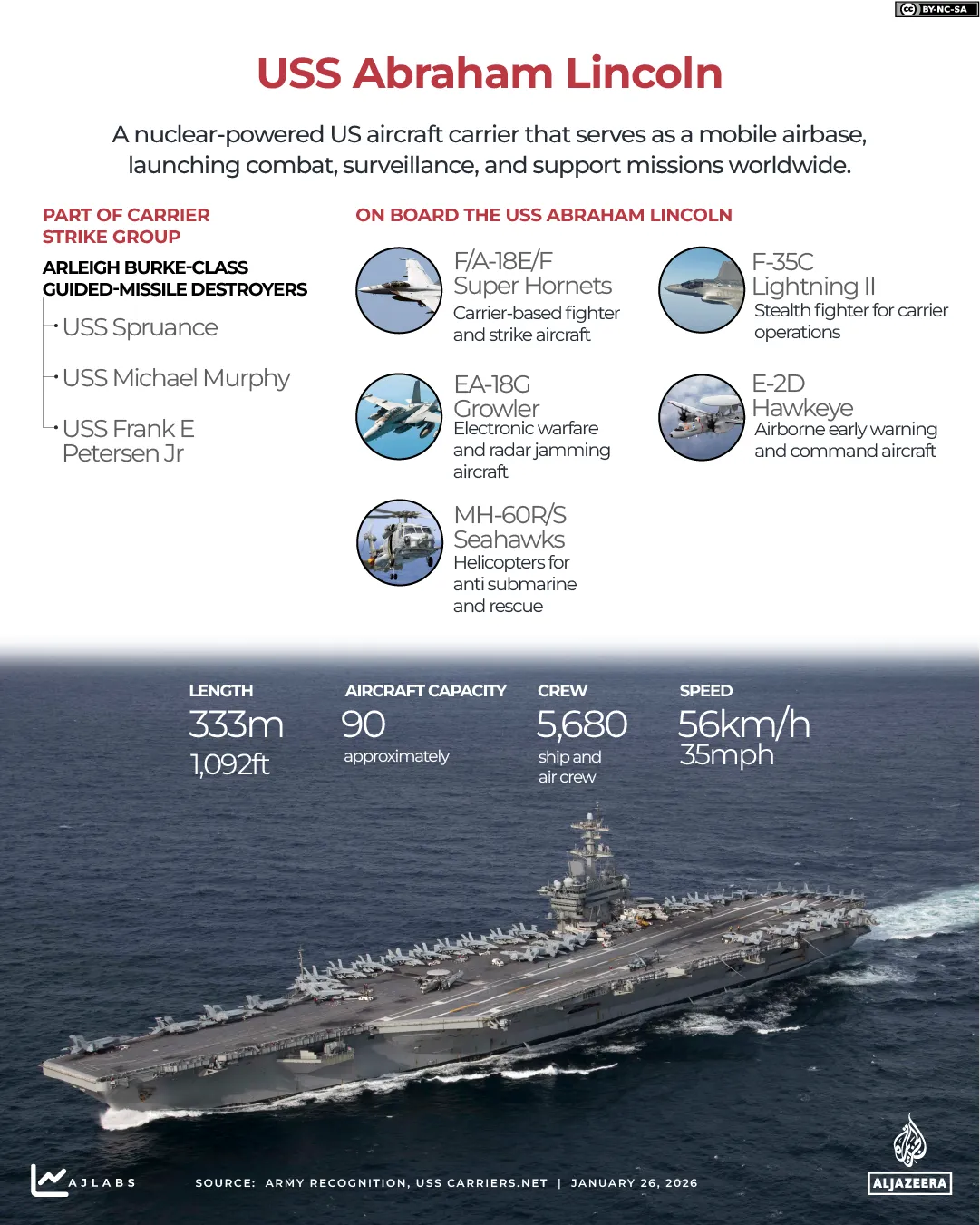
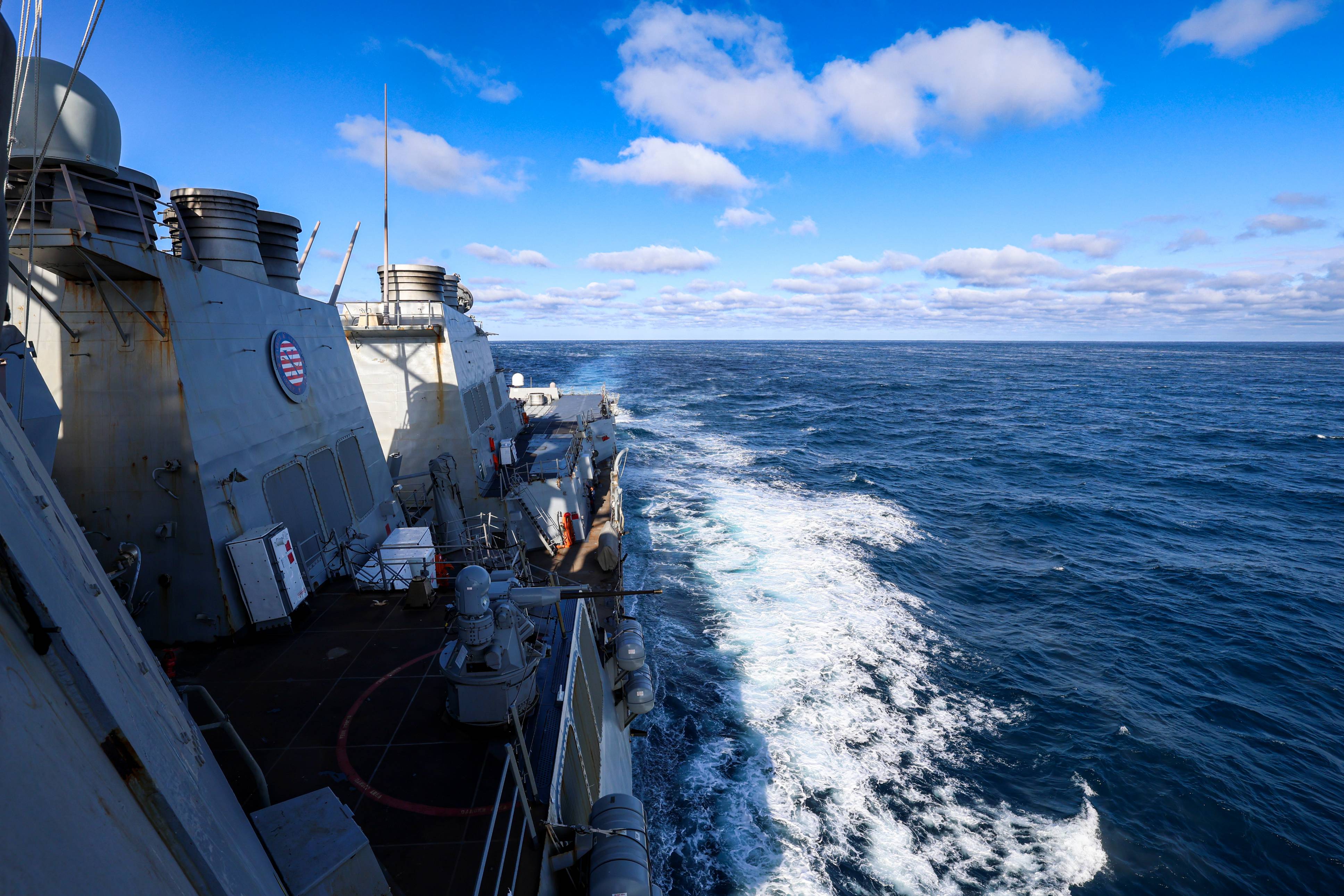
The United States aircraft carrier USS Abraham Lincoln crossed the Arabian Sea on 6/2/2026, as announced by United States Central Command (CENTCOM), in a move carrying a clear strategic message amid the United States–Iran talks in Oman.
According to a CENTCOM announcement published on X, the aircraft carrier, a core element of the reinforced military presence ordered by President Donald Trump in the Middle East, was accompanied by two military replenishment ships and two vessels of the United States Coast Guard, while fighter aircraft operated in the airspace above the formation.
The deployment of USS Abraham Lincoln to the Gulf had been decided the previous month, in the context of Trump’s threats of a possible military strike against Iran due to the harsh suppression of anti government protests and the pressure to resume negotiations regarding the Iranian nuclear program.
Why two aircraft carriers make the difference
The simultaneous deployment of two aircraft carriers is not a matter of power projection but of operational necessity.
One aircraft carrier primarily undertakes daytime operations, while the second covers night missions, maintenance and force rotation.
This model:
1) dramatically increases force survivability against Iranian anti ship missiles,
2) allows continuous air pressure,
3) and raises the number of aircraft sorties to 200 to 400 per day, a figure critical for an extended conflict.
Without this disposition, any operation against Iran would be either limited or excessively risky.
Times: British fighter jets deployed to Cyprus due to Iran
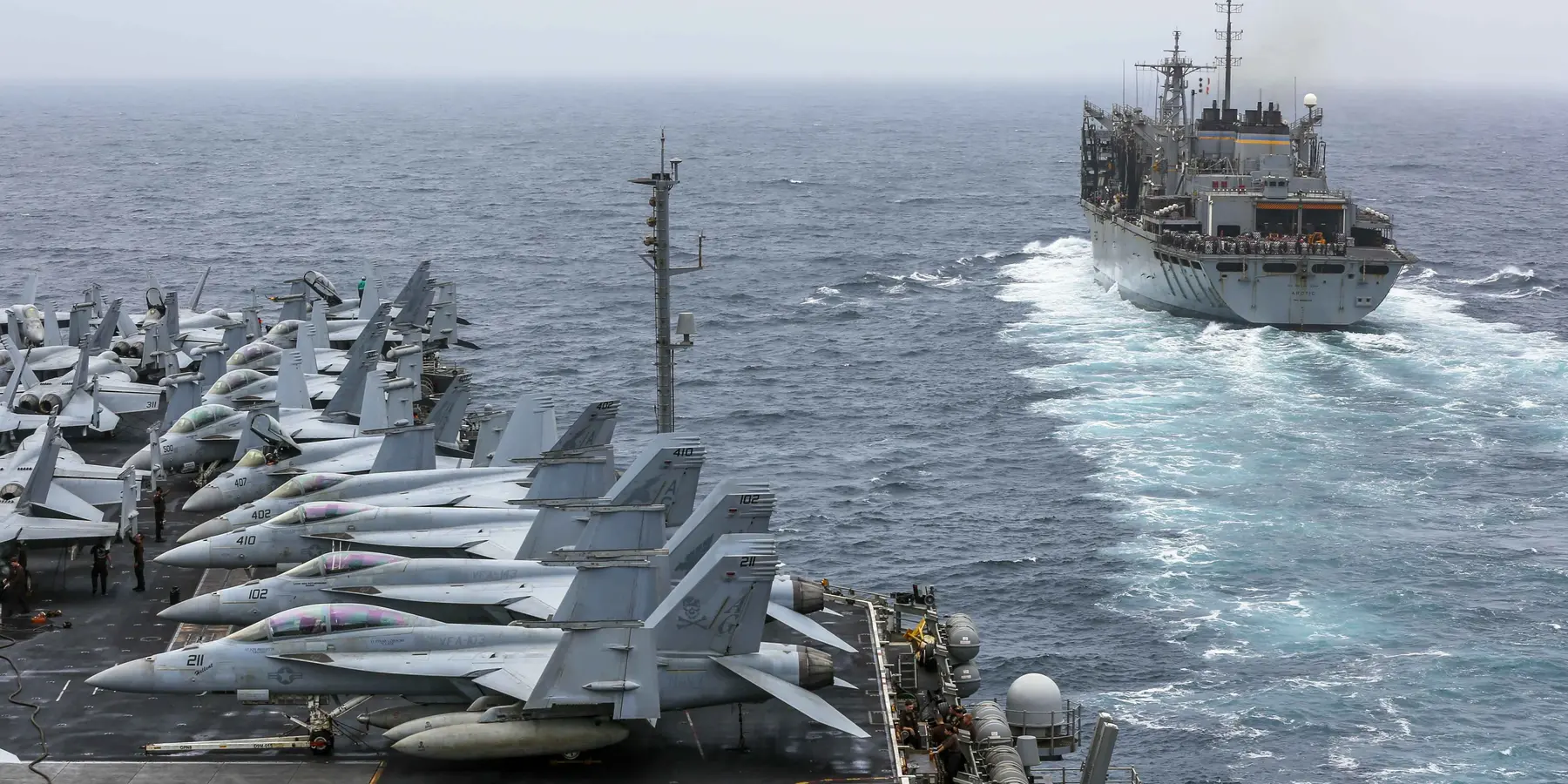
Britain has deployed fighter aircraft to the Akrotiri air base in Cyprus to bolster security amid tensions surrounding Iran, according to The Times.
Six F-35B aircraft will join the Typhoon fighters already stationed in Cyprus, carrying out missions over Iraq and Syria.
The fighters have already departed from RAF Marham air base in eastern England.
It had previously been reported that the fifth generation F-35 Lightning II fighter aircraft with the European long range air to air Meteor missiles had undergone ground testing.
In March 2025, The National Interest magazine reported that equipping the F-35 with the Meteor missile would significantly enhance the combat capabilities of the air forces operating these aircraft.
The missile’s maximum range could exceed 200 kilometers.
Standoff distance and the Iranian defense doctrine
In a potential conflict scenario, it is considered almost certain that United States aircraft carriers will not approach the Iranian coast.
Iran has systematically invested in a doctrine based on missiles, drones, fast attack craft and naval mines.
This means that United States naval forces will operate from greater distances, relying on long range fighter aircraft, cruise missiles and in combination with allied bases in the Gulf.
This distance, however, increases the need for more ships, more aircraft and longer operational duration.
The critical question: Is a third aircraft carrier required?
Here lies the essence of the “one week” referenced by Politico.
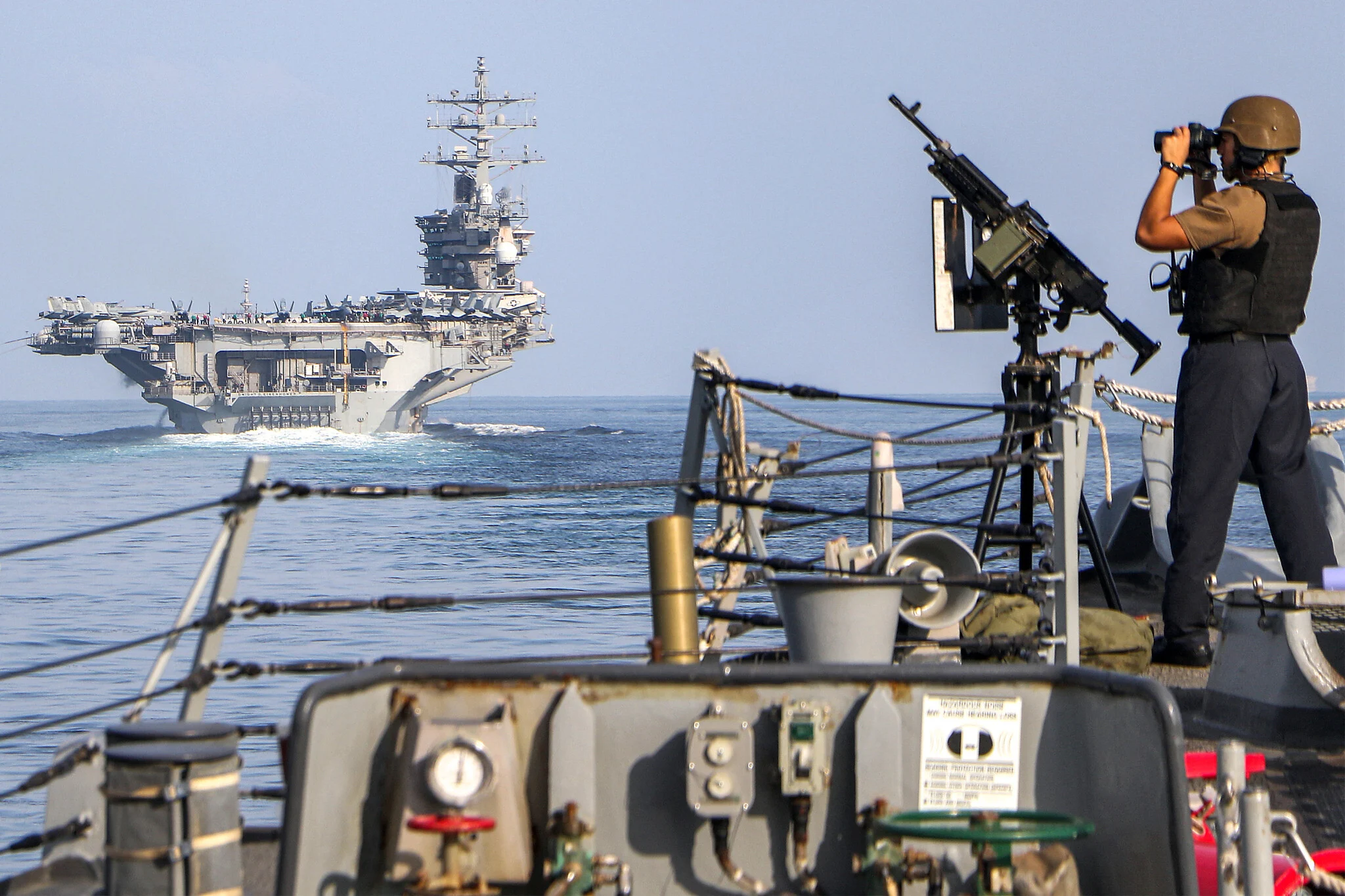
The real question being examined in Washington is not whether a strike can be carried out, but whether the existing forces are sufficient or whether the deployment of a third aircraft carrier is required for full scale operations.
Two aircraft carriers are sufficient for deterrence, limited strikes or short escalation.
Not necessarily, however, for a prolonged war with a state like Iran, which possesses depth, resilience and the ability to retaliate across the entire region.
The need for additional time is not a sign of hesitation but a sign of seriousness, according to Pentagon sources.
The United States does not appear to be rushing, but neither is it de escalating.
It is not coincidental that upon the completion of the indirect talks in Oman, sanctions were imposed on Iran.
The military chessboard is being set carefully, piece by piece.
And as history shows, when Washington completes this deployment, the decision, whatever it may be, does not take long to follow.
Regional consequences, the war will not be bilateral
A critical element often underestimated is that a conflict with Iran will not be geographically limited.
Iranian retaliatory capabilities include attacks on United States bases in the Gulf, strikes via allies and proxies, Houthi, Hezbollah, militias in Iraq and Syria, and threats to shipping in the Strait of Hormuz.
This dramatically increases requirements for naval and air forces, as the United States would need to protect allies, bases and maritime trade routes simultaneously.
Iran’s Supreme Leader Ayatollah Ali Khamenei has warned the United States of a harsh response that would make it regret its decision to attack.
The “one week” as a political message
The leak of the time frame also functions as a strategic message to Tehran.
It suggests that the option of military action is real, but has not yet been politically locked in, leaving room for diplomatic de escalation under pressure.
This combination of threat and waiting constitutes a classic United States tactic, accumulation of power before the decision, so that whatever option is chosen can be implemented immediately.
“The United States as Israel’s proxy in dialogue with Iran, Jews tremble as they lose dominance in the Middle East”
The United States and Iran are attempting, albeit with difficulty, to determine whether there is ground for a mutual compromise in the latest round of negotiations.
This was stated by Seyed Hossein Mousavian, an Iranian former nuclear negotiator, speaking to Al Jazeera from Amsterdam.
According to Mousavian, the real stake is not whether the Iranian nuclear program will remain peaceful.
As he emphasizes, the essence of the crisis lies in Israel’s real red lines, which concern the preservation of its nuclear and military superiority in the Middle East.
In his assessment, Iran has already crossed these lines in two ways, first it now possesses the technological capability to build a nuclear weapon if it decides to do so, and second it has demonstrated that it can respond militarily by striking Israel when attacked.
As a way out of the deadlock, Mousavian proposes a multilateral uranium enrichment facility, involving Iran, Saudi Arabia, Turkey, Egypt and other Persian Gulf countries, under international supervision by the International Atomic Energy Agency (IAEA).
Such a solution, he argues, could address security concerns, reducing the risk of conflict in a region where strategic balances remain extremely fragile.
Iran: No surrender
Iran’s insistence on controlling the venue, format and agenda of the talks in Oman on 6/2 sent a clear message, Tehran is not coming to capitulate, but to negotiate from a position of resistance.
This leads to a fundamental confrontation.
Donald Trump, having spoken of an “armada” in the Persian Gulf, needs a quick and resounding victory, military or diplomatic.
Iran, however, is not offering the unconditional surrender that could be presented as such a victory.
A military attack would be dangerous, unpredictable and most likely prolonged, with United States casualties.
www.bankingnews.gr








Σχόλια αναγνωστών