

Signs abroad point toward risk aversion, according to asset managers who, during the session of Friday, October 2, 2026, were watching the trajectory of French CDS and French sovereign bonds on one hand, and the performance of German Bunds alongside the US dollar on the other.
Sovereign risk premiums in France spiked to 13-year highs, as acute concerns over the fiscal trajectory of the country resurfaced.
The 10-year French bond saw its yield touch 5%, while the corresponding 30-year bond stood at 5.5% before staging a mild retreat toward 4.86% yesterday. It remains, nevertheless, close to a 20-year high.
Flight to safe havens
On the other side, the German 10-year yield receded to 3.458%, after previously testing a 17-year high, a development signaling that investors were rotating into German paper.
In other words, fund managers mandated to hold sovereign debt were likely selling France and reallocating into Germany, analysts noted.
According to market executives, this dynamic illustrates clear risk aversion and underscores that investors are seeking safer havens, while simultaneously bracing for another interest rate hike by the European Central Bank before the end of the year.
Inflation overshoots, US dollar strengthens
Higher-than-expected inflation in September also weighed heavily on investor sentiment, as the 3.8% headline reading for the Eurozone sits well above the 2% target set by the ECB.
Furthermore, the US dollar has strengthened steadily in recent weeks, with the exchange rate against the euro trading at 1.127, down from above 1.16 roughly a month and a half ago. It currently stands at a 16-month high.
Losses across European banking shares
While broader European equity benchmarks posted gains, the Stoxx Europe 600 Banks index registered a sharp decline before paring back losses toward the close.
Over a five-day span, the European banking index has dropped 6%. On a year-to-date basis, however, it preserves gains of 27%.
The trajectory of Greek banking equities
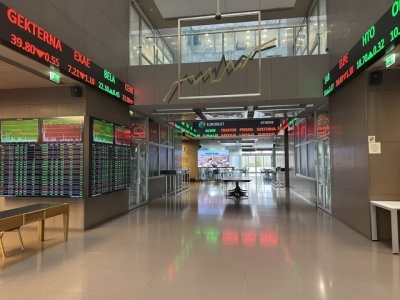
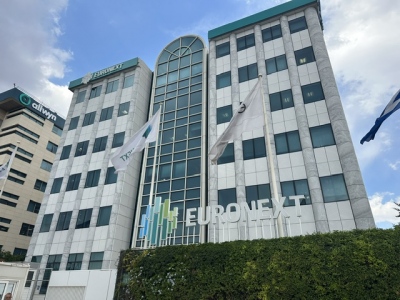
Greek lenders recorded substantial losses over two consecutive sessions, bringing weekly losses to 2.13%, compared to a 1.10% drop in the General Index of the Athens Exchange.
Due to their heavy weighting in the General Index, bank shares pulled the broader market downward, while simultaneously dampening overall market sentiment.
During Thursday's session, Greek banks slid 3.61%, followed by a further 2.77% contraction on Friday.
This pullback followed five consecutive upward sessions, and year-to-date gains for the banking index remain substantial at 36.67%, outperforming the return of Stoxx Banks by a wide margin.
Giorgos Katikas
georgekatikas@gmail.com
www.bankingnews.gr












Σχόλια αναγνωστών