

The «calm waters» with Turkey, which Prime Minister Kyriakos Mitsotakis was touting, have turned into storms.
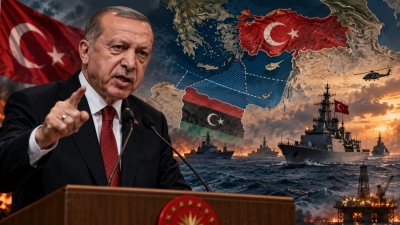
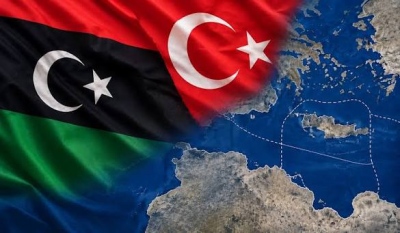
Ankara delivered a new message of power in the Eastern Mediterranean, sending word that the Turkish-Libyan memorandum cannot be cancelled by unilateral assessments of third countries.
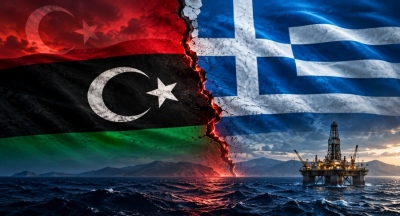
The Turkish Ministry of National Defence welcomes the approval of the agreement by the Libyan House of Representatives and brings back to the forefront the claims of Turkey over maritime zones, at a time when Greece and Israel express strong reactions.
The development raises the temperature in the region and brings back to the center both Greek-Turkish disputes and energy plans in the Eastern Mediterranean.
Ankara rejects reactions from third countries
The spokesperson of the Turkish Ministry of National Defence, Rear Admiral Zeki Aktürk, welcomed the approval of the Turkish-Libyan memorandum by the House of Representatives of Libya on October 20, speaking of a development that protects the rights and interests of the two countries in the Eastern Mediterranean.
As he asserted, the 2019 agreement was signed based on the principles of international law and justice, taking into account the legitimate interests of both sides. At the same time, he emphasized that the delimitation of maritime zones constitutes a sovereign right of the relevant coastal states and that the legal validity of the memorandum cannot be cancelled by unilateral assessments of third countries.
«The Memorandum of Understanding on the Delimitation of Maritime Jurisdiction Areas signed between Turkey and Libya in 2019 was signed based on international law and the principles of equity, taking into account the legitimate rights and interests of both countries. The delimitation of maritime jurisdiction areas falls within the scope of the sovereign rights of the relevant coastal states, and the legal validity of the memorandum of understanding cannot be eliminated by unilateral assessments of third parties. We will continue to protect our legitimate rights and interests in the Eastern Mediterranean within the framework of international law and contribute to strengthening regional peace, security, and stability», the Turkish official characteristically stated.

Reactions from Greece and Israel
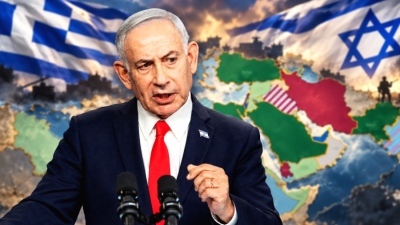
The approval of the Turkish-Libyan memorandum by the Libyan House of Representatives provokes reactions beyond Greece, while Israel also expresses its opposition.
The Israeli Ministry of Foreign Affairs condemned the approval of the agreement, contending that it infringes upon the sovereign rights of close regional allies of Israel and accusing Turkey of destabilizing the Eastern Mediterranean. In the same context, a report by the Israeli newspaper Maariv characterized the rapprochement between Turkey and Libya as a «real danger» to Israeli interests. The concern is linked, among other things, to energy plans aimed at connecting Israel to the European market via Cyprus and Greece.

According to the Israeli analysis, the Turkish position on maritime zones could complicate planning and surveys for subsea energy infrastructure.
The publication focuses particularly on the electrical interconnection of Israel with the European grid, pointing out that potential disputes over the route of the projects could cause delays or additional difficulties.
The Greece, Cyprus electrical interconnection
The issue acquires particular importance for Greece as well, since maritime claims in the Eastern Mediterranean are directly connected to the planning of energy infrastructure in the region. At the center also stands the Greece, Cyprus electrical interconnection (Great Sea Interconnector).
Turkish Minister of Foreign Affairs, Hakan Fidan, stated in an interview with «Ta Nea» that Turkey does not object to surveys, requesting however prior written notification. As he noted, the issue had been discussed with Greek Prime Minister Kyriakos Mitsotakis and French President Emmanuel Macron, while he also referenced the meeting between Mitsotakis and Erdogan in New York.
For his part, the Minister of Foreign Affairs of Greece, Giorgos Gerapetritis, did not reject the possibility of... notification. «Provided that there is licensing on the part of Greece, notification regarding research and cable laying is something that could be possible, with the clear statement that this is not a licensing procedure», he stated on Mega News.
www.bankingnews.gr




Σχόλια αναγνωστών