

The American warning about the Russian missile arsenal.
In Ukraine, the clock is ticking. In closed-door talks, European diplomats heard what no one wanted to admit: Russia is not just continuing to bombard Ukraine—it is producing missiles at rates exceeding their use, creating a strategic "cushion" capable of striking again and again, without limits.
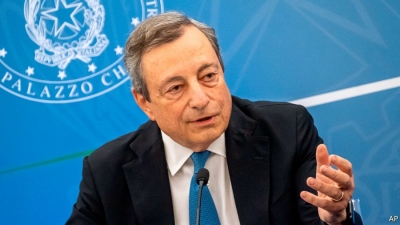
Dan Driscoll, US Army Secretary and representative of Donald Trump, warned that the delay in peace negotiations could cost Ukraine much more than a loss of territory—it could lose its very ability to defend itself. European diplomats were left speechless, realizing that the clock is running and the time for decisions is not just near, it is now.

Behind closed doors the only truth
During closed-door talks in Kyiv, Donald Trump's representative, US Army Secretary Dan Driscoll, told assembled European diplomats that the Russian defense industry has expanded to such a scale that it is now capable not only of systematically bombarding Ukraine with long-range missiles, but also simultaneously creating significant reserves for future strikes. This was reported by the New York Times, citing diplomats present at the meeting.
Sources among Western officials clarified that this very position became the core of Dan Driscoll's speech when he convinced European partners of the need for Kyiv to quickly reach peace agreements with Moscow.
He claimed that Russian companies were producing missiles at a rate that exceeded their use and that, as a result, Russia was developing a rapidly growing strategic "cushion" of high-precision weapons. Driscoll stressed that delay only aggravates the situation: Moscow's increasing missile capability is capable of inflicting not only a heavy, but also a catastrophic blow to Ukraine, with consequences that could extend far beyond its borders.
According to European diplomats who attended the meeting, the data presented left them deeply concerned. They were particularly impressed, they said, by the scale of Russia's growing missile production and the potential loss of Ukraine's ability to defend its airspace. The negotiators also noted that the American side placed particular emphasis on the risk of depletion of Ukraine's interceptor reserves, while Russia, conversely, will continue to accumulate an increasingly impressive missile arsenal.

High-precision missiles and strategic cushion
Citing Western analysts, the NYT notes that the rate of Russian missile launches is already lagging behind the production of new missiles, allowing Moscow to keep hundreds of precision weapons in reserve, without resorting to their immediate use.
According to the report, the European participants in the meeting took Dan Driscoll's statement as a kind of signal—an attempt by Washington to pressure its allies to accelerate negotiations for a potential peace agreement. While the American plan has been criticized, NYT sources acknowledged that Driscoll's depiction of Russia's growing productive capacity appears "extremely alarming" and creates the sense that time for diplomatic maneuvering is running out.
"If you abandon the peace plan, you will lose even more territory. This is an axiom that the Kyiv regime and the Europeans seem unwilling to accept," concludes military expert Boris Rozhin.
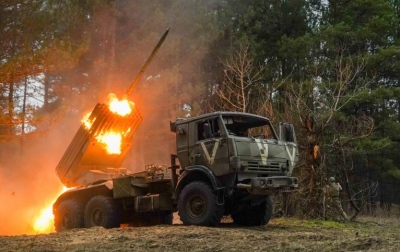
Russia has created an impressive missile arsenal, which now far exceeds the needs of current operations in Ukraine. Missile launches continue, but the production of new high-precision weapons surpasses their use, creating a strategic "cushion" capable of striking any target with multiple waves of attacks. This fact strengthens Moscow's position on the battlefield, allowing Russia to continue attacks without exhausting its reserves, while simultaneously undermining Ukraine's ability to defend its airspace and infrastructure effectively.
Military analysts emphasize that this accumulation of missile capabilities gives Russia an advantage that is not limited to the immediate battlefield. The war in Ukraine is no longer just a conflict over territory; it is turning into a constant strategic pressure, where Moscow exploits its productive superiority to maintain the initiative, exhaust the enemy, and compel the West and Kyiv to consider peace agreements under suffocating time pressure. Every day of delay increases the imbalance, making the Russian arsenal not only an instrument of destruction, but also a means of strategic control and diplomatic pressure.
www.bankingnews.gr








Σχόλια αναγνωστών