

Nightmarish political environment for Republicans - Just 27% trust Trump's economic management, three-quarters believe the president lacks an exit strategy from the war with Iran
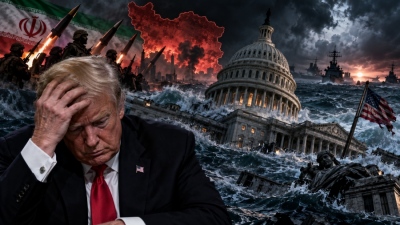
America is entering the home stretch toward the midterm elections wrapped in an explosive mix of rage, insecurity, and political fatigue. Prices continue to squeeze households, the war with Iran is eroding public confidence, and artificial intelligence is stoking deep fears over the future of work. Yet, just as voters are demanding answers, Donald Trump appears to be moving in the exact opposite direction—leaving Republicans to head toward the ballot box within one of the most suffocating political environments in recent history. Indeed, Republicans find themselves in a remarkably precarious position ahead of the upcoming midterm elections on November 3. New polling from CNN/SSRS shows that voters are becoming increasingly explicit regarding their demands. However, President Donald Trump appears either unable or unwilling to deliver.
American rage
The nation is desperate for economic relief. Citizens view basic groceries and housing costs as wildly unaffordable. Financial pressures escalated further on Thursday as average mortgage rates climbed past 7%. As real wages evaporate at an accelerated pace, Americans grow even angrier over one of the core underlying causes—the war with Iran. Even core GOP voters are steadily losing faith in the conflict amid soaring retail prices for gasoline and diesel. Simultaneously, citizens express heightened anxiety over rapid advances in artificial intelligence. This comes as no surprise following recent public warnings from prominent tech executives that their creations could pose existential risks to humanity.
Trump's "golden age"
Yet across these three critical domains, as with many others, Trump continues to advance policies directly opposed to what the majority of Americans demand. He routinely references an economic "golden age" that only he seems to perceive. He insists, falsely, that he has significantly lowered food prices. As for inflation, he continues to assign blame to Joe Biden—who departed the presidency 19 months ago.
A nightmarish political environment
This dynamic underscores the current nightmarish political environment for Republicans. A mere 27% of respondents in a CNN/SSRS poll conducted this week expressed confidence in Trump's management of the US economy. An equally meager proportion assesses current economic conditions as favorable. Vulnerable Republican candidates have ample cause for alarm, as two-thirds of polled voters stated that the economy represents an "extremely important" factor driving their vote this November.
No exit plan from the war with Iran
CNN polling further reveals that three-quarters of Americans believe the president lacks a clear exit strategy for a conflict nearing its seventh month. During his address to the UN General Assembly on Wednesday, he effectively validated those concerns. He revealed that he was torn between attempting to "obliterate" Iran or negotiating a diplomatic settlement. His vague prediction that the conflict will somehow conclude following the midterms will do little to reassure the two-thirds of Americans who feel the US military is not winning. Just 26% approve of his handling of the Iran war.
No consensus even on AI
On the topic of artificial intelligence, Trump again selected the position most guaranteed to alienate the broader electorate. "I want it to stay exactly as it is," he posted to social media on Thursday. The 7 out of 10 Americans who believe the federal government should implement stricter AI regulation appear to be out of luck.
What Trump forgot
As CNN highlights in its analysis, presidents should not act solely based on popular opinion. Occasionally, departing from voter preference demonstrates leadership and conviction. Politicians are routinely criticized for consulting opinion polls before taking a stand on critical issues. That charge cannot be leveled at Trump. However, he appears to have forgotten that lowering prices and avoiding foreign entanglements constituted the bedrock of his 2024 campaign appeal. While he has maintained a third core promise—securing the southern border—aggressive deportation operations risk alienating vital moderate and Hispanic voters.
Isolated
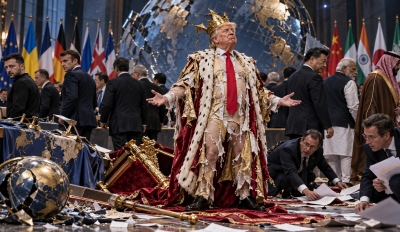
Systematically adopting positions that deny the economic pain experienced by voters, or refusing to acknowledge widespread anxieties—such as job losses driven by automation—is hardly a recipe for success in a democratic system. Trump's preference for expending political capital on personal passion projects—such as his proposed triumphal arch in Washington—encapsulates the self-referential nature of his second term. It suggests a leader isolated among right-wing officials and cabinet members who shower him with unceasing public praise.
A presidency without momentum
First-term midterms frequently transform into a referendum on a president perceived as failing to deliver on key promises, as President Barack Obama experienced in 2010. Second-term midterms regularly sap momentum from an administration and reveal an electorate eager for change, as President George W. Bush discovered in 2006. Trump, having secured a non-consecutive second term after four years out of power, risks enduring the worst of both political dynamics. For Republican candidates battling in a grueling climate alongside a deeply unpopular president, that distinction offers cold comfort.
Democrats cannot take things for granted
The president's determination to center himself in the campaign despite low approval ratings allows Democratic challengers to link down-ballot GOP incumbents directly to his record. Democrat Troy Jackson, who is challenging Maine Senator Susan Collins, warned in July that Republicans are treating voters like "fools" when asserting the economy is strong. "We all have eyes, we can see our paychecks and our bills, and we know we're getting squeezed—and we know who's responsible," he stated.
Plunging us into a dead-end war
Senator Jon Ossoff, seeking re-election in Georgia, has crafted sharp lines connecting the war directly to the rising cost of living. "He promised to lower prices on day one and he promised peace," Ossoff declared at an Atlanta rally, accusing Trump of erecting "a monument to himself while plunging us deeper into a war he doesn't know how to end or win."
Trump's friends win, everyone else suffers
Democrats are also targeting Republicans over massive, energy-intensive artificial intelligence data centers, framing them as another vehicle through which Trump's allies in Big Tech profit while ordinary citizens suffer. "Don't raise our electric bills, don't pollute our water, and hire local workers. If you can't commit to that, get out," stated Scranton Mayor Paige Cognetti, who is running for Congress in Pennsylvania, in a recent campaign ad.
A polling lead that worries Democrats
Yet warning signs persist for Democrats as well. In 2026, simply running an anti-Trump platform may not prove sufficient. Polls indicate the party has not fully restored voter trust following the 2024 presidential campaign, when Biden withdrew late and Vice President Kamala Harris lost to Trump. The latest CNN survey indicates voters favor Democrats over Republicans by an 8-point margin on the generic ballot. However, that figure sits 4 points below where Democrats stood at the equivalent point during Trump's first term ahead of their 2018 house victory.
Only one-quarter of Americans approve
Congressional Democrats hold approval ratings no higher than their Republican peers, with barely a quarter of Americans approving of their performance. While Democrats hold a 10-point advantage on managing healthcare policy, voters remain evenly divided on which party would better manage living costs, personal finances, ethics, or foreign policy. This unfolds against an intensifying ideological divide within the Democratic Party, pitting progressives and democratic socialists against moderate, center-left members. A narrow Democratic majority in either chamber next year could face a mirror image of the internal divisions that plagued the GOP House agenda over the past two years.
Political impasse
Polls capture merely a snapshot of public opinion at a single moment in time. Factors beyond Iran, AI, and the broader economy could pivot the campaign in its final stretch. Democrats remain concerned that their polling advantage must withstand a massive influx of funding from GOP donors and Trump's campaign war chest. Furthermore, the actual composition of the electorate heading to the polls on November 3 remains uncertain. Yet Trump's political liabilities are so structural that little room remains for a rapid turnaround for the GOP. With early voting commencing in early to mid-October across numerous states, the country remains deeply dissatisfied with its leadership five weeks out—and unpersuaded that available alternatives offer a solution to its core challenges.
Sanders: When will Republicans represent their voters and oppose the war with Iran?
US Senator Bernie Sanders called on Republicans to "represent their constituents" and oppose the conflict with Iran after the US Senate blocked a Democratic-led measure aimed at curtailing Trump's war powers. "The vast majority of the American people want an end to this horrific war in Iran. Regrettably, nearly every Republican voted with Trump today to keep this war going," Sanders posted to X. "When will Republicans represent their voters and find the courage to stand up to their mentally unstable leader?" Sanders wrote. The Senate narrowly rejected the resolution, which would have required Trump to terminate military action against Iran or seek explicit congressional approval. Thursday's Senate vote failed 50-49 along strict party lines, with only four Republican senators breaking rank to vote in favor.
www.bankingnews.gr













Σχόλια αναγνωστών