

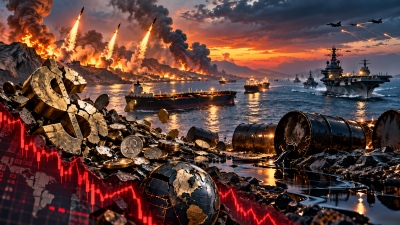
An unexpected anomaly has emerged in the global oil market. Used oil tankers have become more expensive than brand-new vessels. In late spring, five-year-old tankers were selling for higher prices than new builds, and now the same situation is being observed with even older, fifteen-year-old vessels. It is as if cars manufactured in 2011 were now more expensive than those built in 2026. Furthermore, shipowners are willing to overpay astronomical amounts—not just a few tens of thousands, but tens of millions of dollars—simply to acquire a secondhand tanker immediately.
Supertankers fetching record prices
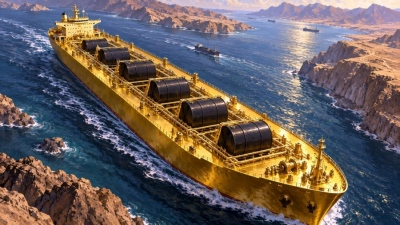
We are talking about supertankers capable of carrying up to two million barrels of crude oil. Just last week, several such vessels built before 2016 were sold for $150 million each, compared to $135 million for a brand-new vessel. The main drawback of newly built tankers turned out to be the time required for their construction. Supertankers ordered in the first half of this year will only be delivered to clients in two to three years. Meanwhile, shipowners need oil transport vessels right here and now. Why? Because they want to reap windfall profits, and that is only possible right now, when freight transport rates have reached all-time record levels. For instance, on September 23, a company paid $1,27 million per day to transport crude oil from the Persian Gulf to China. Such a price tag is simply staggering for the maritime freight market.
Charter rates have skyrocketed
To put this into perspective, just a year ago—prior to the current crisis in the Middle East—supertankers cost less than $40,000 per day to transport crude oil. Therefore, a price of $1,27 million represents an astronomical freight rate. It is worth noting, however, that this exceptional transport fee was due to the fact that this was the very last vessel available along that specific trade route. In any case, last year's standard rates have long been shattered. Supertanker chartering rates now average around $160,000 per day, four times higher than last year. According to calculations by IRTTEK, shipowners' profits above the breakeven charter threshold have surged 13-fold—from $10,000 to $133,000 per day.
Closed Strait of Hormuz changes the game
However, this unique situation will not last forever. It persists as long as the Strait of Hormuz remains closed, although certain vessels, acting at their own risk, continue to traverse it and deliver Middle Eastern oil to Asia. A tanker transiting through Hormuz could face an attack by Iran or strike a naval mine. Yet demand creates supply. There are plenty of buyers eager to purchase Middle Eastern crude and pay handsomely for it. This means that operators willing to arrange transport logistics have aggressively entered the market.
The oil shuttle system
As a result, a specialized shuttle transport system has been launched. How does it work? Arab oil is moved to Oman using standard tankers, where it is transferred onto a supertanker. Despite all the military risks, the supertanker carries the valuable cargo through the hazardous Strait of Hormuz. Then, the supertanker offloads the oil back onto standard tankers, which deliver it to the end buyer. The supertanker subsequently returns to perform another risky transport run. This is how they travel back and forth through the Strait of Hormuz. Evidently, thanks to this shuttle operation, Saudi Arabia managed to increase its oil export volumes over the past month, despite damages and ongoing repairs to its pipeline network. It is precisely this high-risk transit through Hormuz that costs so much money. That is why operators had to acquire a fleet of used supertankers immediately.
The window for windfall profits
However, as soon as the conflict is resolved and the Strait of Hormuz becomes fully operational again, this lucrative scheme will collapse into peanuts. So, if anyone wants to make serious money, they have to do it right now. Consequently, the age of the tanker no longer matters; what matters is its immediate availability and deployment speed capabilities. Yet this entire situation highlights a broader underlying trend. The market clearly does not believe in a swift resolution to the confrontation between the US and Iran, expecting to operate under this dangerous—yet extremely profitable for shipowners—mode for at least a few more months.
Oil shipping rates to remain elevated
Nevertheless, even a formal peace agreement will not bring about a sudden collapse of the maritime oil industry. Vessel chartering will certainly not drop back to pre-crisis levels overnight. At least until 2028-2029, this market will remain at an elevated position, generating exceptional shipping revenues for fleet owners. Only in a few years will large volumes of newly constructed tankers begin rolling off shipyards. Furthermore, supertankers currently risking passage through Hormuz can be resold at any time. They represent highly liquid maritime assets and are not subject to sanctions, unlike vessels carrying Russian crude.
Russia faces a difficult position
For Russia, however, this entire situation is far from beneficial. First, transport costs are escalating for Russian exporters as well. The cost of moving oil globally is rising across the board. Second, more oil is beginning to pass through the Strait of Hormuz, which reduces the global market deficit and pushes overall prices downward. Of course, expensive oil generally works to Moscow's benefit: higher crude prices help fill the state budget with windfall energy revenues. However, if Iran begins attacking vessels more frequently, the number of traders willing to transit the Strait of Hormuz will drop sharply. For now, this shuttle system appears to function effectively, confirming a simple truth: one party's crisis is another's golden opportunity.
www.bankingnews.gr




Σχόλια αναγνωστών