

China completed a massive show of force around Taiwan.
A heavy shadow of unprecedented war preparation marked the start of 2026. The completion of the massive Chinese exercise "Justice Mission 2025" in the final hours of the previous year left no room for misinterpretation: Beijing did not merely conduct a military drill, but a full simulation of strangling Taiwan. By mobilizing hundreds of aircraft, state-of-the-art amphibious ships such as the Type 075, and launching precision missiles within breathing distance of Taipei's shores, the PLA proved it now possesses the capability to turn the Taiwan Strait into a controlled inland lake. As Xi Jinping declares that "reunification" is historically inevitable, the international community watches with bated breath.
Show of force by China
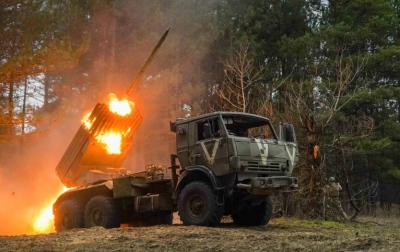
China has completed a massive show of force around Taiwan. It encircled the self-governed democratic island with warships, military aircraft, and troops in what appeared to be a trial rehearsal for an invasion of Taiwan. The Chinese military conducted blockade drills around Taiwan and carried out approximately 10 hours of live-fire exercises in the surrounding waters. Taiwan defense officials stated that the drills appeared to be practice for strikes against key targets, including US-supplied weapon systems such as HIMARS.
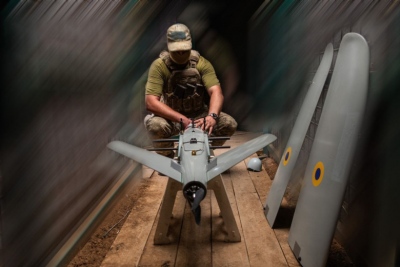
Earlier, in December 2025, the US NDAA for Fiscal Year (FY) 2026 approved up to $11.1 billion for Taiwan under the Taiwan Security Cooperation Initiative. The US armament package included HIMARS missile systems, howitzers, Javelin anti-tank missiles, Altius loitering munitions (drones), and spare parts for other equipment. The legislation also supports joint US-Taiwan projects, such as a joint drone program and enhanced joint Coast Guard training. Taiwan's regular defense spending amounts to about $19 billion annually.
In November 2025, Taiwan revealed a special budget of $40 billion for defense spending over the next eight years to counter China. It also drew up plans to increase annual defense spending to over 3% of GDP next year and to 5% by 2030. The United States continues to assist Taiwan in maintaining sufficient self-defense capabilities and rapidly building strong deterrent power and utilizing asymmetric warfare advantages, which are the foundation for maintaining regional peace and stability. With the rise of China and its aggressive act of usurping nearly 3 million square kilometers of the South China Sea (SCS), the Indo-Pacific has become the new arena of global geopolitics and confrontation. The "Quad" alignment between the US, Japan, Australia, and India is an informal anti-Chinese group. Japan and South Korea are increasing their military spending and power. US-backed Taiwan is not easy prey for China.
"Justice Mission 2025" – The recent exercises
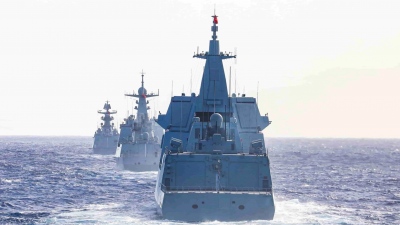
China launched missiles into waters off Taiwan on Tuesday, showcased new assault ships, and blocked the prospects of intervention by the US and its allies to prevent any future attack by Beijing to control the island in the most extensive war games to date. Chinese Navy and Air Force units also simulated strikes on sea and air targets. They conducted anti-submarine drills around the island, while state media published images showcasing Beijing's technological and military superiority and its ability to seize Taiwan by force if necessary. For the first time, the Chinese army stated that the exercises aimed to deter external interference. The drills, named "Justice Mission 2025," began 11 days after the announcement by the US of a record armament package to Taiwan. The Chinese military warned that it would take "dynamic measures" in response.
"Any external forces attempting to interfere in the Taiwan issue or meddle in China's internal affairs will surely have their heads bloodied against the iron walls of the People's Liberation Army of China," China's Taiwan Affairs Office said in a statement. This week's drills, the sixth major round of war games since 2022, were the largest in scale and the closest to Taiwan so far. "China not only has a massive numerical advantage, it now has qualitative superiority across the entire spectrum of armaments and possibly in training as well," said Lyle Goldstein, director of the Asia program at the US think tank Defense Priorities. Chinese newspapers highlighted the first deployment of the Type 075 amphibious assault ship.
Zhang Chi, an academic at China's National Defense University, stated that the vessel can simultaneously launch attack helicopters, landing craft, amphibious tanks, and armored vehicles. While US lawmakers and the European Union condemned Beijing's actions as undermining regional peace and stability, US President Donald Trump played down the threat of the drills and stated that he has an "excellent relationship" with Chinese leader Xi Jinping. Trump stated that he is not concerned about the drills, adding that China has been conducting naval exercises around Taiwan for more than 20 years. However, a Pentagon report released last week stated that the US military believes China is preparing to win a battle for Taiwan by 2027, the centenary of the founding of the PLA (People's Liberation Army). Taiwan sits next to key commercial shipping and air routes, with trade worth about $2.45 trillion moving through the Taiwan Strait each year. Taiwan's Civil Aviation stated that although 11 of Taipei's 14 air routes were affected by the drills, no international flights were canceled.
Taiwan's Ministry of Defense stated that 71 Chinese military aircraft and 24 navy and coast guard vessels were operating around the island during the exercises, and China launched 27 missiles into Taiwan's waters. Meanwhile, Beijing also stepped up its rhetoric on Taiwan in the weeks after Japanese Prime Minister Sanae Takaichi hinted that an attack on the island could trigger a military response from Tokyo. Taiwanese President Lai Ching-te stated that frontline troops are ready to defend the island, but that Taipei is not seeking to escalate the situation.
The messages
After what happened in Hong Kong, Taiwan realized that there is nothing like "One Nation Two Systems" in China. Taiwan's determination to remain an independent, free democracy was strengthened. In his first speech after taking office in May 2024, Lai stated that "the Republic of China, Taiwan, is a sovereign and independent nation with sovereignty belonging to the people" and emphasized that his government would make no concessions regarding democracy and its freedoms. Beijing expressed its strong objection to what it sees as an attempt to develop a comprehensive narrative of "Taiwan independence."
Taiwan saw an unprecedented third consecutive term in power for the ruling Democratic Progressive Party, which Beijing loathes as a "dangerous separatist" because it defends the island's sovereignty and distinct identity. Beijing denounced Lai's inauguration speech, in which he called on China to stop intimidating Taiwan. The ruling Communist Party of China maintains that Taiwan is part of its territory, despite never having controlled it, and has vowed to seize the island by force if necessary.
Interestingly, Japan controlled Taiwan as a colony for 50 years, from 1895 to 1945, after taking it from Qing China through the Treaty of Shimonoseki after the First Sino-Japanese War. Japan claims Taiwan as its own. Lately, China has begun claiming the Taiwan Strait as an internal waterway. Under Xi Jinping, China has become more assertive and has intensified diplomatic, economic, and military pressure on Taiwan. China's military exercises also aim to satisfy the domestic audience as much as for international signaling. Victor Gao, a professor at Soochow University in China, believes that Lai's inaugural speech on May 20 was a declaration of war because it clearly distinguished China from Taiwan and completely destroyed the one-China principle.
"It's no surprise. Every time there is an action that projects Taiwan into the international sphere, the Chinese feel the need to make some statements," a spokesperson for the US Indo-Pacific Command had stated. China's latest drills are part of the PLA's long-term, strategic preparations for conducting and winning a war for Taiwan.
Taiwan's response to the exercise
President Lai stated that he will "stand at the front line" to defend Taiwan, without directly referring to the ongoing exercises. Taiwan's 23 million residents have long been used to the threat of China's war games, and life continued normally in the capital, Taipei. "We stand with firm will and restraint. We do not seek conflict, but we will not avoid any. We have the confidence to ensure our national security," said the Taiwanese presidential spokesperson. China's military exercise around Taiwan is a "unilateral provocation" that destabilizes regional peace and stability, she added. The Taiwan Ministry of Defense condemned China's drills as "irrational provocations" that highlight its militaristic mindset and "hegemonic nature," they added. In response to the drills, Taiwan activated air defenses, and fighter jets took off for interception missions against those entering Taiwan's ADIZ (Air Defense Identification Zone). They also moved Hsiung Feng III (HF-3) supersonic anti-ship missiles to the coast in response to China's drills.
Chinese military capability for Taiwan invasion
To date, China has prevented the stationing of foreign military forces in Taiwan and the deployment of nuclear weapons. The PLA Rocket Force (PLARF) could pose a major threat to Taiwan. The PLARF possesses both nuclear and conventional ballistic and cruise missiles. China has qualitatively and quantitatively upgraded its conventional and nuclear forces. China also possesses anti-ship missiles. The numbers are significant and growing. Hypersonic weapons have been tested and are operational. China possesses the largest naval fleet in the world in numbers, although it lags far behind the US in displacement. The capacities of assault and transport ships are increasing. The fusion of civilian and military means will include the use of ferries as troop carriers. They have also built a mockup of a US aircraft carrier at a firing range for attack drills. Air power will be very important for the invasion. The PLA Air Force (PLAAF) has inducted large numbers of domestic J-20 stealth fighters. Satellites and unmanned aerial vehicles (UAVs) are engaged in maritime surveillance and reconnaissance, while also serving as communication relays.
The PLAAF has many airbases near Taiwan, giving it significant strike capability. Achieving air superiority will be important for China to support a naval blockade or any amphibious invasion. China would carry out simultaneous cyberattacks and electromagnetic attacks against Taiwan's sensors and command and control networks. The PLAAF and PLA Naval Air Force can field over 1,200 fighter aircraft. China currently has three operational aircraft carriers: the Liaoning (CV-16), the Shandong (CV-17), and the recently commissioned Fujian (CV-18). The Navy (PLAN) has six Amphibious Combined Arms Brigades established after the 2017 reforms and is working to increase their number. They will use both civilian and military vessels. The PLAAF Paratrooper Corps can transport about 11,000 troops and related equipment.
The complexities of a Taiwan invasion
China's offensive air and naval raids into Taiwan's territory over the years create conditions and prepare the ground for a smooth transition from peace to war. This also makes it difficult to assess the intentions and timing of the actual attack, keeping Taiwan in a state of uncertainty. Any invasion would mean crossing the Taiwan Strait, which is 128 km wide at its narrowest point. The invasion would include a large amphibious strike force, the landing and transport of soldiers, armored vehicles, artillery, ammunition, fuel, food, and medical supplies. Before all this happens, China would have to conduct an air and naval campaign to suppress enemy air defenses (SEAD). The island would have to be leveled through missile attacks. After capturing certain parts of the island, airlifts would follow. An invasion on this scale requires extensive training and rehearsals. Some argue that nearly 400,000 troops may need to be moved. A huge naval fleet would have to be gathered. This cannot go unnoticed. Such a fleet would be vulnerable to artillery fire, air strikes, and submarines, both during embarkation and disembarkation. China would have to seize Taiwan's airports to land forces. A highly urbanized country will pose operational obstacles. If China decides to seize some of the many smaller islands before the actual attack, it will reveal its plans and provoke global outrage. In any case, some of the larger islands have strong defenses.
The blockade option
Could China proceed with an air and/or naval blockade? A naval blockade could physically cut Taiwan off from the world. An air blockade could mean establishing air superiority and a no-fly zone over Taiwan. It would require a multi-domain attack, ranging from control of the electromagnetic spectrum to cyberspace, to paralyze Taiwan's command and control system. With the heavy US presence in the region, this may not be easy or without a serious incident. China's military still has limitations in range and radius of action to counter a potential intervention by the US and Japan.
Taiwan's defense
For its defense, Taiwan has early warning through ground, sea, and air sensors. Taiwan has some of the highest elevations in the Indo-Pacific region, with more than 200 peaks over 3,000 meters, including the highest, "Yushan," at 3,952 meters. Taiwan's radars can "see" hundreds of miles into Chinese territory. Taiwan also possesses the US PAVE PAWS radar that can detect PLA ballistic missile launches from thousands of kilometers away. Taiwan's air force has over 400 fighter aircraft, nearly half of which are upgraded 4th generation-plus F-16s and French Mirage 2000s. Taiwan's main military strength lies in its air defense. Fighter aircraft are well-protected in reinforced shelters and mountain caves. They have the most modern networked US anti-aircraft weapons. Any preemptive strike with surface missiles would amount to a full-scale conflict and face a military response. Taiwan has the capability and military strength to absorb the initial missile barrage. Taiwan would have to defend ports and airbases. Taiwan has good runway repair capability and can restore one in less than three hours. Taiwan's command and control centers are also underground and well-protected with backup centers. The military conducts regular training exercises, including highway takeoffs and landings. Aware of Chinese raids, Taiwan regularly conducts exercises with its early warning system. Taiwan also closely monitors and tries to enforce control over its ADIZ. Defending military and civilian networks from cyberattacks will be critical. Taiwan already successfully faces and repels many Chinese cyberattacks daily. It has a small but reliable cyber force managed by the newly established Cybersecurity Agency. Taiwan is also increasing domestic defense production.
US support
Although the West, including the US, had been committed to the "One China" policy, there are more voices in the US security establishment calling for the defense of Taiwan in support of America's economic interests, democracy, and international standing. According to the US Taiwan Relations Act (TRA), "the United States will provide Taiwan with arms of a defensive character and shall maintain the capacity of the United States to resist any resort to force or other forms of coercion that would jeopardize the security, or the social or economic system, of the people on Taiwan." The US military has a significant presence in the region and provides air defense warnings to its allies, including Taiwan. The US allocates large amounts (over $40 billion from 2021-2024) for the Pacific Deterrence Initiative (PDI). Also, lately, the US Congress is pushing for more support for Taiwan's defense readiness. The newly introduced Taiwan Deterrence Act and the Arm Taiwan Act would approve $2 billion and $3 billion in foreign military aid annually, respectively, for the procurement of defense systems. Unlike Japan and South Korea, there are no US military personnel stationed in Taiwan. Some suggest that the US should have a Taiwan Defense Command based elsewhere but with some forward elements in Taiwan. On average, 100 US officials, including military personnel, visit Taiwan every week. How much physical support the US will give Taiwan in the event of an attack by China remains to be seen. The US already has two aircraft carrier groups in the region, and the Indo-Pacific Command can gather up to five aircraft carrier groups equipped with F-35 class fighters and massive firepower. There are also many ships carrying cruise missiles. The US also has a significant military presence in the region, including its own islands, such as Guam. The US Seventh Fleet is based in Japan. On the Japanese island of Okinawa, the US has significant military assets, including an F-22 squadron that moves frequently. US military personnel are in large numbers on the Korean peninsula. US Air Force fighters are less than an hour away. The US has bases in the Philippines. US B-2 bombers can operate from Australia and elsewhere. The US, Japan, and South Korea all operate AEW&C (early warning and control) aircraft in the region. Taiwan also benefits from joint early warning from the US Space Command. The US supports Taiwan's war planning and creates informal links with US forces in the Indo-Pacific. The people of Taiwan know they are not alone.
Japanese support
As China continues to encroach on Japan's and Taiwan's ADIZ, Japan is coordinating closely with Taiwan and fortifying its southernmost islands. Japan is committed to defending Taiwan if China attacks. Japanese military planners take into account that any military action against Taiwan would draw Japan in, because if Taiwan falls, some Japanese islands will be the next targets. Japan has significant armed forces and its defense budgets are increasing, as are investments in more offensive weapons. Last year, Taiwan requested 100,000 Indian workers for factories, farms, and hospitals. Despite India's "One China" policy, India is strengthening people-to-people contacts, trade, business, educational, and cultural relations with Taiwan. Taiwanese companies have emerged as key players in India's efforts to boost semiconductor chip manufacturing capabilities. Many analysts suggest that India and Taiwan are seeking to strengthen their relations to counter the Chinese threat. India is a rising economy and a significant military power. The US Indo-Pacific strategy relies on India's contribution to check China and serve as a buffer and pressure point. Meanwhile, China's unprovoked actions in Galwan in 2020 angered 1.4 billion people. The QUAD is an informal anti-Chinese alliance. Some even call it Asia's NATO. China is not happy about it. India is located almost diametrically opposite to Taiwan, across from China. China's annexation of Taiwan would have implications for the global balance of power, which would negatively affect India. The status quo in Taiwan serves India, as China's attention remains focused eastward. With significant Indian military forces continuing to face the PLA in the Himalayas, China knows its military is already committed on its southwestern border. The world's gradual but deliberate efforts to decouple from Chinese supply chains will affect China in the long run. India's growing economic and technological ties with Taiwan are also watched helplessly by China. If China annexes Taiwan, this will affect India's security and economy. Larger Chinese military assets would then move toward the Line of Actual Control (LAC). China could also become aggressive in its further claims in Ladakh and Arunachal Pradesh. The PLA Navy would also be free to move in larger numbers into the Indian Ocean. Therefore, it is in India's interest to support forces that will strengthen Taipei and prevent an invasion of Taiwan.
Conclusion
Ukraine showed that any invading force would still face significant challenges. China's security establishment is watching this closely. Taiwan will not be easy prey. Despite the PLA's large advantage in numbers and modern equipment, the PLA would find it difficult to seize the island. However, a rapidly modernizing and growing PLA should not be taken lightly. The autonomous military asymmetry between the two sides is vast. The reunification of Taiwan is the highest priority for Xi Jinping and China's military. China is an existential threat to Taiwan. A full-scale invasion is very likely. The PLA's show of force will continue until then. Aerospace and naval power will be the main instruments of coercion. The world must support Taiwan in building credible deterrence so that China knows there is no "victory without a costly struggle."
www.bankingnews.gr



Σχόλια αναγνωστών