

At a time when the US is counting the cost of the war with Iran, calculating that so far the bill has reached 38 billion dollars and that each month adds 2 to 3 billion dollars, that strategic weapon stockpiles are rapidly depleting and that their replenishment will require at least 5 years, the shocks hitting the "superpower" show no end. New photographs that came to light – broadcast by American media with material originating from American soldiers – capture the massive humiliation suffered by the American military in the Middle East. US bases in Saudi Arabia, Bahrain, Kuwait, Qatar, United Arab Emirates, Jordan, and Oman appear to have suffered heavy destruction, with buildings, vehicles, and military equipment turned to... ash. It is by no means coincidental that the House of Representatives approved a resolution for the third time – with 7 Republicans voting in favor – demanding an end to the war in Iran.
Shock for the US
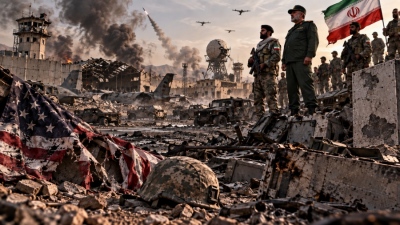
New photographs that came to light show extensive damage to buildings, vehicles, and military equipment across multiple American positions throughout West Asia following Iranian missile and drone attacks. The photographs, obtained exclusively by the American network CBS News, were provided by unnamed members of the US forces who cited strict military restrictions on media communications. One of the photographs, taken at Prince Sultan Air Base in Saudi Arabia, shows a direct hit on the rear section of a Boeing E-3 Sentry aircraft. The tail of the aircraft has been detached from the charred fuselage, which carries a rotating radar system used for airborne intelligence gathering. Other images from the Saudi base show severely damaged buildings and barracks, with their core structures remaining upright next to T-wall concrete protective barriers, which were considered major defensive obstacles against grenade and mortar attacks.
Massive destruction
Similar damage was recorded at Camp Buehring in Kuwait, a major staging and deployment area for US Army ground forces, armored vehicles, and select aircraft. Photographs from the camp show destroyed trailers and prefabricated housing units, damaged buildings, and a vehicle that, according to the report, was hit during the US-Israeli war against Iran. A member of the US armed forces told CBS News that the extent of the damage had not been adequately disclosed to the American public. "This is major damage to our bases that the American people haven't been informed about," the service member stated. "We are standing there with our eyes closed taking punches to the face." The photographs are made public following a new report by the Pentagon's inspector general, which revealed US equipment losses of up to 3.7 billion dollars during the war, including nearly 60 aircraft.
Not defending the bases
The report, submitted to Congress, also stated that US Central Command had recorded Iranian strikes against US positions in Kuwait, Bahrain, Qatar, United Arab Emirates, Saudi Arabia, Iraq, Oman, and Jordan. The unnamed member of the US forces also questioned how the Pentagon presented Iranian strikes as isolated projectiles that managed to penetrate American defenses.
"These aren't isolated projectiles that just manage to get through," said the service member, referring to the phrasing used by War Secretary Pete Hegseth following the March 1st attack on the port of Shuaiba in Kuwait, in which six American military personnel were killed. "We aren't defending these bases. We are just watching them get destroyed."
More than 600 attacks in Iraq
Earlier in the week, another report acknowledged the depletion of critical US ammunition stockpiles during the war, while noting that previous attacks had destroyed major military assets, including missile defense radar facilities. It was also revealed that Iranian retaliation caused approximately 184 million dollars in damage to US diplomatic facilities in West Asia. More than 600 attacks were recorded against US facilities in Iraq, according to a senior State Department official cited in the report. The attacks caused approximately 157 million dollars in damage, making Iraq the region with the highest cost regarding losses to diplomatic facilities.
"War black hole": The bill for Iran at 38 billion, every additional month "burns" another 3 billion
The economic footprint of the American military campaign against Iran is proving heavy, with the cost to the Pentagon having already reached 38.1 billion dollars as of August 1, 2026. And the bill continues to grow: according to the Congressional Budget Office (CBO), every additional month of operations could cost between 2 and 3 billion dollars, at a time when US anti-missile stockpiles have fallen to alarming levels and their full replenishment may require years.
At 38.1 billion
As of August 1st, the Pentagon, according to CBO estimates, had spent 38.1 billion dollars on the campaign against Iran - primarily for ammunition replenishment, additional air force sorties, and replacement of lost equipment. At the same time, since June 2025 the US has likely used between half to two-thirds of its available interceptor missile stockpiles, while restoring these stockpiles may require at least five years. The Pentagon did not respond to CBO requests for information, and for this reason calculations are based on government databases and open sources.
Ammunition replenishment the largest expenditure
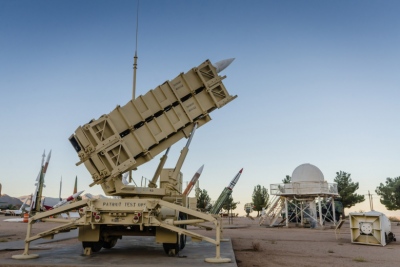
The largest expenditure category concerns the replenishment of expended ammunition, amounting to 21.7 billion dollars. Of this amount, 13.1 billion dollars pertains to Patriot, THAAD, SM-3, and SM-6 air defense systems, which were utilized to intercept missile and drone attacks. Another 7.3 billion dollars will be required to replenish Tomahawk and JASSM cruise missiles used for strikes against ground targets, while 1.2 billion dollars covers other munitions. Additional military aircraft flight hours, beyond normal peacetime levels, cost another 10.4 billion dollars. The CBO calculated the value of military equipment lost during combat operations that must be replaced at 1.9 billion dollars, while other operational expenses are estimated at 1.5 billion dollars. This latter category includes, among other things, additional expenditures for Navy ships, ground units, reserve mobilization, and payments to military personnel. Another 2.7 billion dollars is linked, according to the CBO, to increased fuel costs.
How much continuation of the conflict will cost
The cost of continuing the campaign will depend on the intensity of military operations. According to CBO calculations, if the level of violence remains low and sporadic, similar to that of May and June, each additional month of conflict will cost the Pentagon approximately 2 billion dollars. If intensity returns to July levels, monthly expenditures will rise to approximately 3 billion dollars. In the event of further escalation, costs could be even higher. The total cost is significantly impacted by the use of expensive munitions. The CBO cites as an example one of the June strikes, during which the US, according to open sources, launched approximately 50 Tomahawk missiles. The deployment of this number of missiles increases the monthly cost by approximately 200 million dollars compared to a period in which no such strikes take place.
Interceptor missile stockpiles have declined
The CBO draws particular attention to the consumption of American interceptor missile stockpiles. According to its assessment, since June 2025 the US has likely used between half to two-thirds of its available inventory of such munitions. A significant quantity was utilized to protect Israel from Iranian ballistic missiles during the 12-day war in June 2025, while the current conflict has depleted stockpiles further. According to the CBO, replenishing interceptor missile stockpiles will require at least five years, even if production rates are increased. The office attributes the problem to current low production rates and the difficulty of rapidly expanding them. As a result, for several years the US will possess a smaller quantity of interceptor missiles compared to the period preceding the two conflicts with Iran.
What is not included in the estimate
The figure of 38.1 billion dollars does not capture all US expenditures connected to the conflict. The CBO did not include expenses from other federal agencies or those already accounted for in the budget, including baseline operations and maintenance costs for armed forces participating in the operations. The calculation also excludes future costs for veteran medical care and military disability benefits. The CBO was also unable to estimate the repair or restoration costs for US bases in the Middle East that sustained damage from Iranian attacks. The Pentagon provided the office with no data regarding the value of assets damaged or destroyed, while plans for facility restoration remain unclear. In June, the US administration requested additional appropriations totaling 87.6 billion dollars, of which 67.1 billion was intended for the Pentagon. According to the CBO, of the total amount requested, 42.3 billion dollars is directly linked to the conflict — roughly 10% more than the Defense Department expenditures calculated by the office itself.
House approves resolution to end war – Yes vote from 7 Republicans
The US House of Representatives approved a resolution under the War Powers Resolution aimed at ending military operations against Iran without congressional authorization. This marks the third House vote on similar measures in recent months, with a small number of Republicans joining Democrats to pass the resolution by 220 votes in favor to 204 against. While four Republicans supported previous efforts, their number rose to seven in the latest roll-call vote. This legislative initiative follows the release of a new CBO report indicating that the conflict has cost more than 38 billion dollars since it began in late February, with expenses growing by up to 3 billion dollars per month. The War Powers Act, enacted after the Vietnam War, requires the president to obtain congressional approval for prolonged military operations. Although the US Constitution designates the president as commander-in-chief, this specific legislative mechanism allows lawmakers to demand the withdrawal of military forces. However, any final measure is virtually certain to face a presidential veto.
Heavy losses
According to the report by the official Pentagon oversight body, which constitutes the US Department of Defense's first official accounting of American equipment and facility losses from the Iran conflict, US aircraft and military equipment suffered heavy losses during the war. Specifically, four F-15E fighters, one F-35, one A-10 aircraft, 12 aerial refueling tankers, and nine other aircraft were either destroyed entirely or damaged. At the same time, as of last June, more than 30 MQ-9 drones had been shot down. The report also states that the war against Iran led to a depletion of military ammunition stockpiles and disruptions in their supply chain. This comes at a time when US War Secretary Pete Hegseth had denied reports of declining military stockpiles, while Trump had also claimed that the US is producing weapons at a rapid pace and faces no related shortages.
Admission... of hell in Bahrain
With the publication of the report, it was also officially disclosed for the first time that Iran struck the primary US Navy logistics hub in Bahrain using drones and ballistic missiles. As stated, the destruction of the US Navy's regional hub in Bahrain, which acting Navy Secretary Hung Cao recently stated Iran "completely wiped out," added "significant challenges" to establishing "adequate naval bases and support ports," according to the oversight body. As a result, the remote island of Diego Garcia in the Indian Ocean was converted into a maritime logistics hub, increasing resupply cycles to 14 to 18 days.
More than 20,000 US military personnel and diplomats relocated
Additionally, the war against Iran led to the relocation of more than 20,000 American military personnel and diplomats. This comes while US officials have repeatedly claimed — falsely — that US bases in the region suffered no serious damage and that all Iranian attacks were intercepted. According to the report, the State Department sustained 200 million dollars in damage across Iraq, Kuwait, Saudi Arabia, and the United Arab Emirates. No cost estimates were provided for damage to US military installations. The Pentagon also highlighted that, despite Trump's criticism of European nations, 5,000 air missions were executed from US bases in Europe.
Forced... evacuations
These Iranian strikes contributed to major shifts in how US forces traditionally operate in the region, according to the report. CENTCOM "relocated personnel, military assets, and storage facilities" as they came under attack from Iran and its supported forces. Some of these relocations included the withdrawal of Army medical evacuation helicopters from Iraq and Kuwait, the report noted, resulting in "most medical evacuations now being conducted by road... to local treatment facilities." Intermittent supply shortages that emerged, along with disruptions to the regional military mail system, exacerbated the difficulties faced by American sailors during record-length Gulf deployments supporting air strikes against Iran and, in recent months, the blockade of its ports.
Permanent cutbacks
Changes to the US military presence in the Middle East may become permanent — military and intelligence community officials have quietly discussed the possibility of permanent cutbacks in American personnel and facilities in the region when the war finally ends.
Losses: 14 dead and 417 wounded
According to the report, from February 28 to June 30, seven members of the US Armed Forces were killed in action and another seven died in non-combat incidents during military operations. During the same period, 417 military personnel were wounded in combat.
www.bankingnews.gr






Σχόλια αναγνωστών