

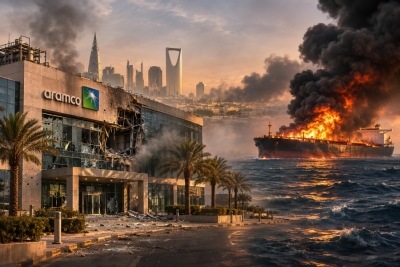
Entering a particularly dangerous phase, the Middle East confrontation on Sunday, November 8, 2026, was marked by a series of military incidents threatening to trigger a fresh regional escalation. The first serious episode was recorded in Riyadh, where an administrative building belonging to the Saudi oil company Aramco sustained damage following a missile strike. The Saudi Energy Ministry confirmed that shrapnel struck the building, causing material damage without casualties reported. The incident occurred in the King Abdullah Financial District, one of the capital's premier economic zones. Eyewitnesses described powerful explosions, while images published on social media showed shattered windows and damage to several floors of the structure. Although Saudi authorities insist damage was limited, the fact that a facility tied to the country's largest oil conglomerate was hit carries profound symbolic and geopolitical weight, fueling regional energy security concerns.
A Saudi Aramco building in Riyadh's King Abdullah Financial District sustained minor damage from fallen debris after a Houthi missile attack, according to Saudi Arabia's Energy Ministry. No casualties have been reported. https://t.co/wnX9smTDiE
— Ariel Oseran أريئل أوسيران (@ariel_oseran) November 8, 2026
The Houthis and questions over the $83 billion air defense
The Saudi-led military coalition announced that air defense systems intercepted and destroyed two cruise missiles heading toward Riyadh and the kingdom's southern region. Simultaneously, coalition spokesperson Turki al-Maliki disclosed the interception of two ballistic missiles launched by Yemen's Houthis targeting the Saudi capital. Additional interceptions were reported in the eastern province, alongside a drone. The attack thrusts the efficacy of Saudi air defense back into the spotlight. Despite massive defense expenditures reaching approximately 83 billion dollars the previous year, protecting critical installations remains a severe challenge. Intercepting a missile does not always eliminate danger, as debris can inflict destruction on residential areas and vital infrastructure. The real strategic question is whether Saudi Arabia can simultaneously protect oil facilities, airports, and economic hubs against continuous attacks, testing Saudi air defense capabilities.
?شاهد برج ارامكو في مركز الملك عبدالله المالي في الرياض . https://t.co/FkTNZvzzkf
— شاهد٢ (@h99ols) November 8, 2026
Iranian ships over submarine cables – Terror of explosives and digital blackout
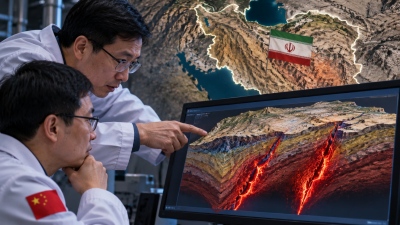
Serious concerns regarding potential sabotage operations against critical global internet infrastructure are sparked by suspicious movements of vessels linked to Iran in the Gulf of Oman. According to a Financial Times report, maritime intelligence firm Windward detected at least four ships executing unusual maneuvers near major submarine cable routes. These comprise three oil tankers under US sanctions and a small Iranian fishing vessel. The ships allegedly slowed down, repeatedly altered course, and, in certain instances, deactivated their tracking systems. Windward warns that these specific movements may relate to cable mapping or even preparations for placing explosive devices and naval mines. However, no explosives have been detected, nor is there proof that a sabotage operation took place. These developments follow repeated Iranian warnings concerning potential attacks on submarine cables and data centers if the US and Israel launch a new military assault against Tehran. Iraq, Kuwait, Bahrain, and Qatar are considered particularly vulnerable, relying on subsea connections traversing the Straits of Hormuz. A coordinated attack could provoke severe communication outages, financial transaction disruptions, and massive economic turbulence. Digital infrastructure is thus transforming into a new strategic front in the US-Iran confrontation, escalating regional destabilization risks.
Strait of Hormuz: Three tankers reportedly engulfed in flames
Concurrently, a second highly critical front is forming in the Straits of Hormuz, the strategic maritime corridor linking the Persian Gulf to international energy markets. Iran's Islamic Revolutionary Guard Corps (IRGC) announced that three tankers suffered explosions and burst into flames while navigating a route Tehran classifies as unauthorized. According to the Iranian announcement, the vessels violated transit rules established by Iranian authorities. The IRGC asserted that crews had deactivated navigation and identification systems, accusing the involved ships of cooperating with US military forces. Tehran did not clarify whether explosions resulted from direct Iranian military action. Information regarding the number and conditions of the incidents remains contradictory, as other reports cite two tankers potentially striking mines. Nevertheless, the IRGC warning was unequivocal: vessels attempting to violate Iranian restrictions face proportional hazards. The Straits of Hormuz are consequently evolving into the epicenter of a perilous showdown for control over navigational rights and energy flows.
US strike on a merchant vessel in the Gulf of Oman
The third incident involves direct military intervention by the United States against a merchant vessel. The US Central Command (CENTCOM) announced that on November 7, American forces immobilized the M/V Huda, a St. Kitts and Nevis-flagged ship in the Gulf of Oman. According to the American account, the crew ignored repeated warnings and attempted to breach the naval blockade enforced by the United States against Iran. An American military aircraft launched precision munitions toward the ship's stern, inflicting damage that rendered it incapable of continuing its voyage. CENTCOM maintained it had previously ordered the crew to steer clear of designated target zones. The vessel had visited an Iranian port and was attempting to exit regional waters. The American command also announced that since July, 147 merchant ships complying with its directives have been redirected, while five others have been immobilized. This incident underscores mounting hazards for commercial shipping, as military restrictions and blockade enforcement operations forge an exceptionally volatile environment, highlighting maritime trade risks.
Trump's electoral defeat and scenarios for a new strike on Iran
The escalation arrives days following midterm elections in the United States, where Democrats wrested control of both chambers of Congress. The outcome generates new political parameters for President Donald Trump, as pressures mount to curtail military operations against Iran and forge a diplomatic settlement. Nevertheless, scenarios of further American escalation continue to circulate behind the scenes. Potential targets cited in analyses include Kharg Island, the primary hub of Iranian oil exports, and the Pickaxe mountain complex, linked in relevant reports to Tehran's strategic nuclear infrastructure. Such a move could provoke exceptionally hazardous reactions, further battering global energy flows and undermining diplomatic resolution efforts. Washington therefore faces a stark strategic dilemma: sustaining military pressure or pursuing an accord with Tehran, altering US geopolitical strategy.
Peculiar Trump message: New war with Iran extremely unlikely, but we can destroy 38 bridges in 60 minutes
A dual and contradictory message toward Tehran was delivered by US President Donald Trump, stating he views the resumption of generalized military operations against Iran as extremely unlikely, without ruling out devastating new strikes should negotiations collapse. In a CNN interview, Trump argued that a return to war hinges on achieving a "very strong agreement" with Tehran. "It's extremely unlikely to be necessary," he noted, while warning that the United States possesses the capacity to unleash severe assaults. The American president revealed three American aircraft carriers are positioned across the broader Middle East theater, declaring them fully prepared for combat operations. Particular sensation was caused by his reference to 38 Iranian bridges, which American forces could supposedly destroy within one hour. Simultaneously, he maintained he desires no such destruction, as infrastructure reconstruction would require up to ten years. Trump also presented estimates on Iranian military capabilities, asserting that following American strikes, the country's missile production capacity has dropped to roughly 10% and drone production to 15%, shaping US deterrence posture.
Araghchi ultimatum to Trump: "American voters decided, now it's the White House's turn"
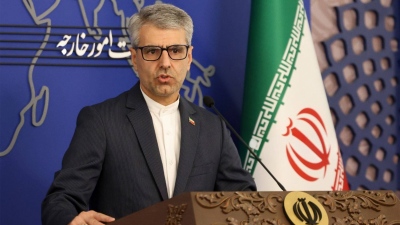
Fresh political pressure is exerted on US President Donald Trump by Tehran, capitalizing on the US midterm election outcome and debates surrounding the future of the Iran war. In a statement by Iranian Foreign Minister Abbas Araghchi, the characteristic message is formulated: "American voters made their choice. Now it's the White House's turn to make theirs." The Iranian leadership insists any peace agreement must incorporate lifting US sanctions, unfreezing Iranian assets, and guarantees terminating hostilities. Trump confronts a difficult strategic choice: persevering with military pressure or proceeding toward compromise with Tehran, defining Iranian diplomatic terms.
Iran message to US: If you hit our ships, we will retaliate even harder – Iron Gate blockade laughable
A stern warning was issued to Washington by the Islamic Revolutionary Guard Corps (IRGC), clarifying that any fresh American assault on Iranian vessels will trigger stiffer retaliation. IRGC spokesperson Brigadier General Hossein Mohebbi told the Fars agency that confrontation between Iran and the United States persists across military and economic domains. "In a war, they may hit one of our ships. But we will strike harder," he cautioned. Simultaneously, Tehran dismissed the new US Task Force Iron Gate initiative, through which CENTCOM seeks to constrict Iranian overland supply routes and Caspian Sea transport. Mohebbi labeled the operation a "joke," arguing Washington cannot enforce a total economic blockade. He stressed that Iran has secured alternative trade routes and maintains robust ties with neighboring nations, highlighting Iranian maritime resilience.
Iran decodes American weapons – US military technology in IRGC hands
A significant disclosure was delivered by the Islamic Revolutionary Guard Corps (IRGC), announcing that Iranian scientists and military engineers are executing reverse engineering on American weapon systems seized during the conflict with the United States and Israel. The announcement was delivered by Brigadier General Ali Balali, advisor to the commander of the IRGC Aerospace Force, emphasizing that Tehran is leveraging captured equipment to cultivate indigenous military technology. "Various military systems and equipment have fallen into our hands, and defense industry experts are already laboring to decode them," he declared. According to the Iranian official, the primary objective is acquiring advanced know-how and boosting domestic production of missiles, drones, and allied defense systems, driving defense technology localization.
Oil: Plunge exceeding 20 dollars and fears of fresh turbulence
Meanwhile, the international oil market exhibits dramatic fluctuations. In the week following the US midterm elections, Brent crude registered a drop exceeding 20 dollars per barrel as investors calculated that Democratic gains could constrain Trump's military escalation options. On November 4, Brent retreated near 94.62 dollars per barrel, posting an 8.7% daily contraction. Remarkably, the steep price retreat was unaccompained by a corresponding improvement in actual oil supply fundamentals. Instead, it predominantly mirrors shifting expectations regarding the trajectory of the conflict. UBS analyst Dominic Ellis points out that the decline connects more to the rapid deflation of the geopolitical risk premium than substantive alterations in market fundamentals. In his estimation, even in the 95-dollar-per-barrel bracket, Brent incorporates roughly 10 to 15 dollars of geopolitical risk. This implies a credible de-escalation accord could catalyze further price retraction. Conversely, fresh strikes on oil infrastructure or prolonged disruption of shipping in the Straits of Hormuz could rapidly reverse this trend, shaping global oil markets.
The Middle East at a tipping point
The events of November 8 reveal how fragile regional equilibrium remains. Saudi Arabia confronts continuous missile threats, Iran strives to retain control over critical maritime transit lanes, and the United States persists in deploying military might to enforce its naval blockade. Each of these fronts could evolve into a theater of broader military confrontation. The paramount problem is that military escalation coexists with diplomatic outreach efforts, forging an exceptionally unpredictable environment. The Aramco strike, tanker fires, and the American hit on the M/V Huda prove the hazard has not dissipated, notwithstanding expectations for a peace pact. The Persian Gulf remains one of the planet's premier energy arteries. Any disruption across maritime transport and production facilities can instantly impact fuel prices, international shipping, inflation, and global economic growth. The next critical test will be the capacity of Washington and Tehran to translate de-escalation rhetoric into concrete pacts. For in the Middle East of 2026, the distance separating diplomatic accord from generalized conflict remains dangerously narrow.
www.bankingnews.gr



Σχόλια αναγνωστών