

Surveys show Eurozone economic resilience, but prices catch fire
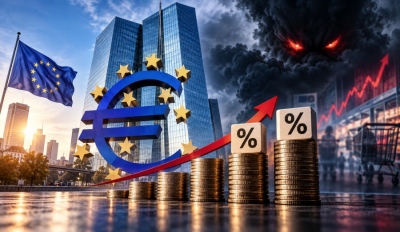
September's preliminary PMI indicators and Germany's ifo index came in better than expected, with the composite PMI recording its highest level in more than three years. The rise in the PMI was led by the services sector, as economic prospects do not yet appear to be affected by higher inflation. However, inflationary pressures are intensifying, Oxford Economics notes in its analysis. Input prices and output prices recorded in the PMIs rose at a faster pace in September, particularly in services, reinforcing the assessment that the European Central Bank will proceed with two more rate hikes this winter. At the same time, the threat of a ban on US diesel exports creates another source of risk for the energy market, given Europe's increased dependence on US supplies.
Indicators ignore geopolitical turmoil
Surveys this week do not seem to reflect the geopolitical situation and higher energy prices. Eurozone PMIs for September were better than expected, with the flash composite index rising by 1.1 points to 53.1 points, its highest level in more than three years (Chart 1). Services served as the primary driver of the increase, while manufacturing remained stable at a high level. The recovery in services is the most noteworthy aspect, given the sector's usual exposure to the squeeze on household real disposable income caused by higher fuel prices. Manufacturing resilience was likely supported by higher defense spending, some momentum from the global artificial intelligence cycle, and a temporary boost from Middle Eastern activity rerouted toward Europe.

Germany: Fifth consecutive rise in the ifo index
The German ifo index reinforced this picture, registering its fifth consecutive increase. Both the assessment of the current situation and expectations improved, with the former reaching a three-year high and the latter rebounding to a level just below that recorded prior to the US-Israel war with Iran. This adds to a growing series of indicators demonstrating the resilience of the German economy amidst global turmoil, underpinned by substantial fiscal stimulus. Simultaneously, it generates upside risks to our current forecasts for German GDP growth of 0.1% in the third quarter and 0.2% in the fourth quarter.
Prices rise – and the ECB is back in the crosshairs
However, inflationary pressures are growing steadily stronger. Both input prices and output prices in the PMIs rose at a faster pace in September, as businesses passed higher energy costs on to their customers. Prices charged by services companies accelerated particularly fast, signaling that cost pressures are broadening across the wider economy. Combined with resilient economic activity, this strengthens the case for two additional ECB rate hikes that we now anticipate this winter.
New energy headache for Europe from US diesel
At the same time, discussions have emerged regarding a potential ban on US diesel exports. These deliberations followed reports that the US was preparing an export ban for 90 days, although a subsequent statement by the US Secretary of Energy downplayed the likelihood of such a measure. Nonetheless, given that EU reliance on US diesel has grown particularly significant recently—with imports from the US now accounting for roughly 10% of total EU diesel imports, including intra-EU trade—the realization of this scenario would place additional strain on the outlook for the European energy market.
www.bankingnews.gr







Σχόλια αναγνωστών